 Conducted by Brian J. Showers (August 2005)
This interview was originally published in All Hallows 42 (October 2006), edited by Barbara and Christopher Roden.
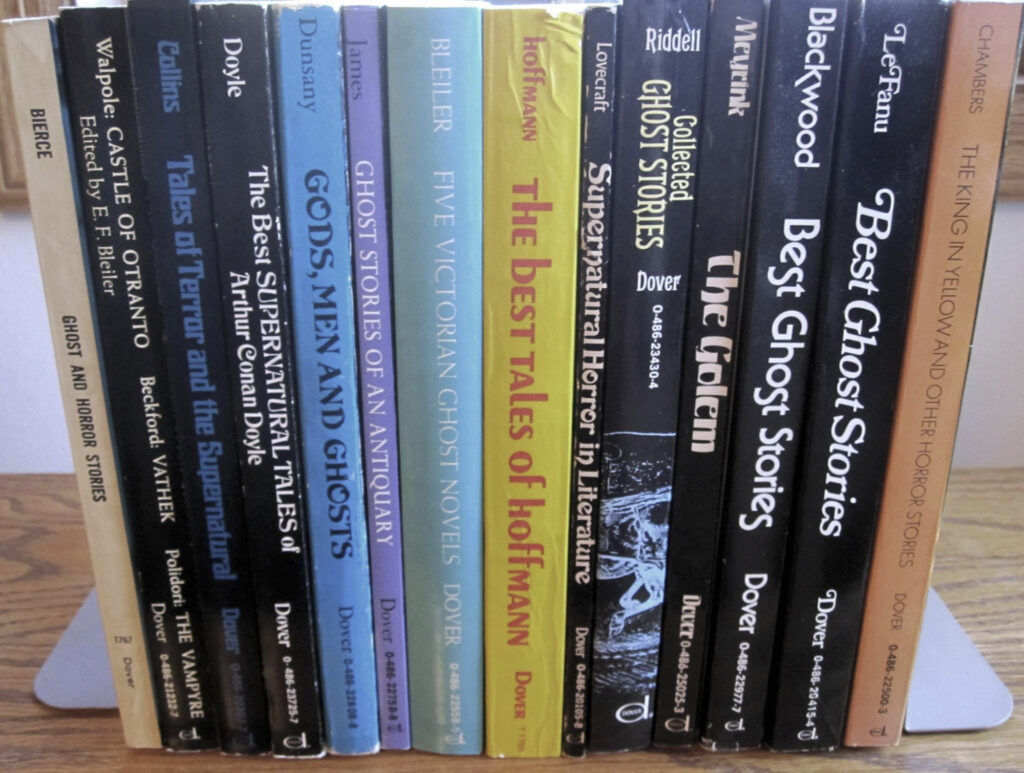
I would be willing to bet that every student of fantastic fiction has at some point in his or her career read a book with the name E. F. Bleiler printed on its cover. I grew up reading the Dover collections of, among others, Lord Dunsany, Ambrose Bierce, and Algernon Blackwood; each edited and introduced by Mr. Bleiler. On some level, many associate Bleiler’s name with the genre as much as they do Machen’s or Le Fanu’s. On the back covers of these sturdy paperbacks that introduced me to the genre was a guarantee: “This is a permanent book.” These collections were made to last a lifetime, and thanks to Mr. Bleiler’s scholarship and care, they will probably last even longer than that.
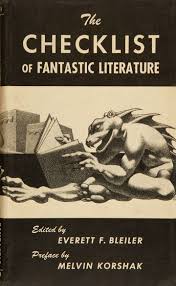
E(verett) F(ranklin) Bleiler’s [1920-2010] career as an editor began in the mid-forties when he compiled the now legendary Checklist of Fantastic Fiction (Shasta, 1948). The Checklist was one of the earliest attempts to survey the venerable genre. From 1949-1952, Mr. Bleiler compiled Best Science Fiction Stories anthologies with T. E. Dikty.
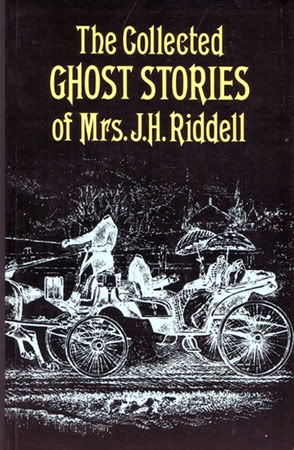
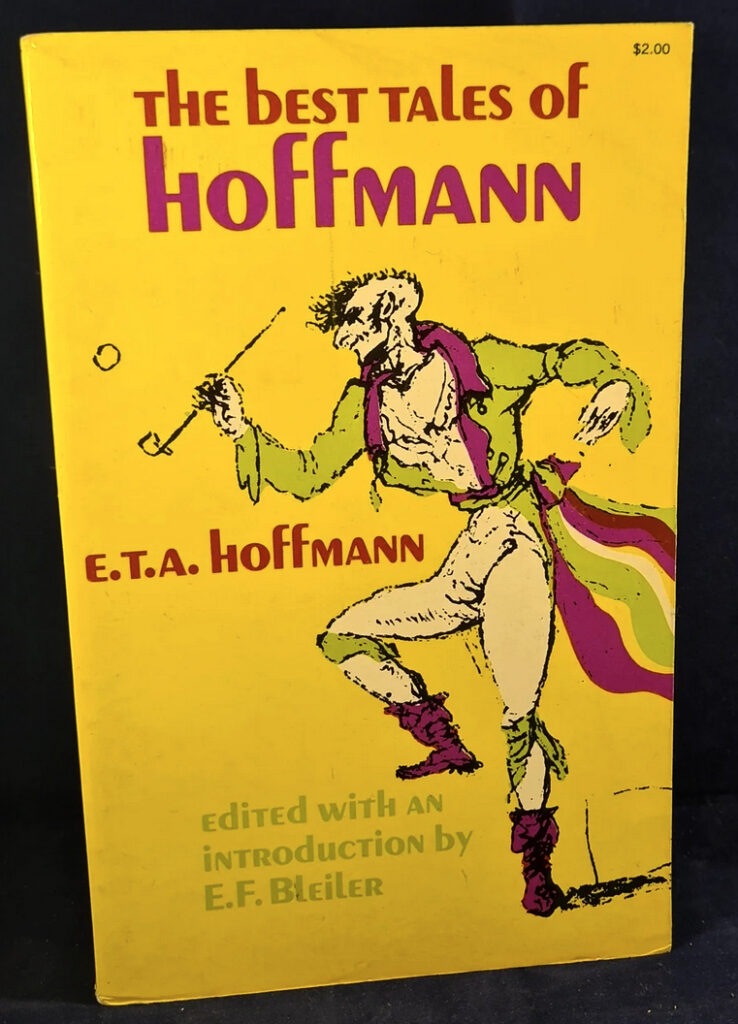
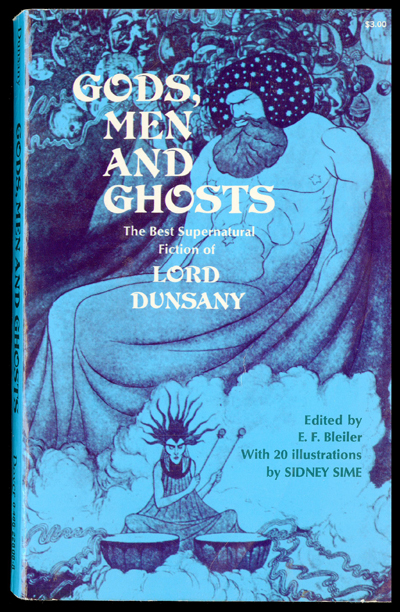
In 1955, Mr. Bleiler landed a job as an advertising copywriter at Dover Publications, his employer for the next twenty-three years. He served as general manager until 1963 when he became executive vice president. During his time at Dover, Mr. Bleiler wrote Japanese and German grammars, edited and wrote introductions on topics as varied as Atlantis, the lore of tea, classical detective stories, and Renaissance floral prints, but it is his research in the field of fantastic fiction that most readers will be familiar with. During his tenure at Dover, he edited and wrote introductions to collections by H. G. Wells, E.T.A. Hoffmann, M. R. James, Mrs. J. H. Riddell, and many other notable writers.
In the 1980s and 1990s Mr. Bleiler wrote three definitive and comprehensive reference books: The Guide to Supernatural Fiction (Kent State, 1983), Science-Fiction: The Early Years (Kent State, 1990), and Science-Fiction: The Gernsback Years (Kent State, 1998). The science fiction reference books are still available, but The Guide to Supernatural Fiction, a resource long since out of print, is much sought after and fetches prices upwards of $400 USD.
Jim Rockhill, editor of The Collected Supernatural Works of J. S. Le Fanu, writes: “In my opinion, E. F. Bleiler is one of the key genre scholars, and one of the main people responsible for keeping the work of many of these authors not only alive, but on the right side of respectability. It is not only his scholarship, but his exceptional taste, and the work he made readily available through Dover that was of signal importance for so many decades.”
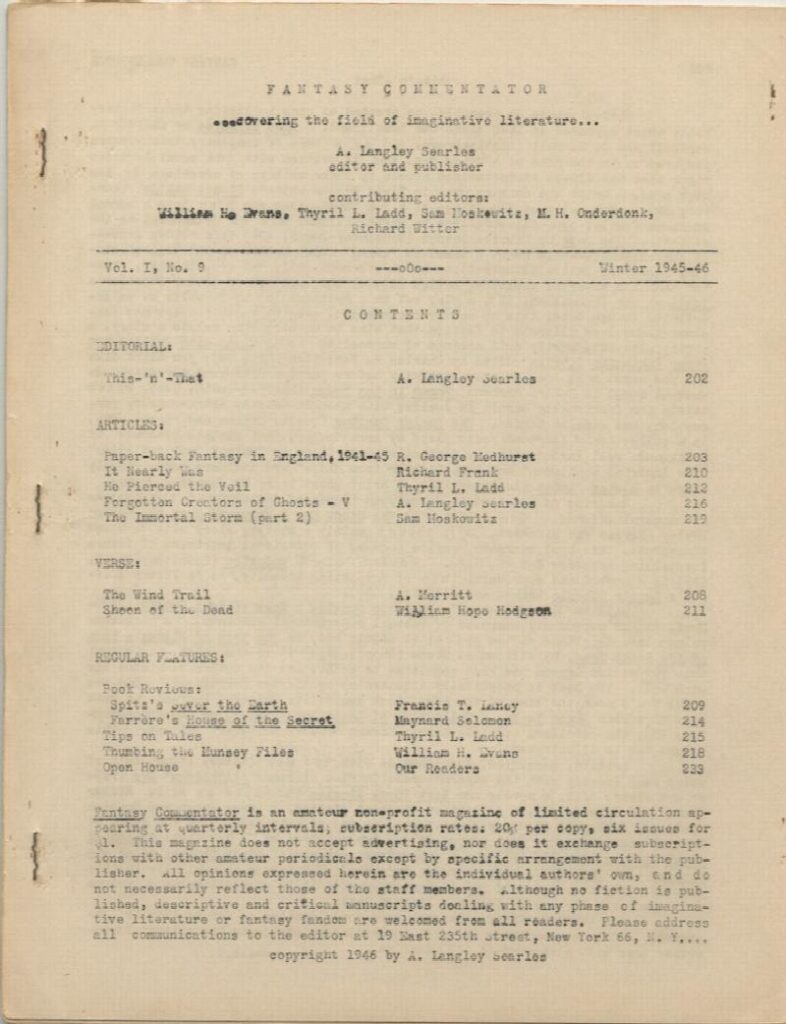
The following interview was conducted via post, and is indebted to Mr. Bleiler’s article on the creation of the Checklist as well as the two interviews conducted by A. Langley Searles for the Fantasy Commentator.
Fantasy Commentator VI, “A History of the ‘Checklist’ ”: 112-123 (1988).
Fantasy Commentator VIII, “Anthology Days: An Interview with E. F. Bleiler”: 204-213 (1995); and IX, “Dover Days: An Interview with E.F. Bleiler”: 252-269 (2000).
Once again, I would like to express my gratitude to Jim Rockhill, Barbara and Christopher Roden, Richard Bleiler, and, of course, E. F. Bleiler.
 What do you think attracts people to macabre and fantastic fiction?
I wish I knew. I would guess that it is a combination of basic personality and cultural patterns and configurations. If the dominant literary culture is social realism, as it was not long ago, individuals may rebel against it in the direction of non-realism. The Freudians would have an explanation for this. On the other hand, this phenomenon goes beyond an individual matter into the formation of different or hostile subcultures. So far as I know, this has never been studied, although I admit I am not up on the subject. I go into it a little in the introduction to Science-Fiction: The Gernsback Years.
In a 1988 interview with A. Langley Searles for The Fantasy Commentator, you said that you lost interest in “science-fiction and its related fields” around 1952. The 1950s might be an odd decade to lose interest in science fiction as it is now considered to be a classic era of the genre. What about the genre at this time dismayed you?
As I said in the Searles interview, a combination of factors. The business-ethical side, which I disliked. Also, satiety per se. I just had to read too much of it. Suppose you like vanilla ice cream and eat it every day. Suddenly, you realize that you never want to see another dish of vanilla ice cream. Plus the gradual realization that I was wasting my time on a side issue, that is, fantastic fiction.
 In a subsequent interview with Searles, you said that it took twenty-five years before you became interested in science fiction and its related genres again. What brought you back into the fold?
It’s hard to be precise on dates; perhaps twenty years is more accurate, though I’m not sure that I ever really got back into the fold. Nothing spectacular. I used to see occasional fan magazines and publicity at Dover. Occasionally, one of the kids there would ask me to read something, and ask me what I thought of it. Dune, for example.
It was interesting to see, then, how the field had evolved in a generation, some writers still present, some gone, some new. The improvement in literary technique. But I never regained the interest that I had had in, say, the late 1940s. And I found myself more interested in the earlier, pre-modern period, though I had no illusions about its quality.
So have you kept up to date with fantastic fiction? Have you continued to read at least the highlights of the genre, authors like Philip K. Dick and William Gibson?
Not really. Dick, I think, is overrated. Gibson is very interesting. But by and large I haven’t read much recent material. I have been away from supernatural fiction for almost thirty years and up to a few years ago have been working on early science-fiction. I am not too conversant with modern work, although I have bought a fair number of the small-press editions of older work. I’m really a Rip Van Winkle.
What made you feel you could make a go at reissuing the work of authors whose heydays had passed?
In general, this principle: If enough people want a book and it is made available to them in a reasonable way, it can be viable.
More specifically, a combination of factors lumped together as a primitive sort of non-numerative market research. 1.) Seeing what buyers are looking for in AB and The Clique. Catalogue listings and prices for out of print books. 2.) Word of mouth and grapevine factors. 3). General availability of the books in question. Both on the out of print market and potentially competitive editions. 4.) Intuitive feel for what is worth publishing and likely to succeed. If you work in a field long enough, and are saturated, you may well have intuitive judgments that you couldn’t justify rationally, but turn out to be valid. This is not just saying, “I like it, therefore it will sell.”
Example: At the New York Antiquarian Book Fair, perhaps 1974 or 1975, I pulled out a small book of nineteenth-century line engravings. It was a gimmick book: When you moved a transparent, lined screen over it, the moirés created the illusion of motion. Hayward Cirker [founder of Dover] and I knew immediately that it was worth printing, even though there had been nothing like it on the market for almost a hundred years.
Once Mr. I-Forget-Who interviewed Cirker and me. The question that bugged him was, “How do you know about books?” The answer, which didn’t satisfy him, was that if you work in a field for half your life you pick up things by osmosis. So, that when I told him that only a half dozen or so early books had been devoted to hand shadows, I couldn’t back it up with a specific source. I just knew. To me it’s obvious in any learning situation, but he couldn’t accept it.
 It wasn’t until Charles Baudelaire championed Edgar Allan Poe that the latter’s work was considered by the literary establishment, and it has only been within the past couple of decades that H. P. Lovecraft’s work has received fair treatment by the academics. Why do you think is there so much resistance to fantastic fiction?
I disagree. Poe, after the Griswold editions, was well appreciated in America.
Lovecraft— at a guess, the personality didn’t help: the weird semi-recluse. Also, while the ideas are interesting, the writing is abominable, as Jorge Luis Borges (sympathetic in other ways) and Edmund Wilson (basically unsympathetic) agree. But there is also the cultural factor emerging from your second question.
Why is there so much resistance to fantastic fiction? Not any more. The TV channels are filled with s-f of a sort; bookstore carousels are loaded; best-seller lists include fantastic lit. Magic realism is accepted.
On the individual level: I wonder if, in the past, the note of fantasy had associations with infantilism—fairy tales, Mother Goose, etc. Or, fear of the unknown, the incalculable, the erratic, the un-patterned? Association with marginal types? The sensational as opposed to the restrained? The notion from the fin de siècle that fantasy was associated with sickness, drug addiction, etc. Ossification of the imagination? One might have to check individual cases for any, all, or none of these reasons.
On a theoretical level, in complex cultures, there is often deep suspicion and dislike between the subcultures. In the 1930s, a reader of the Van Dorens and Van Vechten (mandarins whom I despised) in one facet, an admirer of Hemingway and Dos Passos in another, would both sneer at popular fiction. A reader of the pulps scorned Mainstream. In an earlier period Arthur Machen could scorn George Eliot and Henry James; MR. James scorned Machen.
Now we’re getting into theory of culture of a sort. Why are there subcultures, sometimes fantastic, sometimes realistic, sometimes romantic? Cyclic answers have been offered by Vico and Jakob Grimm on the one hand; mechanical answers by Hegel and Schelling. All, however, deal with generalities and have no answer how the individual is adjusted to a subculture, whether he accepts it, rejects it, creates it, or inherits it.
Taking my own case: My family were all realists; from earliest childhood I was a fantasist. I saw “color” that they didn’t see. I was thrilled by the exotic and sensational. When I read Arthur Machen’s Hieroglyphics as a teenager, and later, read about Whistler’s theory of art, I immediately knew that their thought fitted me. Imagination was important, not recording. I almost cheered when I read Machen’s denunciation of George Eliot, who had been forced down my throat in school.
 But this isn’t explaining anything. I wasn’t the only one with this position; the whole early Weird Tales coterie had reached the same position. How does a concrete individual relate to something as tenuous as an anthropological configuration? In the introduction to Science-Fiction: The Gernsback Years, I went into this a little, noting how a tiny nucleus of people in the 1930s swelled into a potent cultural force by the twenty-first century.
But this theorizing probably bores you stiff.
As for the academics, they are often conservative or ultra-conservative. In our day, they have been educated and trained in a system that stresses rationality in a culture that is based on rationality, and they carry it on. But this is not always entirely consistent. An academic who laughs at Lovecraft will not object to figurative interpretations of Herman Melville or Nathaniel Hawthorne.
Did you encounter any such resistance when you were collecting and re-publishing writers of a similar ilk?
Yes, when I was a kid, I was often told that s-f was crazy stuff. It was impossible. (So what? This didn’t bother me.) Libraries seldom had any holdings in fantastic fiction. Thus it was a pleasant surprise to find that the Widener library (Harvard) had quite a bit of such material, including bound magazine excerpts donated by an alumnus fan.
I recall one amusing (to me, anyway) incident from Dover, perhaps around 1957-1958, when I invoked this prejudice as a joke. This was before science-fiction took off into the mass market and the movies, and was still beyond the pale. A salesman from Street and Smith called and tried to sell me space in Astounding (Analog) to advertise scientific books. I pretended horror at the thought and asked the salesman if he read such crazy stuff as Astounding. In embarrassment, he assured me that he didn’t.
Publishing? Let’s just say that I was unaware of such resistance if it existed. Reviewers, particularly in the smaller media, usually don’t bother to lambast something they don’t like; they just don’t review it. As for the stores, they don’t care as long as it sells.
I do recall criticisms from other areas. We used to get letters from Fundamentalists in the South urging us to foreswear the Devil and drop Bierce’s Devil’s Dictionary; prudes who objected to books on anatomy for artists—I remember one letter that I may still have around—“Stop sending me you (sic) letters about dirty books. I don’t want for my son to be no artist with naked women . . . etc.” And a couple from admirers of Montague Summers who asked me how I dared to disagree with him.
Why do you think these authors slip into obscurity in the first place?
Depends which author you mean. Some never did have much going for them and deserved to be forgotten. In general, tastes change; our culture stresses the new replacement rather than the old item. Our monetary economy and our cultural “economy” are based on selling the new.
 In a 1995 interview with The Fantasy Commentator, you refer to Abraham Merritt as a “fallen god”. Many of the fallen gods are currently in the midst of a revival, especially with the small presses. Do you think these revivals good things? Should these books be made available, or do they detract from better works (theirs and others)?
I don’t think that any of the small-press authors would really fit as “fallen gods”. The term, by the way, comes from Malcolm Elwin’s Old Gods Falling. He meant, and I mean, someone immensely popular at one time, then cast aside. Like, say, Marie Corelli or Hall Caine. This was once true of Merritt in fantasy reading.
On the second question, are the current small press revivals good things . . . I would say they are a mixed blessing. Occasionally they reprint worthy material, but they also utter too much junk that takes up resources that could go to better books. Tartarus has the best record in printing worthwhile books.
This is the theoretical position, but I recognize that commercial realities enter. You cannot always get rights to certain books, and if you need to publish a certain number of books per year to stay alive, you may have to print a certain amount of rubbish. There is the further factor that publishers often balance bad (or mediocre) books with good books, so that the saleable bad pay for the unsaleable good. Dover did some of this in letting books of riddles, paper-folding tricks, etc. make up for weak sales on more important books.
Also, you may want to concentrate on rarity, for obvious reasons. If, for example, you run into a copy of a book that is so rare that even the British Library doesn’t have it, even if it is junk, you may have a better chance of selling it than something better but less rare.
 Do you think that exhaustive re-publication could potentially damage an author’s reputation? The minutiae of Lovecraft’s corpus may deserve a mass audience, but what about, for example, a novel like William Hope Hodgson’s The Night Land? Do works like this need to be re-published at all?
To the first question: Yes, such material can damage an author’s reputation. I think that juvenilia, unfinished work, rejects, and fragments should be available for serious scholarship, even if in a limited way, but I don’t hold with publishing inferior material for sales purposes just because the author has a big name. It is unfair to both the author and the reader.
Lovecraft, as you mention, is a good example of this. “Herbert West, Re-Animator,” is best forgotten. Robert E. Howard has also suffered. He apparently left a large box filled with rejects and unfinished material, which other authors have reworked, always badly.
Another example: I knew of M. R. James’s “The Experiment” and “A Vignette” long before they were “discovered”. I could have put them into an anthology and boasted of reprinting “lost stories”. But I felt they were inferior work and best bypassed.
As for The Night Land: It’s a mess. In my Hodgson paper in Supernatural Fiction Writers I said, “It is hard to think of another situation in which a reasonably competent author has so mangled a good idea.” Despite this, I would keep it in print for its visionary and emotional qualities. It’s what Orwell would call a good bad book.
When you look for authors and stories to reprint, you also look for marketability. What sort of marketability do authors like J. Sheridan Le Fanu or Robert W. Chambers have that others don’t?
I can’t say much except generalities. Le Fanu had a general reputation as a good writer, and the little in print in anthologies supported this. So, the more sophisticated readers of supernatural fiction would be curious. Also, the Victorian specialists and those interested in Anglo-Irish fiction. Add to this the rarity of his books. I can’t support this, but I believe that of major Victorian writers, his books were the most difficult to find.
Chambers, on the other hand, had a large American reputation through the Lovecraft circle and the Weird Tales readers. Oddly enough, his books had once so flooded the market that dealers didn’t bother to list them, but discarded them. Thus, ironically, they became scarce.
 How did you go about tracking down stories and doing research when there was little preceding?
This is very hard to answer. For the first part of the question, as I said above: If one does a lot of miscellaneous reading, one gradually accumulates a background. From high school days on I used to buy books of all sorts that looked interesting and read them. Sometimes this paid off, sometimes it didn’t. While I had very little money, it was always possible to buy books cheaply. Americana was costly, but fantastic fiction was readily accessible at low prices. And there is always the grapevine.
Doing research: No different from the way, I suppose, that any pre-modern scholar worked. Reading as much of the author’s oeuvre as was accessible, within reasonable limits. Checking bibliographic indexes, like the MLA annual listings. Following up references. In some cases, correspondence with relicts, but this was never important. Serendipity, browsing in the stacks, in book stores, collecting. I worked, of course, before the computer age.
How do you view the generation of editors/researchers (Mike Ashley, Jack Adrian, Richard Dalby, S. T. Joshi, et al.) who came up in the early 1970s and seem to build on your own work?
I regard them with respect and gratitude. They’ve really done excellent work in researching primary material and presenting it nicely. Their work is far from the editing of a generation or two ago, where someone slapped together a group of stories and prefixed them with a perfunctory introduction. I wish that their work had a larger circulation. (This does not mean that I always agree with their critical opinions; that is a matter of personal taste.)
Why do you think many mainstream writers from the late-eighteenth century to the early-twentieth century dabbled in the fantastic, especially in short form?
£/s/d obviously played a part, but I don’t think there’s a simple answer to your question. One would have to examine authors individually.
When Dickens or another editor wanted a ghost story for a Christmas annual, he contacted, say, Amelia B. Edwards, Mrs. J. H. Riddell or another writer who gladly sat down and wrote one. Similarly, when Miss Braddon needed to fill out Belgravia or The Misletoe Bough, she sat down and wrote a story. Ordinarily, these women wrote a different sort of fiction: Edwards domestic/psychological, Riddell social/economic/psychological, Braddon soaps/sensation. A ghost story was a matter of business.
But this is not the whole situation. For someone like Edward George Bulwer-Lytton I think it was working out psychological situations. Although A Strange Story was commissioned by Dickens, it was based on a dream and an obvious projection of his life situation. Ditto for his “The Haunters and the Haunted”. Bulwer-Lytton was fascinated by the occult.
 For Henry James, I think, the use of the supernatural was a literary technique whereby he could get across certain ideas and situations better than with realism; the same for Gertrude Atherton and May Sinclair. For Thomas Hardy, saturated with folklore, an occasional idea probably clicked.
Then, of course, there’s always the vanity/self-expression factor. Although not popular authors, men like the British Museum librarian Richard Garnett and the polyglot James Platt, who were choked with fascinating historical and cultural lore, simply wanted to get it down on paper and wrote, respectively, The Twilight of the Gods and Tales of the Supernatural.
I think that quite often an idea for a ghost story popped into an author’s head and he/she wrote it and tried to sell it, nothing more than that.
Along similar lines, why does the supernatural appear frequently, yet peripherally in “gothic” novels? What purpose do such brief and un-pursued inclusions serve? Was it sensationalism? Commercialism?
One would have to say “some gothic novels”, certainly not all. Some were solidly supernatural all the way through.
Your question is really leading into readership. What did readers want from books? I don’t think that anyone (though someone in British popular culture may have done so) had thoroughly investigated the readership, on various social levels, of British fiction in the late-eighteenth and early-nineteenth centuries. (I recall Amy Cruse did something on it back in the 1930s, though I suppose it is outdated by now.)
I would guess that the young women in Northanger Abbey are a reasonably realistic rendering of upper-middle-class English. In their case it was thrills and delight at exoticism as they read certain passages.
Or, considering Ann Radcliffe. What was she really after? She was a respectable writer from the cultural point of view of the day, a competent author. One can see her novels as an unconscious or semi-conscious statement of protest against mistreatment of females, in which forces of the supernatural are linked with forces of society, both in figurative terms. Her titillating use of the “supernatural”, usually coming after or during long passages of staid material, provides both variety and sensation.
On the lower levels, the chapbooks, crude supernaturalism provided thrills.
As in your above question, usually, ultimately, £/s/d. Authors tried to give the market what it wanted.
One could go on, analyzing just what was accepted as supernatural, how people really reacted to it, etc. but that would be a book in itself.
In the introduction to Dover’s collected stories of Robert W. Chambers, you write, “[O]ne might even single out The King in Yellow as the most important book in American supernatural fiction between Poe and the moderns.” That’s a very strong statement to make about such an obscure writer. Can you comment on it?
 I was thinking historically, and I would guess that you are thinking critically. Chambers took one of the first steps in breaking the bind of the genteel Victorian ghost story in America and set up a mythic basis for supernatural fiction. All the early writers like H. P. Lovecraft, Clark Ashton Smith, Robert E. Howard, Henry S. Whitehead, knew his work and rated it high. Also, Chambers, though rightly scorned by critics, was immensely popular in his day in general fiction. So that while you are right in calling him obscure as seen today, he was far from obscure in the popular culture of his day.
Do you think that Chambers would have had as much of an influence on weird fiction if he hadn’t been praised so highly by Lovecraft?
Lovecraft certainly helped Chambers in later years, but The King in Yellow was known and cherished long before Lovecraft’s essay attracted much notice. Lovecraft’s work didn’t get any real circulation until Ben Abramson’s edition of 1945. I bought my copy of The King in Yellow, knowing what it was, in the 1930s before I had read even the partial printing of Supernatural Horror in Literature in The Fantasy Fan.
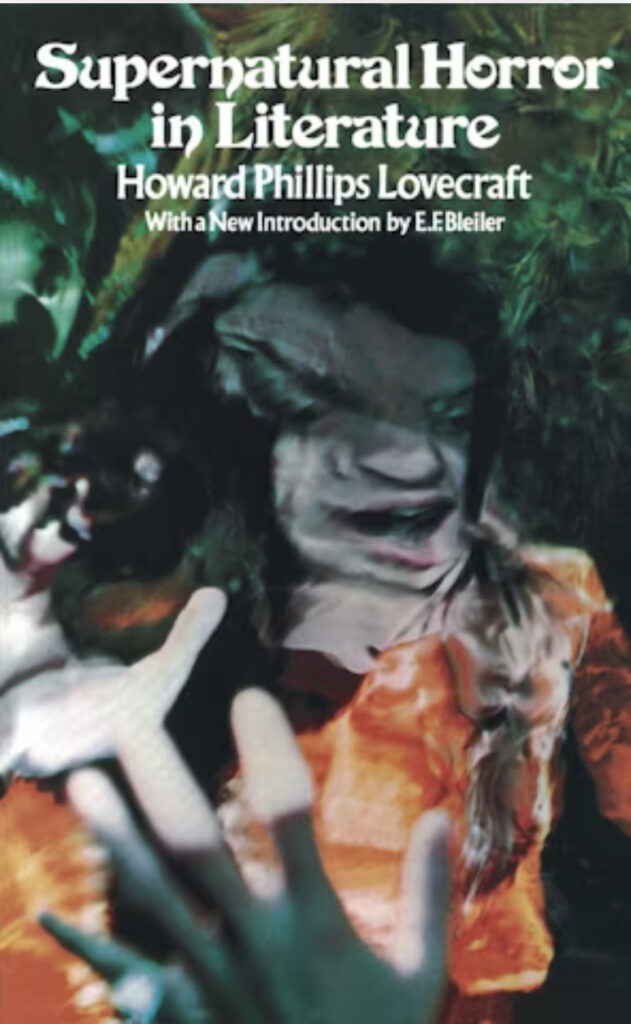
Aside from Supernatural Horror in Literature, why did Dover never do a volume of Lovecraft’s fiction?
We might have if I had stayed there a couple of years longer. But there were two factors against putting a book through. The market, if not exactly flooded, had a lot of inexpensive Lovecraft fiction, since much of it was already public domain. There was also the personal and ethical factor. August Derleth, who didn’t hold copyrights, though he claimed that he did, was a friend and was paying royalties to the Lovecraft estate, which I thought was an admirable thing.
Given the above, why did Dover publish Supernatural Horror in Literature?
Why not? It was a good introductory and historical statement, and at the time there was little else available.
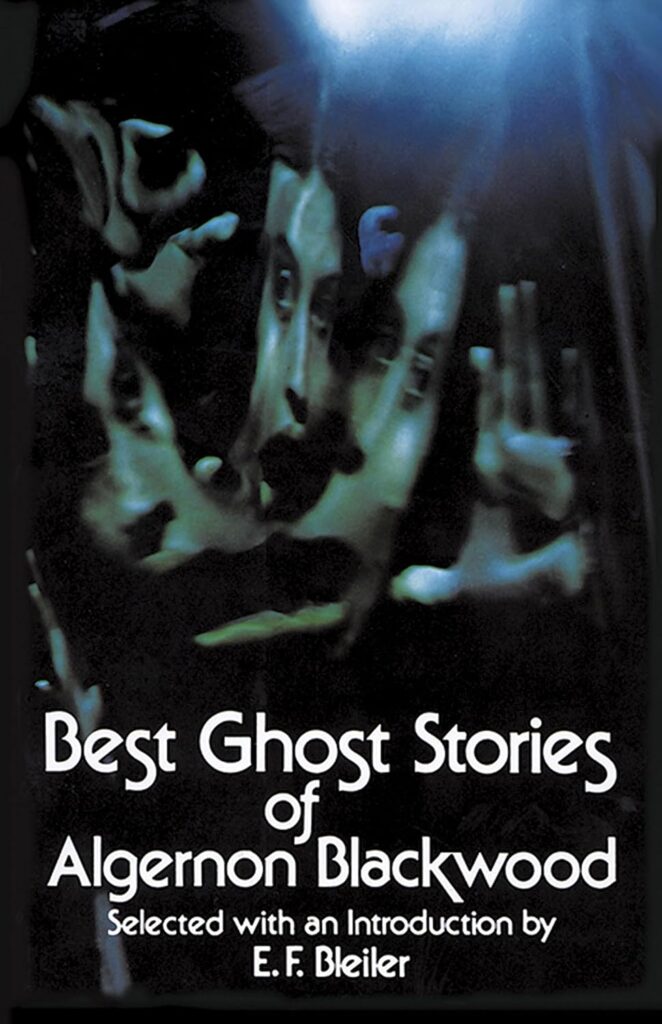
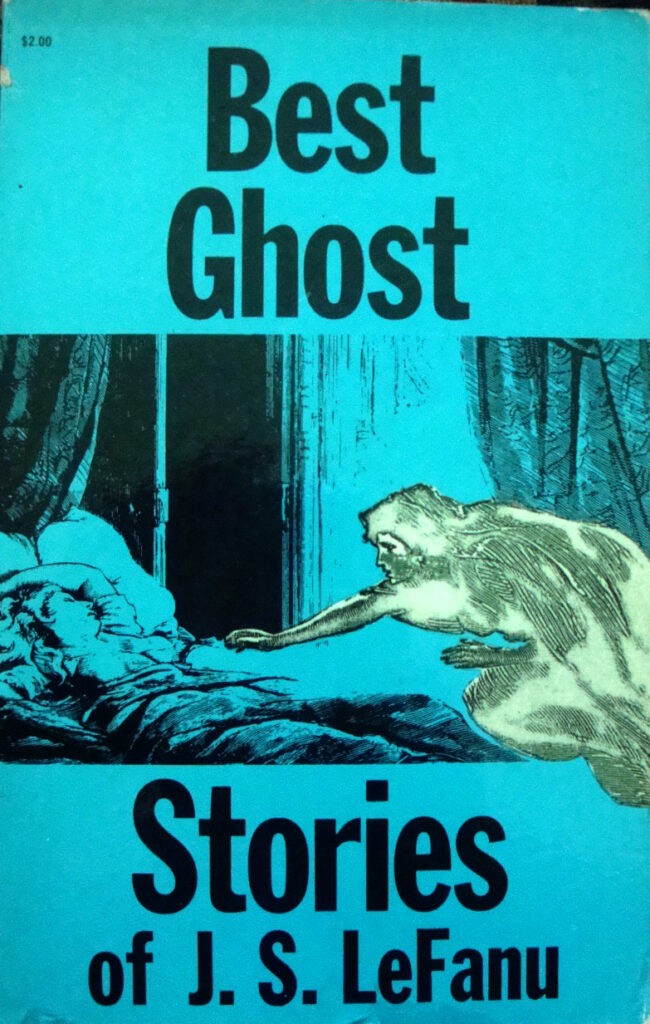
In your introductions to The Best Ghost Stories of Algernon Blackwood and the two collections by J. Sheridan Le Fanu, I get the impression that you’re more enthusiastic about the former than the latter. Given your enthusiasm, why did Dover (or you) decide to do two collections of Le Fanu and only one of Blackwood?
On the first part: Odd, that wasn’t my intention at all. Critically I would rate Le Fanu higher than Blackwood. But again, I wonder if we are thinking in different channels? I was thinking historically. Le Fanu was pretty much a dead end. His Victorian fellows either didn’t understand what he was doing or didn’t care about it. Blackwood’s stories, on the other hand, were widely read and imitated. While he had faults as a writer, he did enlarge the idea-corpus of supernatural fiction greatly.
 Second part. We did several Le Fanu volumes beyond the supernaturals: Uncle Silas, Wilder’s Hand, and a couple of others that I had set up before I left, but were published later.
Availability was a factor. Le Fanu, except for Uncle Silas, was very difficult, if not impossible, to obtain. Blackwood, on the other hand, was easily obtainable on the second-hand market. As for more reprints of Blackwood, I suppose another collection of short stories could have been made, but the novels were all too often turgid and unreadable. We might have done The Human Chord, but the subject matter would be alien to most readers. One would have to know something of the position of acoustics in later nineteenth, early twentieth century occultism.
You’ve said that Varney, the Vampyre is a poorly written book, but because it has historical value, it should be made available. Obviously you can’t state in the introduction that it’s a bad book—in other words, you don’t want to write your own bad publicity. How do you approach writing an introduction and marketing such a book?
We faced this problem several times in different areas. Many of the classics of science that Dover reprinted, like Gilbert’s De magnete, Leeuwenhoek’s Microscopy, Galileo’s Two New Sciences, have no unique scientific value today; what is valuable in them is to be found in any high school textbook. But historically they were very important and invaluable to understanding later developments. Also, it is fascinating to watch the mental operations concerned. It wasn’t necessary to say that they have been absorbed by centuries, nor was it necessary to apologize for them.
In our sales approach, we didn’t try to deceive the potential buyer. We admitted flaws, but pointed out some value beyond the flaws. I did say that Varney was a bad book.
In Ignatius Donnelly’s Atlantis, the Antediluvian World, I said flatly, “Why should Dover reprint a book that cannot be taken seriously, a book that is admittedly wrong in all its major conclusions and can never be rehabilitated,” and then gave reasons, mostly historical, why we reprinted it. The only criticisms we received for reissuing it was from cranks who scolded me for not accepting Atlantis.
The point is that history and aesthetics (or scientific value) do not always go together. What is important in one field may be trivial in the other. I am by bent primarily a historian.
Your sense of humour occasionally sneaks into your largely academic introductions. Was this intentional?
Probably. Sometimes a concept seems so ludicrous when abstracted or restated that poking fun at it is irresistible.
A number of the titles you edited have since gone out of print, Robert W. Chambers and Mrs. J. H. Riddell come immediately to mind; while others like M. R. James and J. Sheridan Le Fanu found more success. Why do you think this is?
This happened after my time at Dover. Chambers undoubtedly went out of print because of too much competition; it was never intended as a permanent publication. Mrs. Riddell should have been kept in print; it could have been sold. Indeed, it has a very brisk second-hand market. M. R. James probably stays in print in many editions for reasons of quality and reputation. James has reached into mass-market culture, which is not true of the others. Le Fanu was only moderately successful in sales; a limited, but appreciative, steady market.
 Which were Dover’s most popular titles in the fantastic fiction line? Which were least popular?
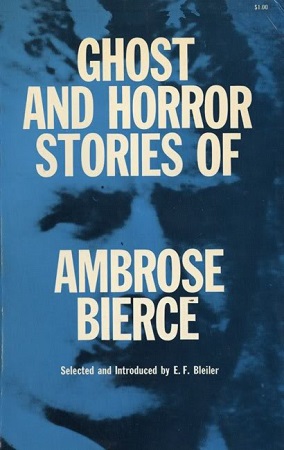
In science-fiction it would easily have been Edwin Abbott’s Flatland. In supernatural fiction, for a short term, it would have been Varney, the Vampyre, which sold out two printings very rapidly, but then was exhausted. In long term, I think Ghost and Horror Stories of Ambrose Bierce, which sold steadily. The least popular books were a one-volume collection of novels by H. Rider Haggard and the two-volume edition of Hector Servadac by Jules Verne.
You mention above that M. R. James is very popular and available in many editions. Given this, why did Dover confine its James reprint to Ghost Stories of an Antiquary and not reprint either a larger selection or the Complete Ghost Stories which would have been manageable as a single volume.
I don’t remember. We probably didn’t think of it. In the background would have been the publishing reality that large collections didn’t sell as well as smaller, individual volumes.
Were there any authors that you wanted to re-publish but, for one reason or another, were unable to? Anything that Cirker strongly objected to?
There were scores of books that I would like to have republished but either couldn’t or never got around to. Varney, the Vampyre, encountered a lot of resistance from Cirker, as I described in one of Searles’s interviews, but it finally went through, with no outside criticism whatever. G.W.M. Reynolds’s Wagner, the Wehrwolf met no resistance.
In other areas there were often books that we disagreed on. Sometimes I could talk him around; sometimes I didn’t try if the book didn’t seem important enough; sometimes I tried but didn’t succeed.
Do you think you’ve written enough essays and introductions (still valid and maybe even unsurpassed) to warrant a volume of Collected Writings of E. F. Bleiler?
No, I don’t think so. Most of them are now somewhat dated; and as I said in the Searles interview, I often didn’t have time to do the job I would liked to have done. Most of them were okay in their day, but are now overtaken. Inevitable in any sort of scholarly work. Also, even if I thought it worthwhile, (a) who would publish it? (b) I don’t hold the rights for most of them.
Of the writers you’ve researched, do you have any personal favourites?
In fiction, M. R. James, Oliver Onions, R. Austin Freeman, Mrs. J. H. Riddell, Gustav Meyrink, E.T.A. Hoffmann, J. S. Le Fanu, H. G. Wells, T. S. Stribling, Freeman Wills Crofts, Robert van Gulik come to mind.
 What horror short story has scared you the most? [Question submitted by Guillermo del Toro]
I can’t think of any story that frightened me. I did feel a sense of horror at W. W. Jacobs’s “The Monkey’s Paw”, but it was the human relationships, not the supernaturalism. The Woman in Black by Susan Hill aroused the same feeling of horror in both the book and the movie.
Have you ever had an uncanny experience? [Question submitted by Scott Hampton]
I can recall one, when I was a boy, perhaps nine or ten years old. I had dozed off on the sofa in the living room. I awakened suddenly and saw standing beside me a luminous column-like manifestation, wavering and sinister. I knew it was a ghost and was scared stiff. But then when I scrambled up, I saw that it was just a light pattern from a fanciful ashtray with a brass figure atop it. A combination of tricky light and myopia. It doesn’t sound like much in retrospect, but it was terrifying when it happened.
What’s the secret to writing a good fantastic yarn? Something lasting?
I don’t know of any secrets; I wish I did. General answer: Do the best you can. Stand up for your work against company editors unless they are really first-rate. This last may seem to be a minor point, but it really isn’t.
The second question: This is really asking me about writing a classic. Here I take an operational point of view: To me, a classic is something that has survived its culture period and is highly regarded for various reasons: technique, insight, ideas, cultural reflection, etc.
This, if you follow it out logically, means that there are no real classics in an ideal sense, simply works that various groups have liked for one reason or another. What was considered a classic in the middle ages, we are likely to regard as dreary nonsense. The other way around: medieval popular music, which was scorned by the dominant culture, is now quite alive for us today.
As you know, critics and philosophers have given different answers to this problem . . . imagination for the fin de siècle people? Ethics, morality, some of the mid-Victorians. Symbolism, depth psychology, verisimilitude, surface psychological accuracy, concordance with the Ideal . . . I don’t know. If anyone really knew, criticism would be fossilized.
As you probably know, there have been “method” systems for writing fiction. Lloyd Warner of the University of Chicago tried to work out basic concepts (perhaps even archetypes) that could be developed. A couple of my friends hoped to write masterpieces according to this method. Alas, alas.
What do you think is fantastic fiction’s greatest weakness as a genre?
I think and think about this, and nothing comes up. Someone who is outside the field might have better insights. I could say bad craftsmanship, but this can be true of any genre and does not really answer the question.
 It is often argued that tales of the ghostly and supernatural work best in the short story. Do you think that this is true? If so, why do you think this is?
Why are there so few really good ghostly/supernatural novels? There is a simple answer that has some truth in it: The major writers in English literature have written very little in this form. A quick survey reveals Charles Dickens, Henry James, Nathaniel Hawthorne (Septimius Felton, which he never finished). Where are the others?
Why did Walter Scott, Edgar Allan Poe, the Brontës, Herman Melville, William Makepeace Thackeray, George Meredith, Thomas Hardy, Mark Twain, George Bernard Shaw, H. G. Wells, et al. avoid the form? Probably different reasons. In part, I would guess, because the commercial climate was against them, although in the earlier period a good novel would have been viable.
The above is a facile answer based on an accident of history, but it isn’t the whole situation. The second part of the question is: Why do lesser authors, who have attempted the form, have difficulties, even though they may write acceptable short stories? The answer, I think, is that there are problems inherent in the long form. The short story fits the classical theory of one point, one story. A ghostly/supernatural novel, in addition to a good supernatural basis, must have a carrier that fits the structure of a novel. One cannot have just a repeated situation where a ghost or vampire chases someone around every chapter or so, as in Varney, the Vampyre.
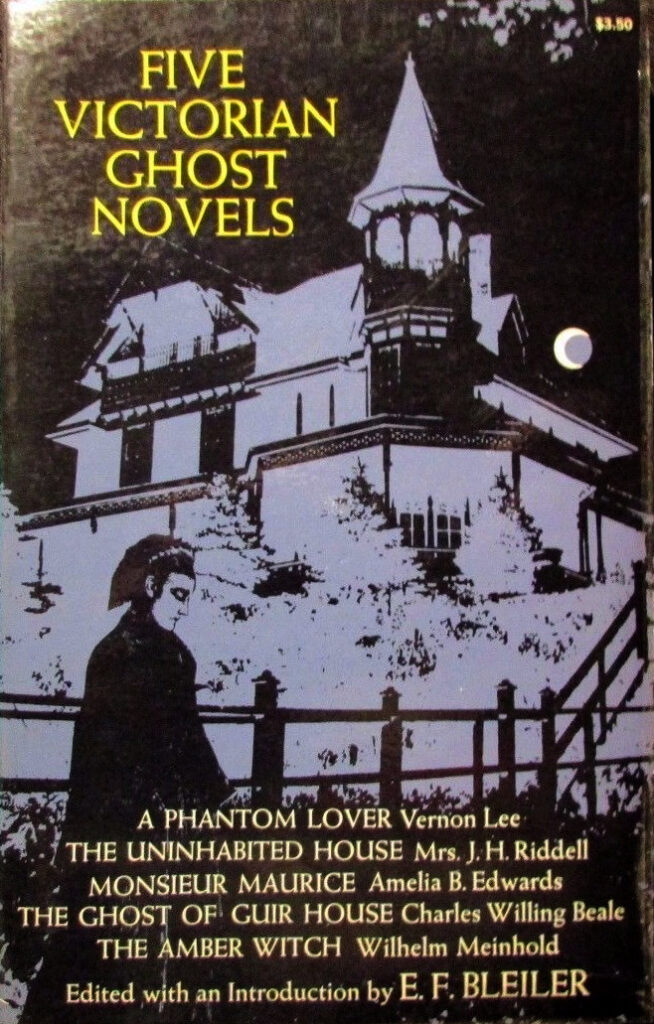
Writers of good ghostly/supernatural novels have used different carriers. Wilhelm Meinhold used a naturalistic fake chronicle. Wilkie Collins, in Armadale, prepared an elaborate crime plot. George MacDonald, in Phantastes, developed symbolic adventures. Charles Williams fought a battle against evil. What I am getting at is that a good supernatural novel has to be something else besides a supernatural novel. (This point, of course, is arguable.)
The above evades the true question. Why do the lesser authors avoid the novel, and if they attempt it, often fail? Possibly they don’t want to invest the time and work in a novel, which will not be saleable. Possibly they lack the skill and the vision.
How is that for a no-answer answer?
Have you ever put to paper and written any of your own fantastic fiction? Is there something that would be republished if someone re-discovered it one hundred years from now?
I haven’t written much fiction. I am not a fiction writer. The art of writing fiction is the ability to say nothing (entertainingly) over many pages. My forté is just the opposite: condensing many pages of nothing into a clear, smaller quantity of nothing.
In the middle 1970s I did write two short novels. One, a fantasy based on Old Norse mythology; the other a Chinese detective story set in the Tang period, in the mode of the traditional Chinese detective story and the work of Robert van Gulik. (At that time I was up on Sinology.) The fantasy got through the lower echelons of DAW, but Wollheim didn’t like it. The Chinese story was rejected (through an agent) as having too much Sinology—which was the point of the story. So, I threw them both into the trunk.
 If anyone comes upon them one hundred years from now—assuming, unlikely, that books still exist—I doubt very much that he/she would find these manuscripts interesting. I have no illusions about their being unappreciated masterworks.
If you could ask your favourite author of fantastic fiction one question, what would it be?
Since I don’t have a favorite author, let me offer several question situations, although I suspect that some of the authors might be unwilling to answer. Charles Dickens: What is really going on in The Mystery of Edwin Drood, fully? James Branch Cabell: Did you really murder your mother’s lover? Frank Baker: How symbolically are your novels to be taken? John Taine/Eric Temple Bell: What happened in your father’s death and why did you hide your identity all your life? Lewis Carroll: Am I right in reading Alice’s second trip as a voyage through the zodiac? A. Merritt: As a young newspaper reporter, you stumbled onto something so hot that your employers spirited you away to Yucatán for safety. What was it? J. S. Le Fanu: Did you really write “The Mysterious Lodger”? Algernon Blackwood: Did you ever find what you were looking for in your spiritual search? Ambrose Bierce’s ghost: What happened to you?
Are there any of your assessments, either of writers or of individual works, that you’d like to go back and change, having reconsidered over the years?
I assume you mean adult assessments, not childhood enthusiasms. Probably lots, but two authors come to mind that I didn’t appreciate fully on first reading—James Stephens and Thomas Hardy. An author whom I once liked, but the more I read, the less I like his work, Baron Corvo (Frederick Rolfe).
The success of today’s small, specialty publishers, beginning with perhaps Lin Carter’s Ballantine line, probably derives from your early work in the field. If it hadn’t been for the Dover books, do you think that there would be as much interest today?
The first statement is unanswerable quantitatively, but I don’t think that Dover’s work in fantastic fiction did that much to stimulate other publishing lines. Some of the university press series that are similar, like Nebraska’s Bison, may have watched Dover, but you would have to ask the right people at Bison to find out.
Nor do I think that Dover’s actions had much influence on the present small presses. They are a natural development that occurs every generation or so: A fan or group of fans wants to print something they like and also make a little money on it. This is what happened before World War II in a small way, and in a much larger way in the fantasy publishers after World War II: Prime, Gnome, Shasta, Arkham (though originating earlier), Fantasy Press, etc. The present development: Tartarus, Midnight House, Ash-Tree Press, Sarob, Ghost Story Press, etc., is much the same sort of thing.
On a larger commercial level Donald Wollheim with Ace and DAW books operated similarly in mass-market paperbacks. While there were other isolated publications, Wollheim probably was most responsible for the beginning of mass-market fantastic reprints. He simply printed fantasy material and sold it like an ordinary mass-market book. I would guess that Ballantine followed his lead: Reprinted material that he knew, then moved into new material. There would have been no connection with Dover: different type of fantastic fiction, different production, different marketing.
I think that Dover’s contribution was re-awakening interest in Victorian and fin de siècle authors, some of whom have survived, some of whom have not.
 You’ve done more than just edit fantastic fiction anthologies—you’ve written language books and overseen the daily management of Dover Publications. Despite this, are most people familiar with you and interested in your work as a fantastic fiction editor?
I don’t think people are familiar with me or interested in my work at all any more. Thirty-five years ago, when the Dover mailings reached most of the intellectual community, my name would probably have been fairly familiar, probably as a general writer, but not now. That generation is gone. I think that the only persons who recognize or use my name are second-hand book dealers who make reference to the bibliographic works as sales points. Or possibly an occasional scholar who looks something up in the three big books.
After a career’s worth of reading, would you care to give a short list of recommendations? A sort of updating of your Arkham Sampler selections?
In supernatural fiction: for the Gothics and early material, Charles Maturin, Melmoth the Wanderer; for the Romantics, James Hogg, Confessions of a Justified Sinner and E.T.A. Hoffmann, various; for the Victorians, J. S. Le Fanu and Mrs. J. H. Riddell; for the late Victorians, Arthur Machen, various; for the Edwardian/Georgians, M. R. James, Oliver Onions, Gustav Meyrink, Walter de la Mare, David Lindsay, E. R. Eddison. The moderns? Ray Bradbury. Present: Rhys Hughes, Howard Waldrop, but I probably shouldn’t comment on contemporaries, since I know so very little.
A very conventional list, as you see. If you asked me for a hundred names, it would probably be a more personal list.
In the Harvard College Fiftieth Anniversary Class Report, you mention that you were given a knighthood by the “king” of a small island called Redonda. Would you care to elaborate on this
Since your readers may not know the story of Redonda, let me give it briefly. In the nineteenth century many of the smaller islands in the West Indies had not formally been annexed by the great powers. One of these was Redonda, a tiny, uninhabited crag in the Leeward Islands that was occasionally visited by guano miners. In 1880 one Matthew Dowdy Shiel, owner of a local trading ship, recognizing this vacuum, proclaimed ownership of Redonda and in a small religious ceremony crowned his son, the later author Matthew Phipps Shiel, king of the island. When the British annexed the island decades later, M. P. Shiel protested, but without success. That is the story. Some doubt it, but it seems to be true, though how serious Matthew Dowdy Shiell was is anyone’s guess. M. P. Shiel mentioned Redonda occasionally, but eventually seemed to lose interest in it.
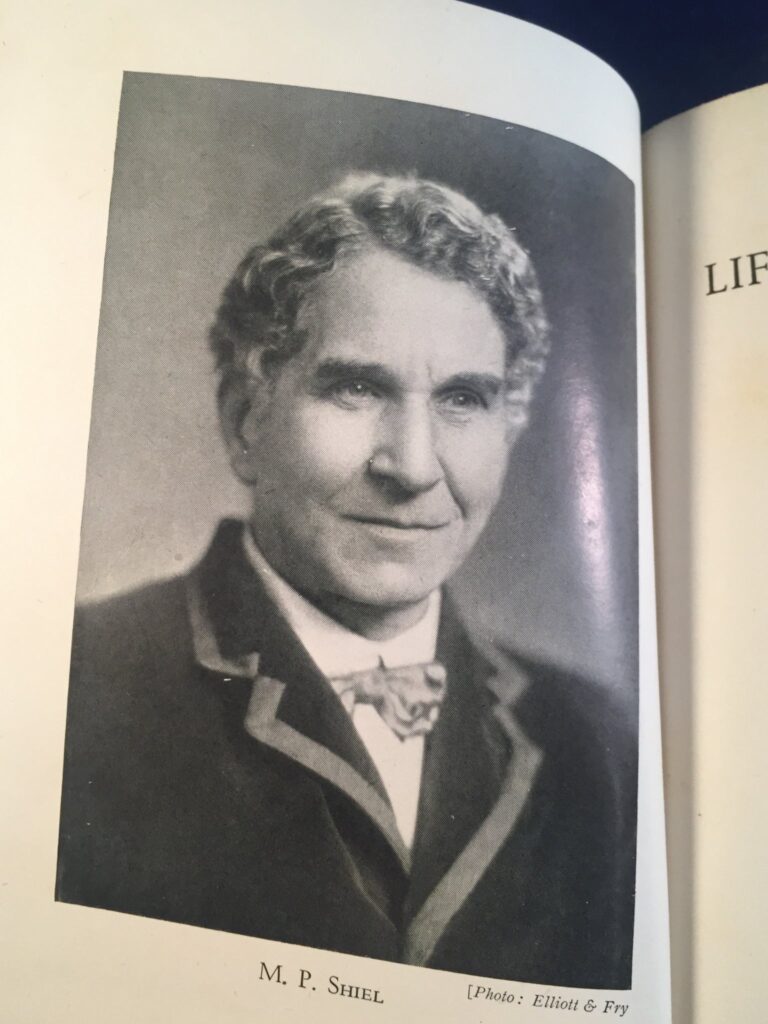 In the 1930s and 1940s, John Gawsworth, a minor poet who was cultivating Arthur Machen, Shiel, and others, heard the story. Probably at his persuasion, Shiel bequeathed the kingship to Gawsworth. At first, as King Juan I, Gawsworth seems to have had the idea of a serious literary fellowship including people who admired Shiel’s work. He publicized the situation, awarding various titles of nobility to such people as Gollancz the publisher, Rebecca West, Arthur Machen, Dylan Thomas, and others. Gawsworth, however, was a severe alcoholic, and in his later unscrupulous years would sell peerages or even the kingship to bar acquaintances for a drink. Redonda got quite a bit of publicity a generation ago.
How do I fit into Redonda? A. Reynolds Morse, a wealthy Ohio industrialist, became fascinated with Shiel’s work (along with Salvador Dali’s paintings) and prepared a bibliography of Shiel. I reviewed it rather severely, which review Gawsworth saw, and assuming that I was an authority on Shiel awarded me a knighthood in Redonda. At this time Gawsworth and Redonda were still reputable.
I had left Chicago on a Fulbright to the Netherlands and knew nothing of the knighthood. Book hunting in London, I came upon the shop of Andrew Block, a known bibliographer of the English novel. I asked him if he had any books by Shiel, whereupon swelling with pride he told me that he was an honorary member of Redonda. He pulled out a parchment to show me, and lo, on the parchment, there was my name above his! He was very annoyed.
I don’t take Redonda seriously, but it is amusing.
In a 1995 interview with Searles, you state that you look back on your 75+ years with dismay—can you elaborate on what you meant by this? What failings do you see, and how could you have corrected them?
As I remember it, the comment was really focused on the years in Chicago, not my total life.
But, I think that many people who reach their eighties are more or less dissatisfied with the way their life worked out. Wrong decisions, bad luck, etc.
Reliving my life: I sometimes think that if I had my life to relive, I would go in one of two directions. Either go into the physical sciences (where the action is) and buckle down, or sell my soul to the Devil and go into corporate law, with the hope that after a few years of devious and dubious practice I would have made enough money to retire and do what I wanted. All this is just talk, of course. I’m really a misplaced academic. My wife says that I am an academic manqué; I think of myself as an academic augmenté.
 You’ve made so many contributions to letters over the years. What are some of your proudest achievements? How would you like to be remembered?
Let me change this into two questions: First, what do you think you’ve done that will be remembered? Second, what have you done that you would like to be remembered by?
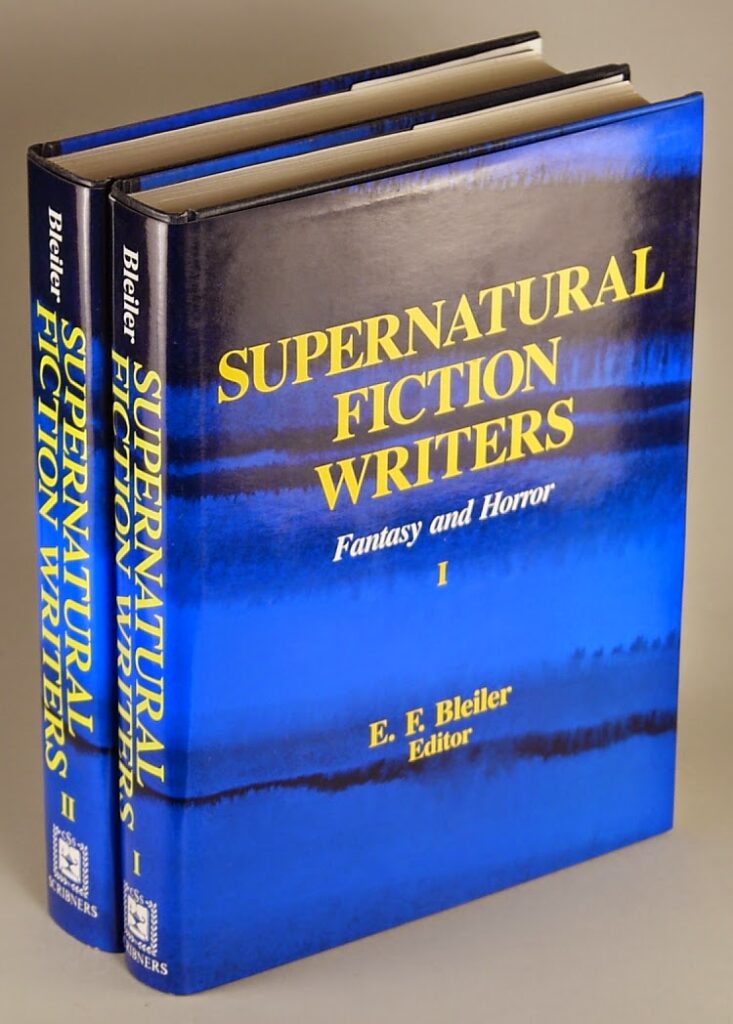
Time will wipe out the various anthologies, introductions, and the early bibliographic work. Some of the papers in the collected volumes by Scribner are insightful, but they will be or have been superseded.
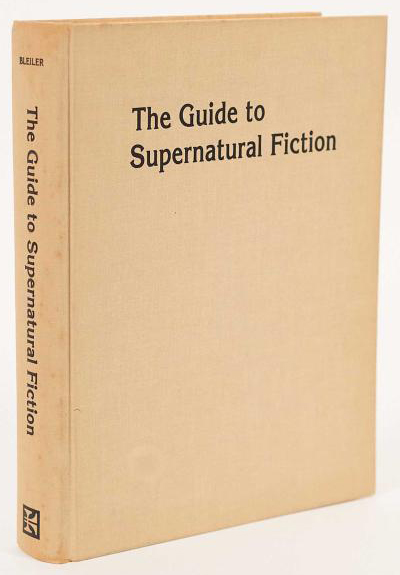
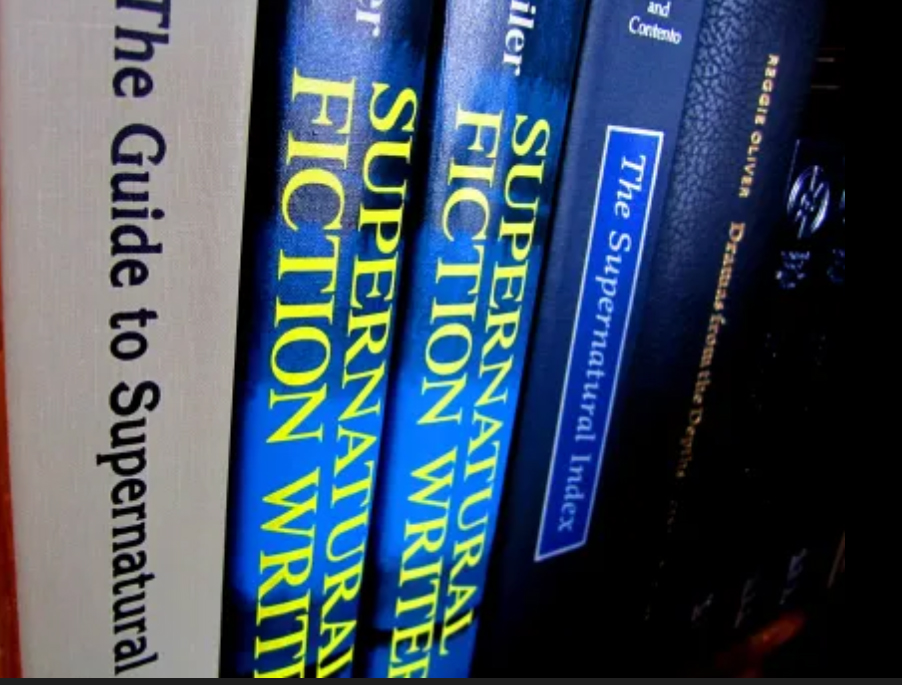
I think that the three big books, The Guide to Supernatural Fiction, Science-Fiction, The Early Years, and Science-Fiction, The Gernsback Years will survive, particularly the last two. (The first, Supernatural, has too many errors.) They have a lot of data that aren’t available elsewhere and a theoretical orientation that is strong. No one is going to be crazy enough to recapitulate the same reading. They will live, undoubtedly with corrective footnotes and addenda.
But these are really just compilations. I prefer three works that are more personal and amounted to break-throughs, not just restatements of the work of others: Northwest Argentine Archeology, Prophecies and Enigmas of Nostradamus (rational, not prophetic), and Alice and the Snark. But I won’t be remembered by them. If I had entered the academic world, as I wanted to, there might have been more.
How long did it take you to put The Guide to Supernatural Fiction together?
In one sense a lifetime of reading and collecting. In a stricter sense, perhaps five or six years. I don’t remember exact dates, but I started serious work on it just before I left Dover in 1977 and I finished it either in 1982 or early 1983.
What influence, if any, did Lovecraft’s Supernatural Horror in Literature have on The Guide to Supernatural Fiction?
Not much. I had absorbed what was in it, together with the contents of other older surveys, and gone beyond them long before.
Lovecraft based his work on a different aesthetic foundation than I did mine. He found fear the primary source. I was concerned with an intellectual matter, the contranatural, the deliberate contravening of a logical-positive universe. This, I felt, unified the field.
I didn’t always agree with Lovecraft on critical matters and sometimes said so, as in the descriptions of H. B. Drake’s The Shady Thing and Leonard Cline’s The Dark Chamber (in Science Fiction: The Early Years).
In terms of writing, I have the impression that Lovecraft, since the essay was in one sense a propaganda piece, tried to make individual items sound enticing. I felt no need to follow this approach; it wasn’t necessary to hard-sell supernatural fiction. Personality did enter the book though; I confess that sometimes (in all three big books) I couldn’t resist poking fun at bad fiction.
At the time you were compiling this volume, certain rare British books were not available to you. This, coupled with the 1960 cut-off date of your study, has made many people wish for a revised version or a follow-up volume. Is such a volume or set of volumes planned?
A couple of years ago I thought of doing a revised version of the old Guide to Supernatural Fiction and started work on it. I wanted to correct errors, give more detailed summaries in some cases, and improve the writing. Also incorporate new material on authors. But the project turned out to be impossible. I would want to reread everything, and I just don’t have the texts. The wonderful New York City libraries are no longer accessible, nor the Library of Congress. I don’t travel any more. Also, I’m not Bill Gates. The way prices have soared, I can’t afford to buy scores, perhaps hundreds of rare books—even if I could find them.
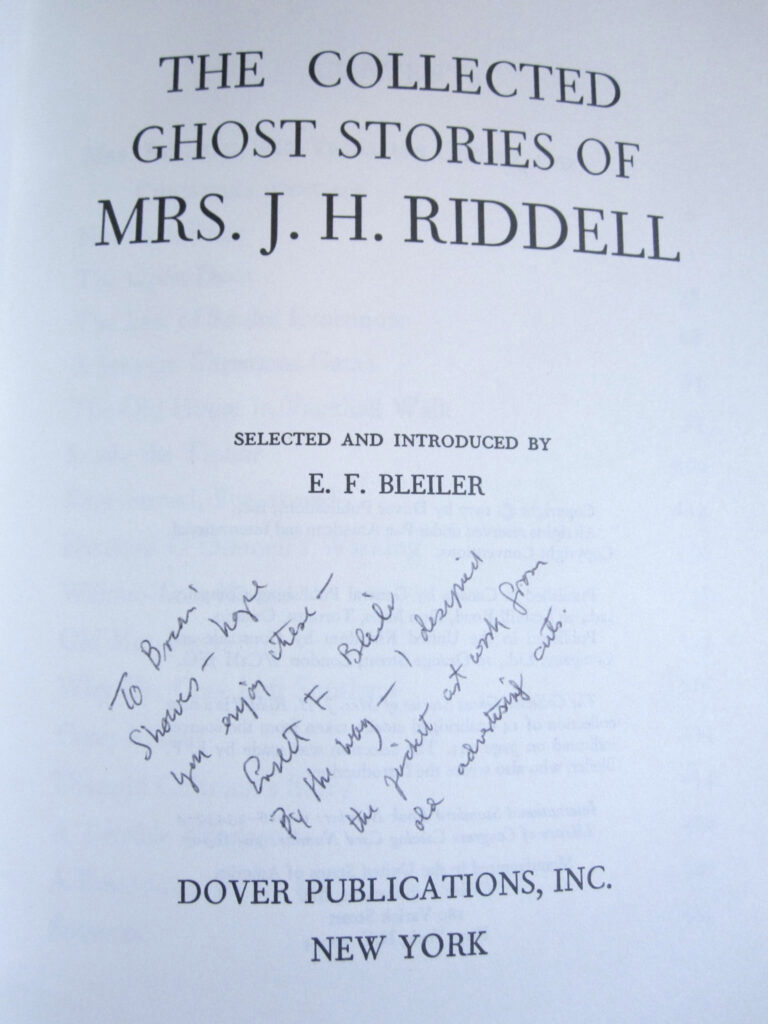 There was talk some time ago about reissuing the book, and I was considering it. But now I’m unwilling. There is too much wrong with it, and I would not want to reprint it.
On a second Guide to Supernatural Fiction: Yes, the small-press reprints have offered very interesting new material for me and I have been trying to gather texts, but this is slow, and I don’t have anywhere nearly enough for publication. Perhaps I never will.
I should add that I don’t have the resources to go beyond 1960, nor would I want to. In the 1960s and 1970s the market was flooded with low-grade supernatural paperbacks, which was one reason that I stopped at 1960. A 1960 limitation would weigh heavily against publication.
Have you changed your mind about any of the works you either dismissed or damned with faint praise in 1983?
I think I’ve been fairly consistent on critical evaluations. (Of course, I would have to reread something to see where I stand now.) I don’t know whether this is good or bad. Petrification versus relativism. While I don’t recall any total changes, I like to think that I’ve become more perceptive
I did reread all of Algernon Blackwood a while ago and found that I agreed with what I had said twenty years ago.
Thank you for your time, Mr. Bleiler. Do you have any closing words for our readers?
So, there are the lucubrations of 2005. I must thank Brian J. Showers and his associates for dredging up an aged, forgotten coelacanth and encouraging him to flap around the deck and make grunting noises. I hope they have been amusing.



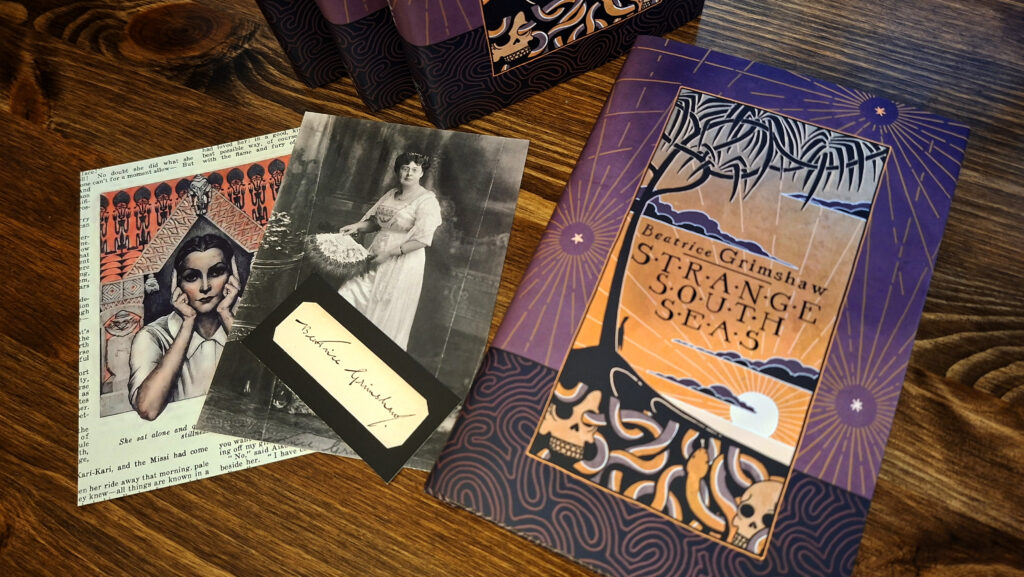
 Conducted by John Kenny © January 2026
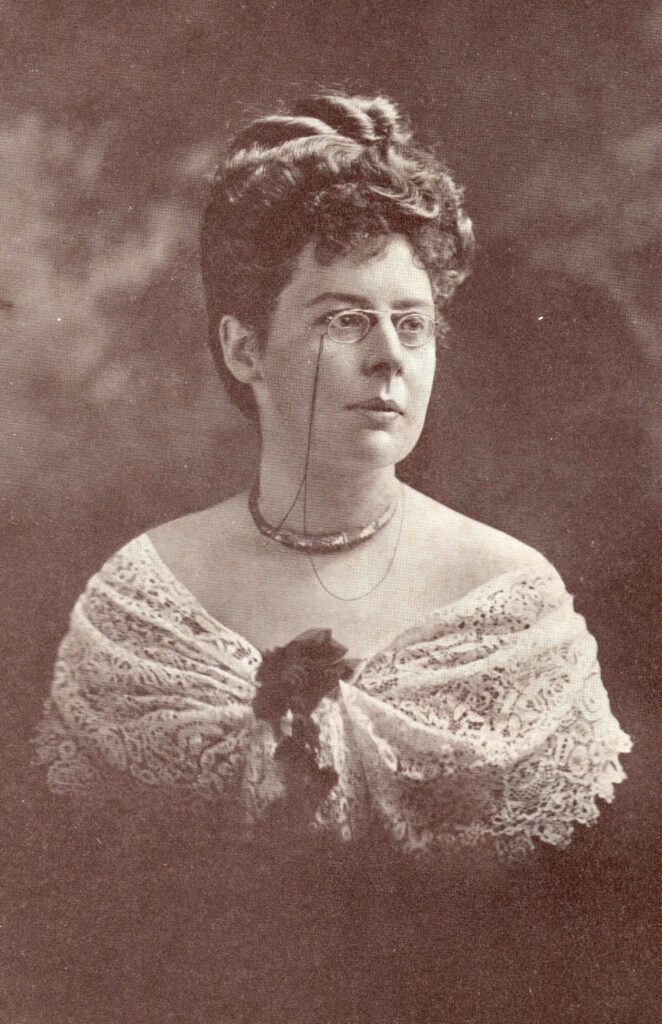
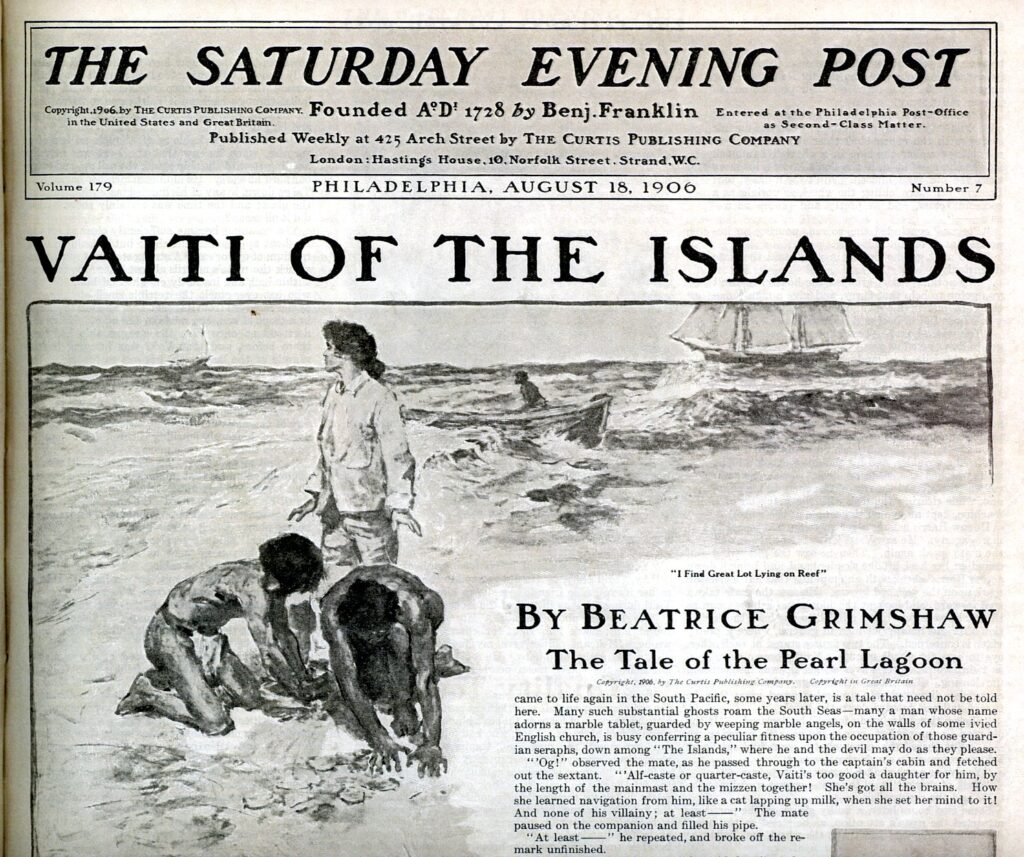 JK: I wonder if there was an element of wish fulfilment with regard to becoming a “native queen”. What do you think it was that fascinated Grimshaw about the indigenous islanders of the South Sea?
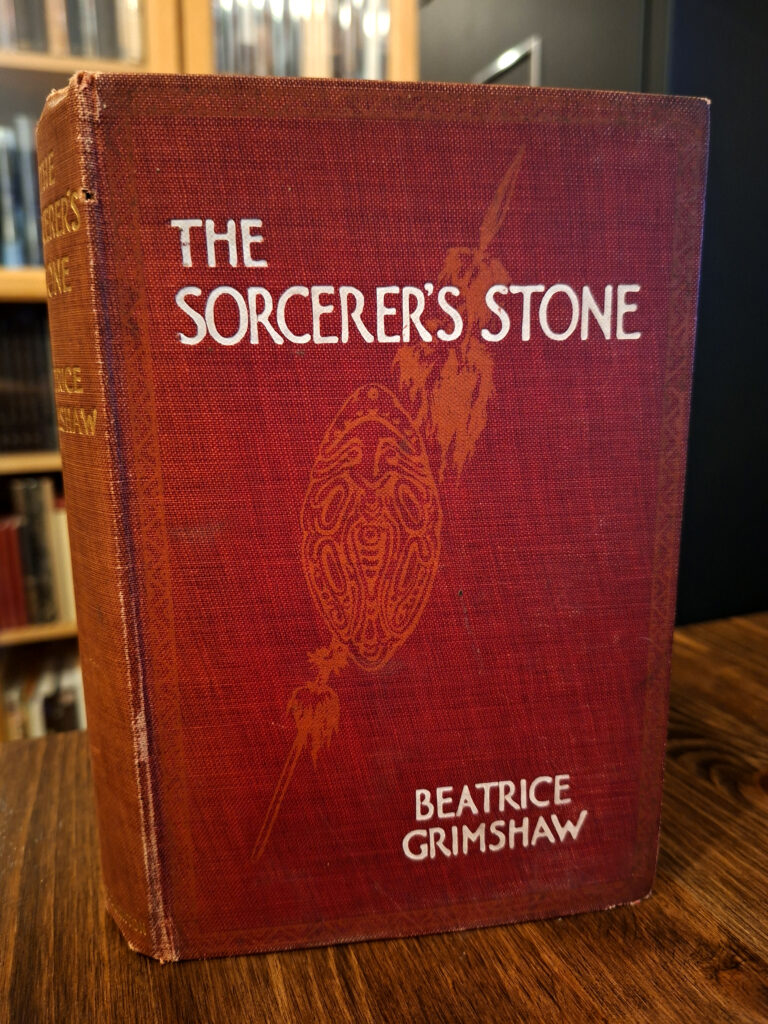 MA: Grimshaw never said much about her own reading habits, leastways not in the books I have. I do have her “memoirs”, such as they are, which are really about her travels, but for the moment I can’t lay my hands on it. But in general I’d say it’s pretty certain she would have read something by Haggard, because he was someone almost everyone read at the time. I know she was well read but I don’t know how much that influenced her writing. I do know she was influenced by the Australian writer Louis Becke (1855-1913), who was well steeped in the magic of the Pacific.
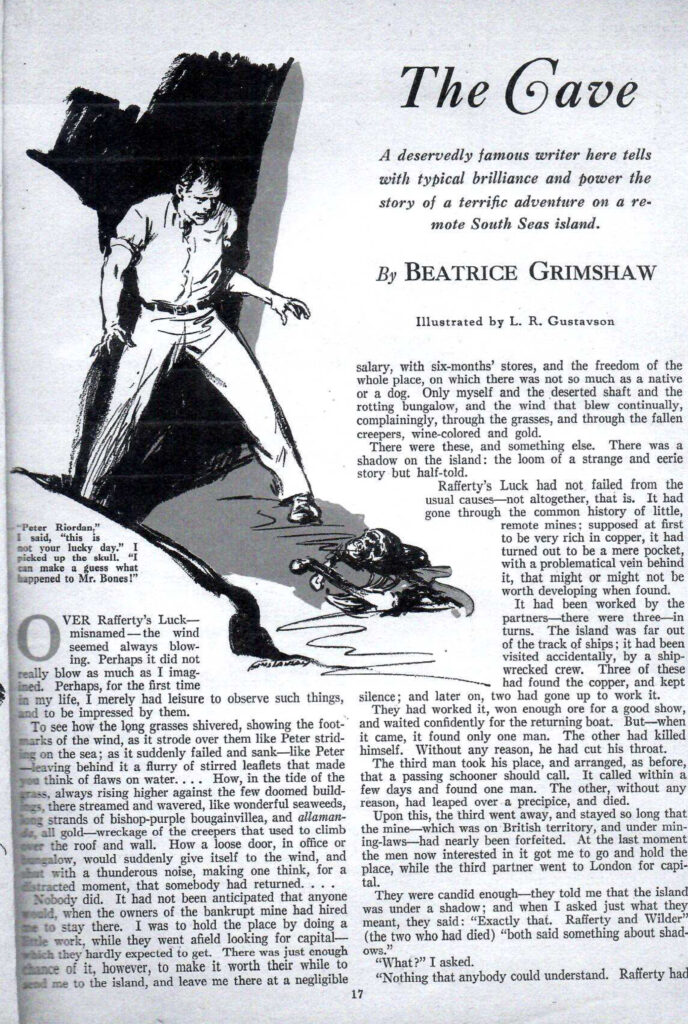 JK: The respect she has for the indigenous islanders is there for the islands themselves and that comes through in “The Cave”, which does not look kindly on prospectors syphoning off their resources. It’s one of the more genuinely chilling pieces in this collection.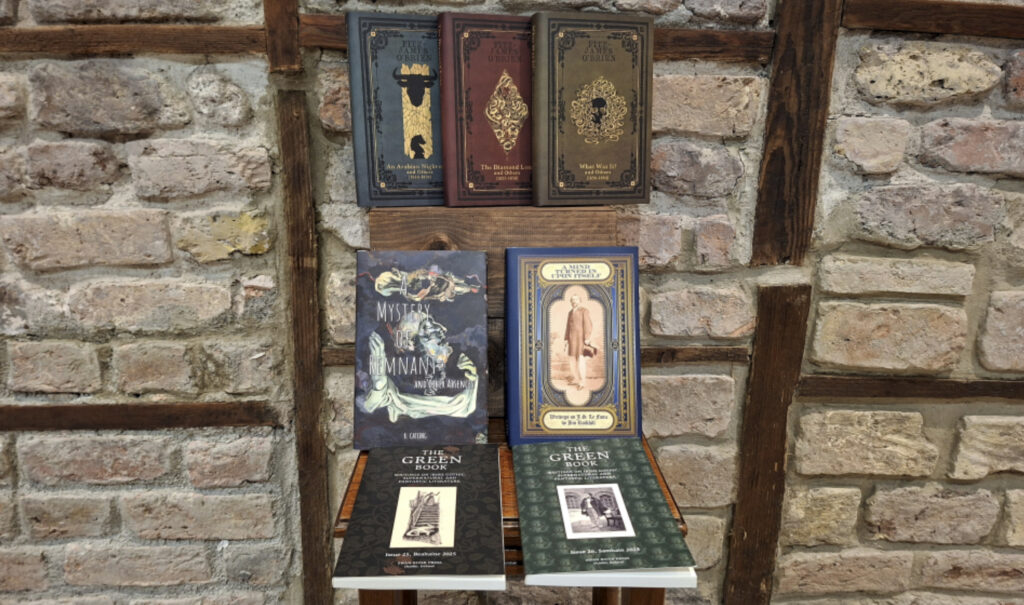
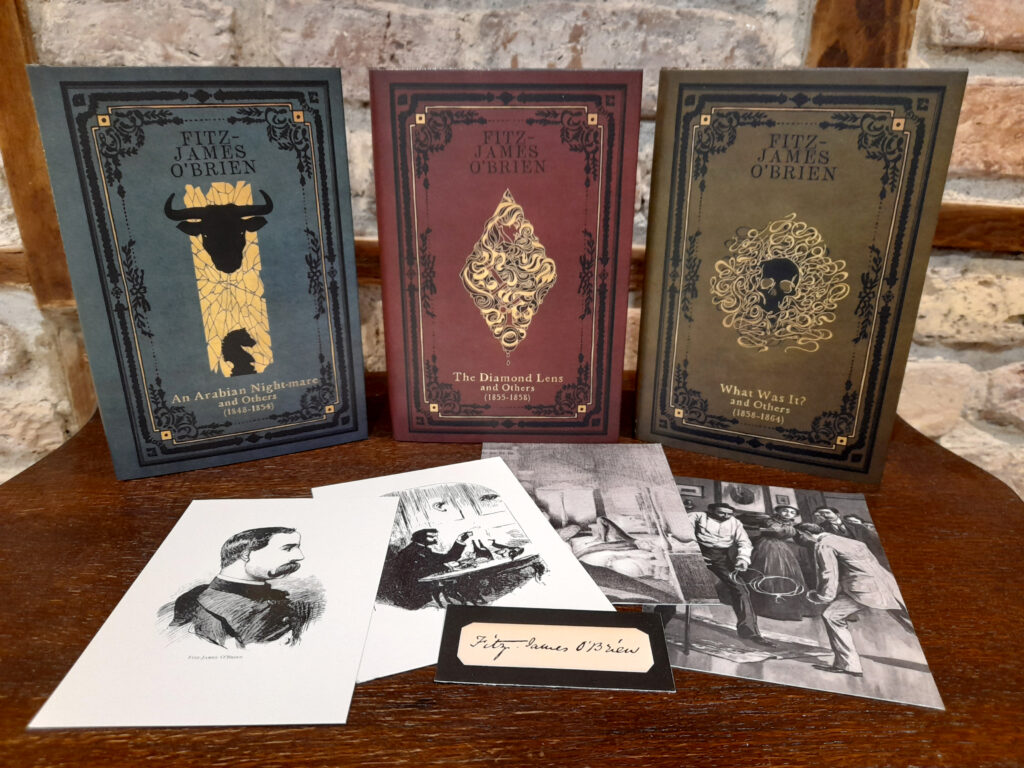 Our first publication this year was an ambitious three-volume
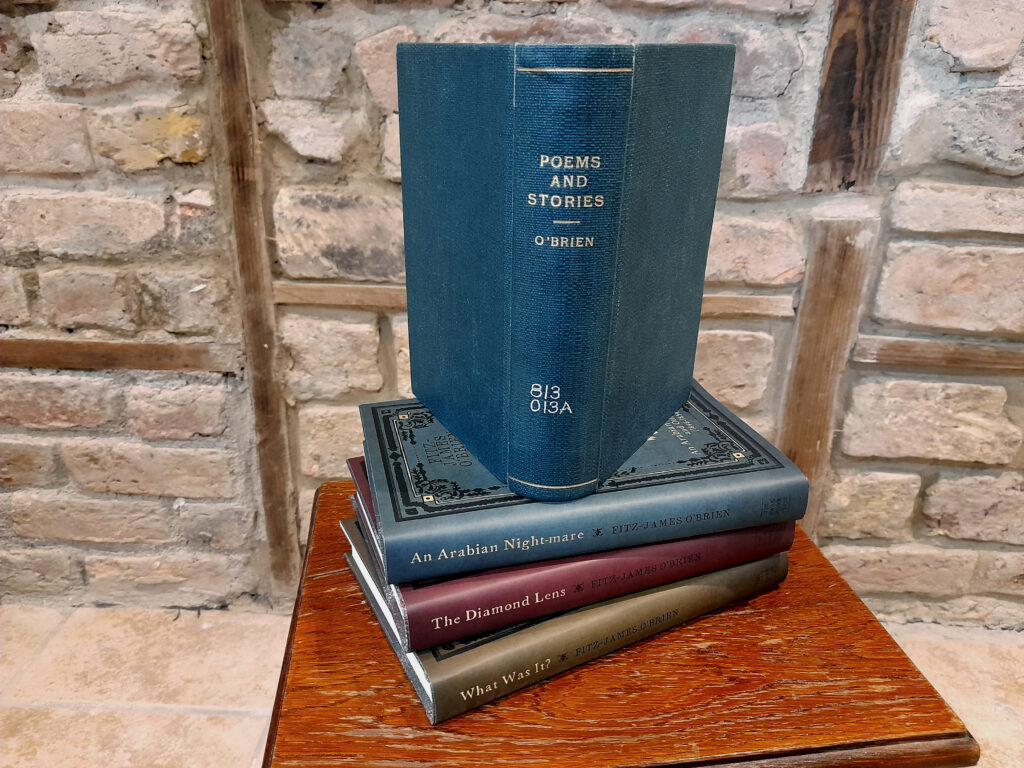
  What makes this such an interesting project is the way in which you can track O’Brien’s development as a writer, one whose stories would become touchstones for later genre scribes. Each of the three volumes contains an introduction by Irish that guides us through O’Brien’s life, tragically cut short in the American Civil War; and so, in reading the set you get a full overview of O’Brien’s life and writing. If you want to know more, I wrote a short article “
 Our next release this year was as much a collaborative memorial as it is a collection:
  The collaborative aspect of this book is perhaps as important as the book itself: Victor Rees, who introduces the volume, is working on a PhD about Catling’s literature and performance art; Iain Sinclair, who provided photographs and an afterword, and Alan Moore, who supplied short prose pieces to accompany those photos, were long-time friends of Catling; while Eleanor Crook, who created the jacket art for the book, was one of Catling’s former students; and finally artist Jack Catling, who penned the foreword, is Brian’s son. Through them, Catling’s imagination continues to seep, saturate, and inspire.
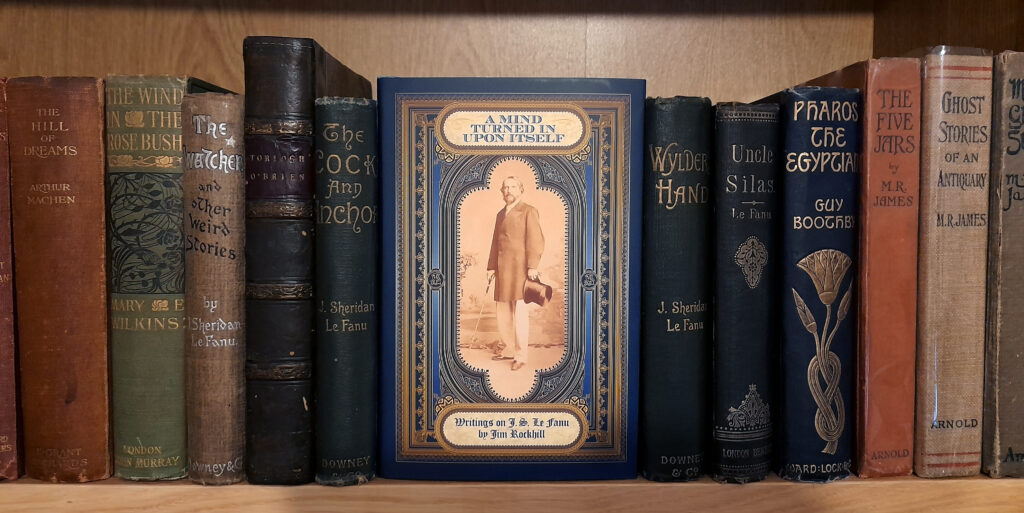 And finally, we have Jim Rockhill’s
 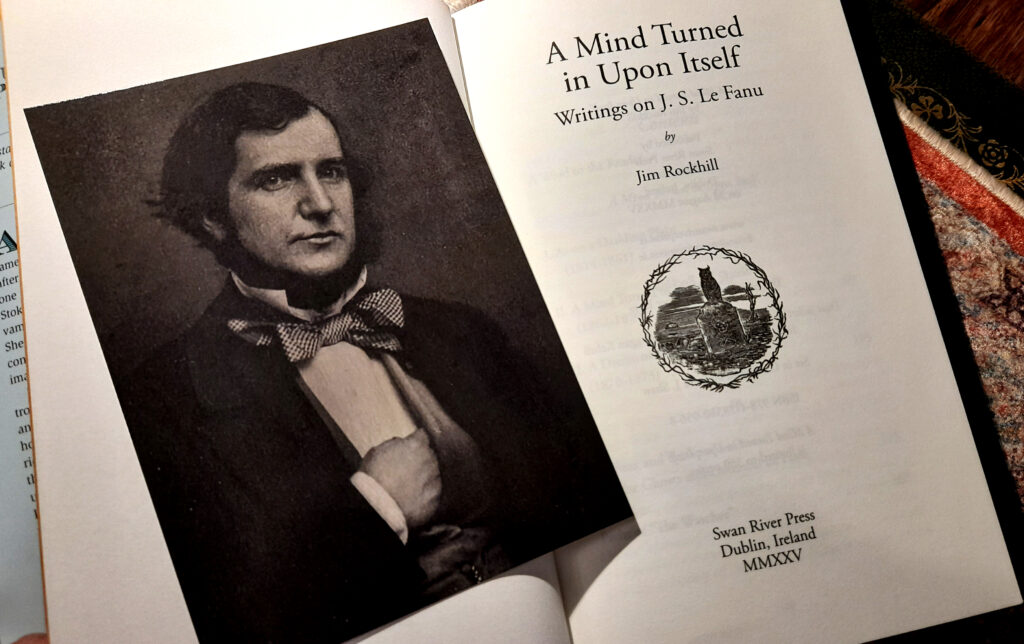 You’re Reading gave the book an incredibly kind notice: “In A Mind Turned in Upon Itself, Jim Rockhill abundantly demonstrates his love and appreciation for J. S. Le Fanu’s fiction and presents such an enthusiastic examination of the work as to inspire people to seek out whatever of that work they have not so far read. Highly recommended.”
 Which brings us to this year’s issues of The Green Book: Writing on Irish Gothic, Supernatural and Fantastic Fiction. And as luck may have it, both issues this year are devoted to Le Fanu.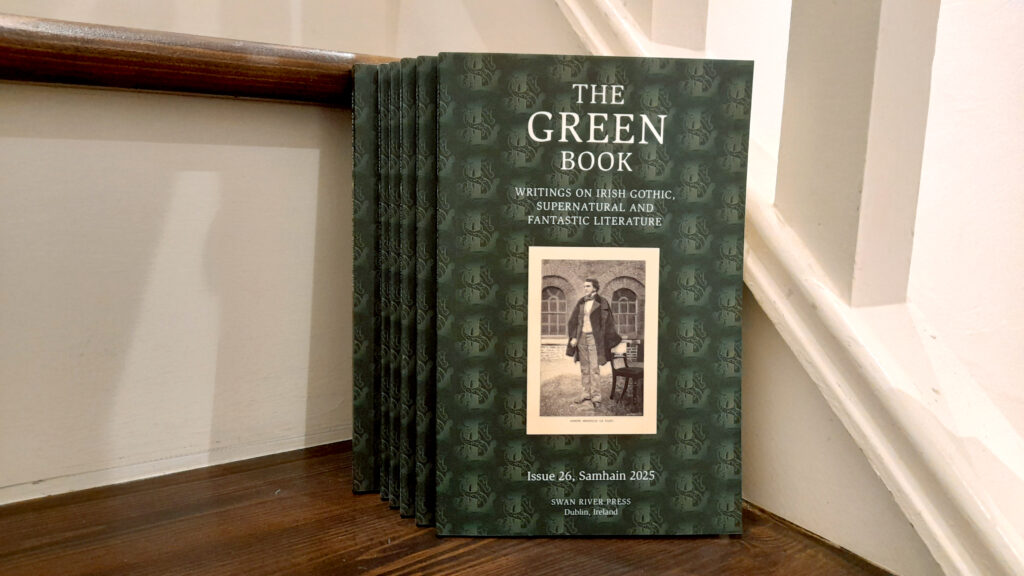
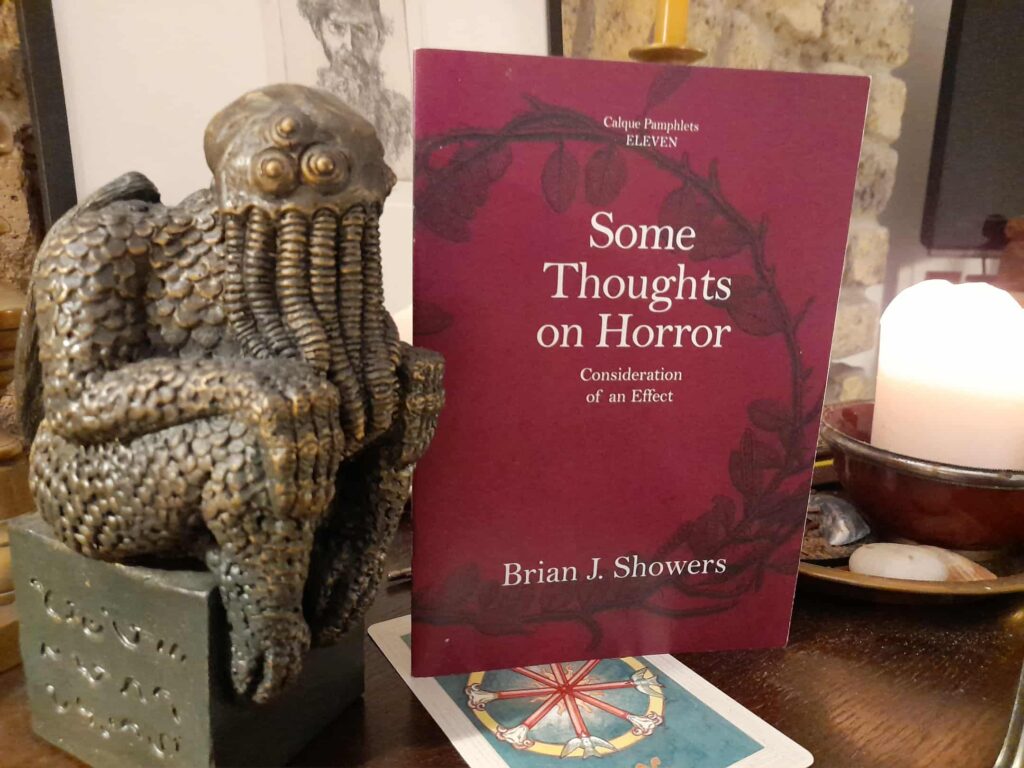 Although not a Swan River Press publication, I’d like to draw your attention to a short monograph I wrote for our friends at Calque Press entitled
  And just to draw everyone’s attention to it, you can use the filters on our Titles page to see which books are on the
  Editor’s Note #26
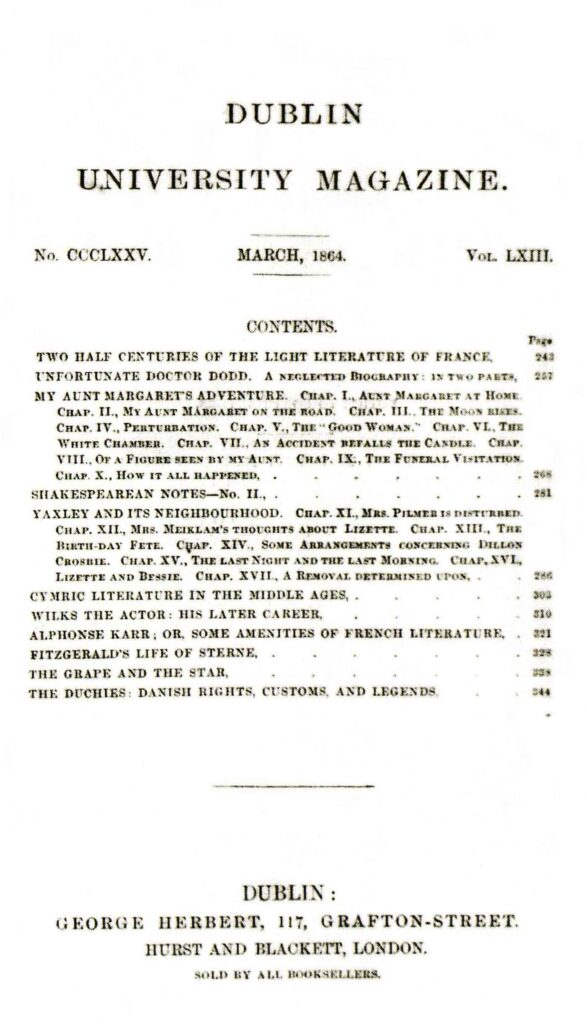 The second item in this issue is a real curiosity: the sole known piece of published writing by Le Fanu’s sister Catherine, a story entitled “The Botheration of Billy Cormack” (November 1840). Catherine was in her late twenties when this story was published in the Dublin University Magazine, where her brother’s “Purcell Papers” were by then already familiar to the magazine’s readers. Perhaps Catherine’s story was a first attempt at a burgeoning literary career? Did Le Fanu have a hand in guiding the story to publication? This career was tragically cut off when Catherline died in March 1841, less than half a year after the story was published. The tale is set in the west of Ireland—where Joseph, Catherine, and their brother William spent their adolescence—and it draws upon that region, evoking local colour and custom. To my knowledge, this is the first time the story has been reprinted.
 A Talk with Jim Rockhill
 JK: I’m assuming at least some of the other stories in that anthology were written by contemporaries of Le Fanu’s. What qualities do you think marked him out from the others writing at that time?
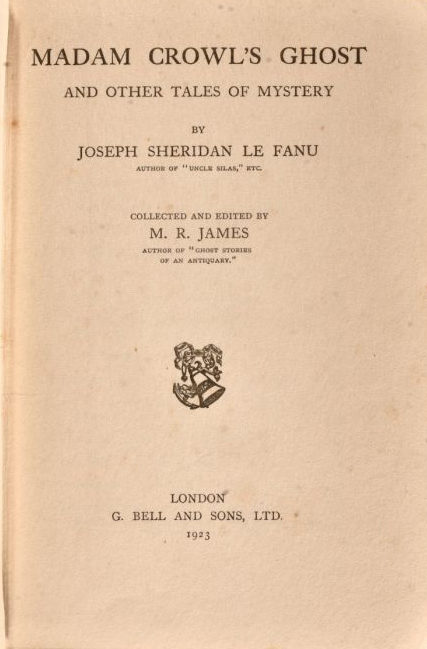 His creative use of folklore as a foundational, but protean element, rather than a merely cosmetic one, is another point that separates him from most of his contemporaries, anticipating Arthur Machen and inspiring M. R. James.
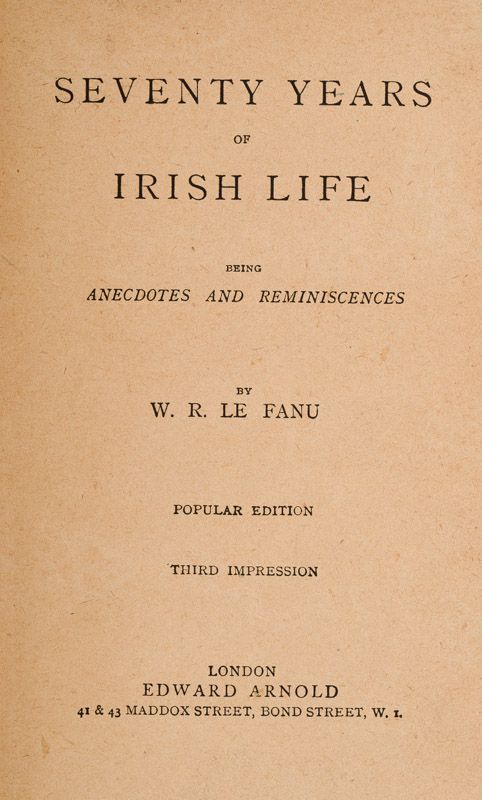
 “I knew the brothers Joseph and William Le Fanu when they were youths at Castle Connell, on the Shannon . . . They were my guides throughout the beautiful district around Castle Connell, and I found them full of anecdote and antiquarian lore, with thorough knowledge of Irish peculiarities. They aided us largely in the preparation of our book, Ireland: Its Scenery and Character.”
 JK: I note that Le Fanu rewrote several short stories, and even a novel or two, in the latter years of his life. Do you think this was because of financial necessity, the need to keep a regular supply of work hitting the market, or was he dissatisfied with the original versions?
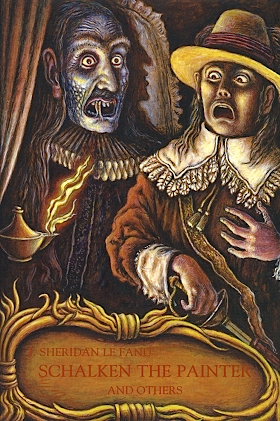 This story, as I have mentioned, was current among the dealers in such lore; but the principal facts are so dissimilar in all but the name of the principal person mentioned . . . and the fact that his death was accompanied with circumstances of extraordinary mystery, that the two narratives are totally irreconcilable, (even allowing the utmost for the exaggerating influence of tradition), except by supposing report to have combined and blended together the fabulous histories of several distinct heroes . . .
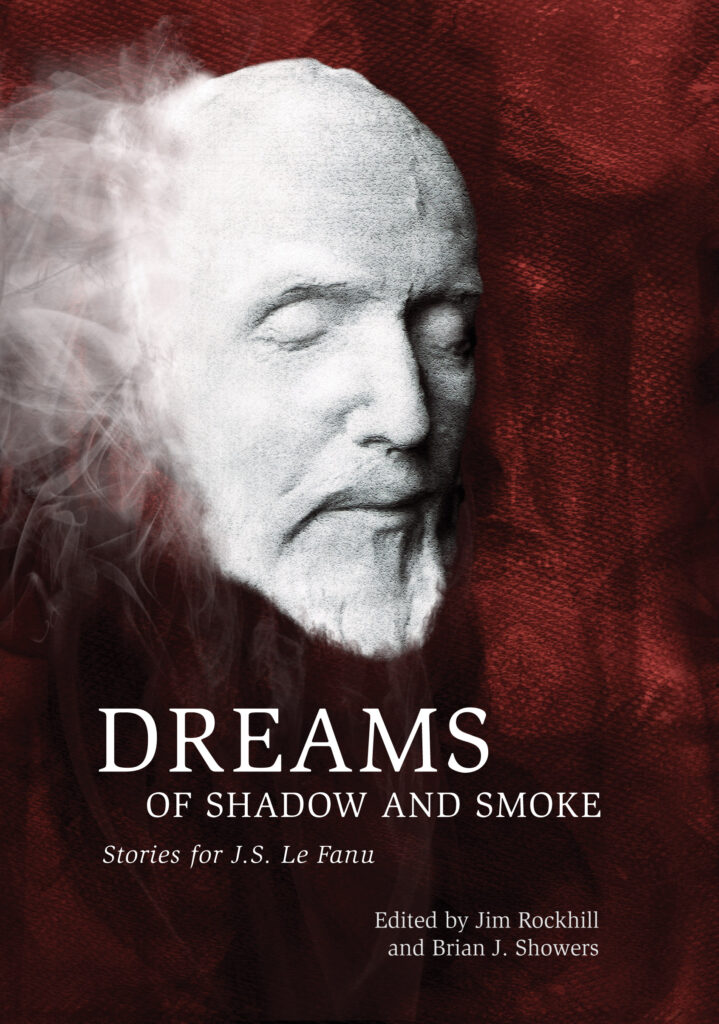 I think Le Fanu might have been proud of that, had he written it himself; however, it came into doubt when William Mc Cormack quoted a letter written by Le Fanu’s younger daughter, Emma, only two days after the event, in which she states:
 JR: I am glad that you asked for my favourites, because it is impossible for me to choose only one. “Green Tea” was the first story of his I read, and the impact, as I mentioned earlier, was tremendous. It shook the ground beneath this lapsed Catholic’s feet. I also love both “Ultor de Lacy” and “The Haunted Baronet” for the elaborateness of their supernatural phenomena and the beautiful description of settings and events behind the horror in these and “The Child that Went with the Fairies”. “Carmilla” has been adapted to death, and would seem to be overly familiar, but the story and Carmilla herself are much richer than most of her adaptaters would suggest.
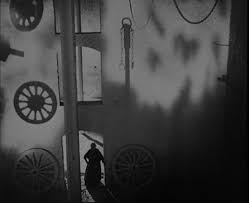 Marjorie Bowen turns elements borrowed from Uncle Silas to her own account in the poignant short story “A Plaster Saint” (1933), and Carl Theodor Dreyer’s film Vampyr (1932) was inspired by the entire collection In a Glass Darkly, rather than any one story, with the memorable scene of the protagonist being carried conscious but incapable of movement deriving from the only non-supernatural story, “The Room in the Dragon Volant”.
 “The Watcher” also doubtlessly spawned a significant number of stories, though these are less easy to identify, and have been filtered down to our time to the point that direct influence is probably no longer possible. For instance, although they also owe a debt to Lafcadio Hearn’s Japanese tale “The Mujina” (1904), the persecutory aspect and culminating structure in Cynthia Asquith’s “The Follower” (1935) and Stephen King’s “The Boogeyman” (1973) clearly point back to Le Fanu’s tale.
 A Talk with Victor Rees
 Catling is best known for his novels, especially the Vorrh trilogy (2012-18)—he is not really considered a short story writer, even though he wrote works of short prose throughout his life. Some of these might be considered examples of lyrical prose-poetry that owe a debt to Baudelaire or the Comte de Lautréamont, while others are more straight-forward ghostly tales—though with Catling nothing is ever totally straight-forward. These texts were published in magazines, chapbooks and pamphlets, or else were discovered posthumously on his laptop. When read one after the other they exuded such a marvellous, weird vibrancy that they begged to be brought together.
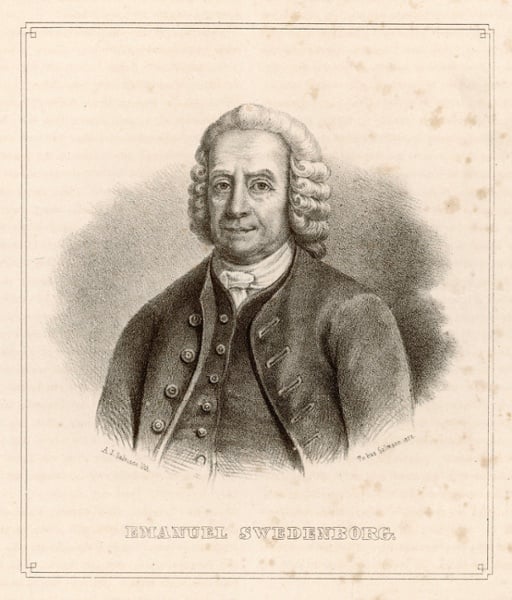
 I’ve taken these words as something of a personal mantra for my research, and they’ve also come to inspire the selection of texts in this collection. I’ve become increasingly drawn to Catling’s relationship to mysteries, secrets, occluded forms of knowledge, the ineffable gaps that pockmark our seemingly rational world. I write in my introduction (to A Mystery of Remnant) that a ghost might be seen as an absence defined by its presence, or else a presence defined by its absence. Sometimes these Catlingesque ghosts might take the form of a dog-headed saint, a cricket-headed flea, a talking mongoose with humanoid hands—at other times they emerge in the stories through the presence of William Blake, Emanuel Swedenborg or Edgar Allan Poe, all members of the author’s personal pantheon. It doesn’t take much for a human being, as in the case of Bosch or Catling himself, to take on a ghostly dimension.
 JK: Yes, several of the stories feature real people: Lars Hertevig (“Heart of the Forest”), Emanuel Swedenborg (“April 6th 1744”), the presence or absence of William Blake (“Lambeth Tenant”). Who would you say were Catling’s primary influences or inspirations for his writing and art?
 VR: The notion of space is also essential. Dorchester in particular played a key role in his later writings, appearing as a setting for “A Pendon Parva Ghost” as well as “A Mystery of Remnant”, which lends our collection its title—Dorchester also served as the main location for his novella
  JK: And watching the documentary about him, The Cast Squid of a Lost Character, it looks like he took a similar approach to his teaching work at the Ruskin School of Art, University of Oxford. I suspect he didn’t like to be considered a teacher as such, more a guider of talent. I was struck by his teaching philosophy of “no prisoners/no disciples”.
 VR: Absolutely—it reminds me of another moment of epiphany he talked about in interviews, this being the time he was rewatching a tape of a performance he’d made and saw that his face had been accidentally reflected in a pane of glass, so that it appeared as though he had one eye in the centre of his head. This sudden vision was the main impulse that led him to become so fascinated with the figure of the cyclops, which went on to reappear throughout his performances, video installations, paintings, and novels. I’m tempted to see this story as a literalisation of the mirror metaphor discussed above, whereby Catling received a sudden flash of inspiration from an image, rather than being taught to pursue the motif by someone else. He could never quite explain the cyclops obsession—it simply called out to him, and he felt compelled to explore it.
 Because of this, it feels important that the book be accompanied by a sequence of responses to Catling that take a diverse range of forms. My introduction approaches his oeuvre from a slightly academic angle, but it’s hopefully balanced out by the more moving, elliptical foreword written by Catling’s son Jack, himself a remarkable performer and poet. Then we have a meditative memory-piece by Iain Sinclair in the conclusion, as well as three new texts (poems? prose poems?) by Alan Moore responding to photographs of Catling as a younger man. This collage of reactions was never part of our original plan, but as the book came together it felt absolutely appropriate—both the man and his work are too slippery to be contained within any single write-up or retrospective. You need to be able to see him from different angles at once, like shards of a broken mirror.
 “Editor’s Note #25”
 Conducted by John Kenny, October 2024
 Fast forward to 2017: I met with my department head to discuss potential dissertation topics. At the time, I was set on writing about Edgar Allan Poe, having spent years shaping my coursework and research around him. However, during the meeting, my advisor asked, “What new scholarship can you contribute on Poe?” When I couldn’t come up with a strong answer, he urged me to find a different topic. I left the meeting feeling deflated, unsure of where to turn next. Then, it hit me—Fitz-James O’Brien! I mentioned him to Professor Lewis, who responded, “Now that would be an interesting subject!” O’Brien was relatively unknown, and there was little existing scholarship on him. I realized I had found my topic.
 Once he relocated to America, O’Brien fully embraced the speculative genre. Just before leaving London, he had a story published in Charles Dickens’s newspaper Household Words in 1851 titled “An Arabian Night-mare”, which we believe to be his first horror story. After arriving in America, he began to grow and evolve into the writer we now recognize. In his first year there, he started a series of stories and poems collectively called “Fragments from an Unpublished Magazine”. These works were connected through a mythical book edited by a character named Adam Eagle. The unnamed narrator of the fiction believes Eagle is involved in some mystical cult, possibly practising dark magic. The narrator randomly selects passages from the volumes of the unpublished magazine, presenting the reader with poems, stories, or fragments depending on what he finds. One of the highlights of this series is the first poem the narrator shares with readers, titled “Madness”. This poem bears a strong resemblance to the works of Poe, delving deeply into the unraveling of a person’s mental state with chilling precision and intensity.
 O’Brien was well-acquainted with Henri Murger’s Scènes de la vie de Bohème, published between 1847 and 1849, and paid homage to the Bohemian movement with his 1855 short story, “The Bohemian”. This tale masterfully blends elements of horror and reflects O’Brien’s literary influences, evoking shades of Poe’s “The Gold Bug” and Hawthorne’s “The Birthmark”. As with much of O’Brien’s fiction, “The Bohemian” contains autobiographical elements, revealing his deep fascination with and connection to the Bohemian lifestyle. The story stands as a testament to O’Brien’s immersion in and admiration for the movement.
 Originally, this collection began as a resource for my dissertation, which, incidentally, didn’t focus on his speculative works. I examined his social, political, and economic thought in his non-speculative fiction and poetry. My dissertation, titled “ ‘
 It’s also important to distinguish between an author and their characters, a distinction that can be challenging. Poe faced this as well; while he was a melancholic figure, he wasn’t the same as the characters he wrote about. O’Brien shared a similar situation. For instance, in his story “The Diamond Lens”, the character Linley is a despicable figure who makes anti-Semitic remarks about his neighbor, Simon, whom he eventually kills. One of my students once suggested that this made O’Brien himself anti-Semitic, which took me by surprise. I explained to her the difference between an author’s perspective and that of their characters. That said, O’Brien was also a product of his time, shaped by the societal conditions he lived in. It’s one of the hardest things to convey to students: we are all shaped by our environments, and who knows what actions or beliefs we take for granted today might be seen as objectionable a hundred years from now.
 JK: It’s also interesting to speculate if he would have delved a little more into science fiction if he had lived longer. Both “The Diamond Lens” and “How I Overcame My Gravity” are worthy of H. G. Wells.
 A reader recently asked me if Swan River Press would ever consider publishing an edition of Robert W. Chambers’s classic collection The King in Yellow (1895). While I love that book, and own multiple early editions, it didn’t take me long to form a response: No, we would not.
 A volume of FJOB’s work never manifested during his lifetime—although he did plan one, even going so far as to list his preferred selection (the full background of this proposed book can be found in “A Note on the Text” in the Swan River edition). Realising FJOB’s original volume was one of the ideas that John and I discussed. However, much as I like this approach (see Bram Stoker’s
  John and I considered other possibilities for this project, but eventually settled on a rather ambitious (for SRP, at least!) three-volume set that would present FJOB’s speculative writing in chronological order. We felt this approach would best showcase FJOB’s trajectory as he developed his craft. Additionally, John unearthed a number of stories and poems that had hitherto not been reprinted since their original magazine appearances. All this would be complemented by three comprehensive introductions by John, which would in turn trace FJOB’s life and works, from his early years in Co. Cork to his wounding and eventual death from that wound during the American Civil War.
 As you can see, we’ve worked hard to provide readers with that “something more” they’ve come to expect from Swan River Press. To my knowledge, this limited, hardback, three-volume set of the collected speculative fiction of Fitz-James O’Brien is not only the most complete collection of his work now available, but also the first Irish edition—appropriate that its official publication day is St. Patrick’s Day. And John P. Irish’s comprehensive introductions serve to guide the reader to a new understanding of Fitz-James O’Brien’s importance in the development of literature of the fantastic.

 In an interview for Lost Estates, “
 The first was
  The last hardback title that we published this year was the seventh instalment of our
  (
(
 For those interested in statistics, we published 6 new titles this year, totalling 1,176 pages; 2,300 copies; and 332,377 words. That includes this year’s issues of The Green Book (but not the paperback reprints).
 Lastly, here’s a short piece I wrote on