Treatises on Dust by Timothy J. Jarvis
“Day’s Horse Descend”
“To Have a Horse”
“We Recognise Our Own”
Uncertainties 6 edited by Brian J. Showers
“Unfinished Business” by Ruth Barber
“The Sands” by A. K. Benedict
“Consumed as in Obsessed” by Meabh De Brún
“The Switch” by James Everington
“Where Are They Now?” by Alison Moore
“The Bracken Box” by Naben Ruthnum
If you’d like to see the full list of recommendations, here’s both Part One and Part Two.
In her summation of 2023, Ellen also notes that Now It’s Dark is a “strong” third collection from Lynda R. Rucker; that Iain Sinclair’s Agents of Oblivion is “perfectly illustrated” by Dave McKean; while Timothy J. Jarvis’s Treatises on Dust is “an excellent collection of fourteen weird, often dark” stories and vignettes; of Uncertainties 6, Datlow writes, “a regular series of anthologies of new weird . . . with notable dark ones”; and The Green Book edited by Brian J. Showers is “an excellent resource for discovering underappreciated Irish writers”.
Greetings, everyone. Thank you for joining me here at the end of another solar cycle, taking time out of your day to read this meditation on what we did here at Swan River Press these past twelve months.
I confess, for much of it, my attention has been on settling myself in Æon House among other personal matters—trickier prospects than anticipated. In fact, it was only last week that I managed to get the heating installed.
I had the pleasure of showing off the new digs to a few guests this past year too. Despite the bare-bones circumstances, I’m pleased to receive visitors into the incense haze of our yellow brick headquarters. Mind the dust, please. Originally I thought the house dated circa 1906. However, further research revealed that Æon House was in fact built in around 1869, the same year that “Green Tea” was published. Does anyone else’s brain work in this way? Linking dates and years to writers and publications? Suffice to say, I’m delighted by the history that’s already been absorbed by these walls and to which I hope to contribute in the years to come.
Although I am settling in well enough, much of my library and some of the Swan River stock remains difficult to access—and it turns out things may be like this for some time. But for the most part, it’s business as usual. This year saw a considerable increase in production over last year . . .
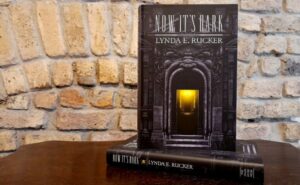
Our first book of the year, back in January, was Lynda E. Rucker’s third collection, Now It’s Dark. We also published Lynda’s second collection, You’ll Know When You Get There (now available in paperback), and of course she also expertly helmed the third instalment of our Uncertainties series in 2018. As always, it was a delight to work with Lynda—I always admire the way in which she regards weird literature. This profound depth of insight, of course, influences her writing. This recent crop is no exception.
The cover is by John Coulthart. Thinking back now, we’ve done quite a few covers with John. There’s a reason for that. John is always a pleasure to work with; he is as professional as he is inventive.
Now It’s Dark was received well too, with Rue Morgue noting, “These horrors come from lived experience, brimming with the juices of life and believable characters who are certain to stay with you for a long time. Strongly recommended for lovers of atmospheric, unusual, and slow-burn literary horror.”
If you want to know more, you can read the interview Steve Duffy conducted with Lynda for our website. I hope we’ll be working with Lynda again in the future. How about it, Lynda?
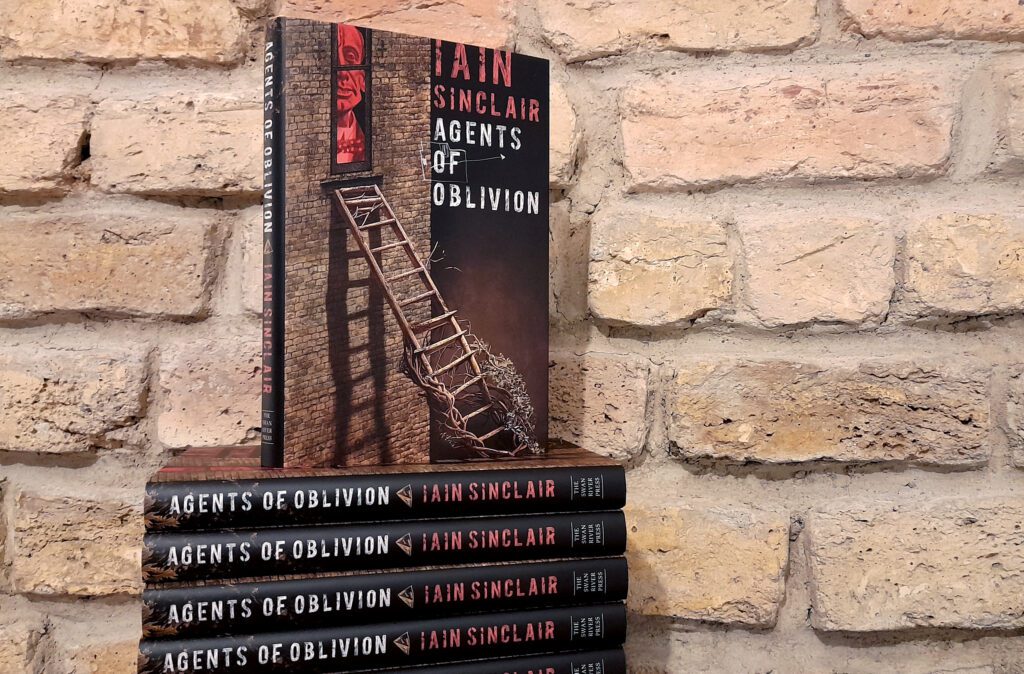
Next up is Agents of Oblivion by Iain Sinclair. Iain had sent this to me with the tentative note, “I’m not sure if you’ll be interested in this . . . ” But of course it was wholly my thing! Check this out:
“Four stories starting everywhere and finishing in madness. Four acknowledged guides. Four tricksters. Four inspirations. Algernon Blackwood. Arthur Machen. J. G. Ballard. H. P. Lovecraft. They are known as ‘Agents of Oblivion’. And sometimes, in brighter light, as oblivious angels . . . As host, as oracle, Iain Sinclair moves through this quartet of tales, through a spectral London that once was, or might never have been.”
What’s not to love? It apparently was a lot of other people’s thing too, because the entire hardback run briskly sold out. Michael Dirda wrote in the Washington Post, “Nobody can do more with a sentence’s cadence, diction and imagery than Sinclair”; while Michael Moorcock said it was one of the best collections of fiction he had read, going so far so to choose Agents of Oblivion as his Book of the Year in The New Statesman.
Not only does Agents of Oblivion feature Sinclair’s writing, but also the artwork of Dave McKean, who is due no small amount of credit for the success of this volume. Thank you, Dave, for another wonderful cover! Matthew Stocker interviewed Sinclair for our website, which you can read here. And never fear: if you missed the hardback, the paperback edition is currently available.
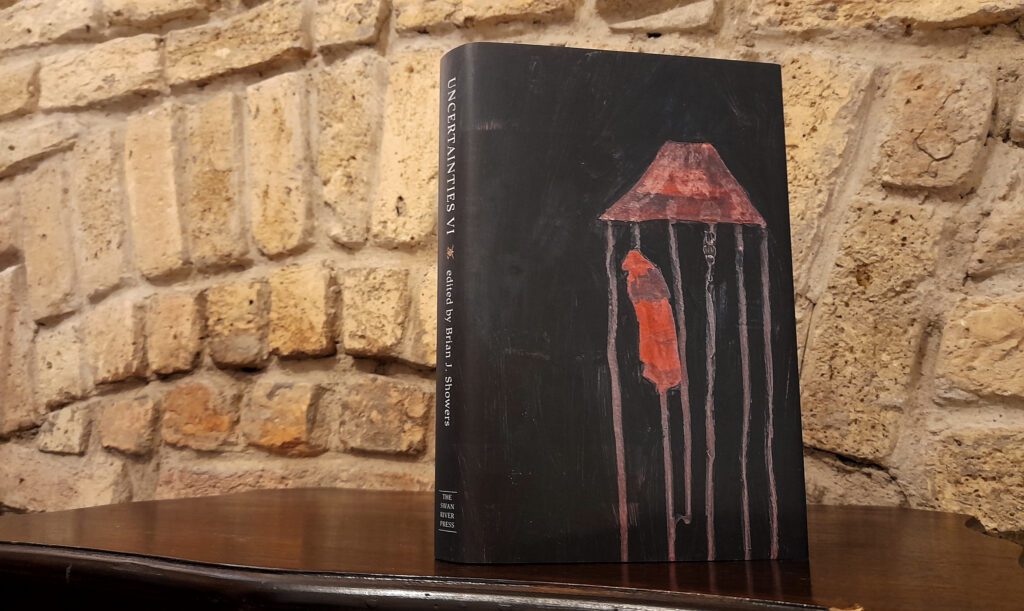
Two new titles showed up on my doorstep in mid-July. The first was Uncertainties 6, which I’d started editing way back in 2020. The volume was delayed for numerous reasons, but I’m pleased that readers are now able to enjoy this excellent crop of contemporary strange stories. It’s as strong a selection as ever, and includes contributions from Naben Ruthnum, Alison Moore, Stephen J. Clark, Anne-Sylvie Salzman, and the late B. Catling. SFRevu gave us a kind review, saying that, “Once again [editor Brian J. Showers] has successfully managed to produce an interesting anthology full of dark atmosphere and disturbing plots.”
Instead of doing an interview for this volume, which I normally like to do, I instead asked each contributor: “What draws you to write tales in the weird/uncanny mode?” You can read their responses here.
Gracing the jacket and boards of Uncertainties 6 are two paintings by David Tibet from his “Dreams as Red Barn” series. Many will know David from his band Current 93. However, for this collaboration, I prefer to invoke David’s pioneering work with the late Richard Dalby for the Ghost Story Press. Over the course of a decade, Ghost Story Press produced fourteen titles, many of which are now considered classics of the genre. I’ve always seen Swan River as part of this publishing continuum that includes Arkham House, Ghost Story Press, Ash Tree Press, Tartarus Press, and others, all inspirations to fine independent publishing. And so it was a real pleasure to collaborate with David for this book, acknowledging our past and forging a connection to our future.
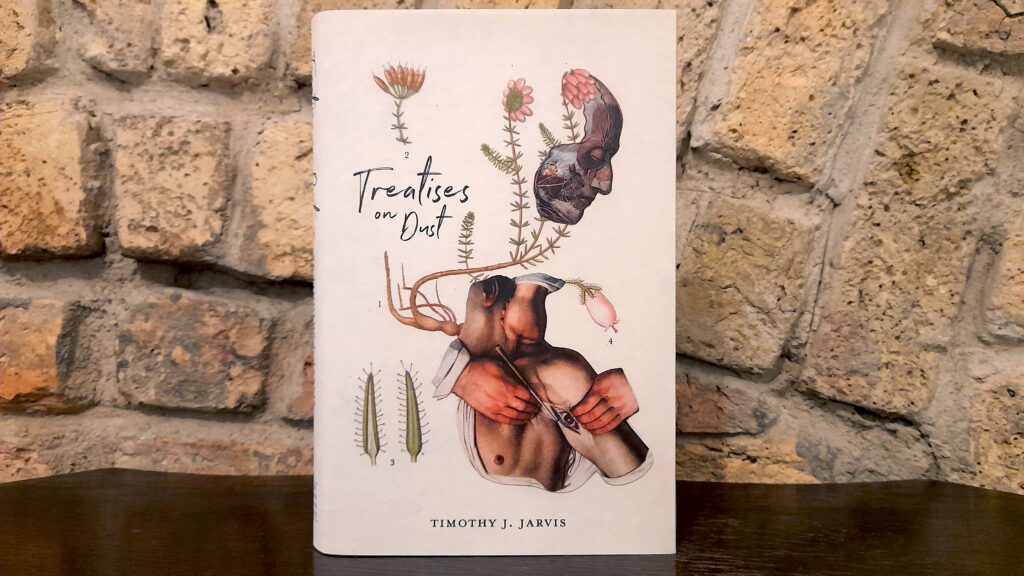
Arriving on the pallet beside Uncertainties 6 was the debut collection by Timothy J. Jarvis, Treatises on Dust. Having been impressed with his novel The Wanderer, which I’d read many years ago, I was determined to publish Tim’s first collection of stories. Up until this point, Tim had contributed to a number of Swan River titles, including Uncertainties 1, The Scarlet Soul, The Far Tower, and Uncertainties 4 (as editor)—I’m probably forgetting something here too.
But Treatises on Dust was on another level entirely and I was excited to publish it. In an interview with James Machin about the collection, Tim said, “I admire contemporary writers such as Mark Valentine who have recurring conceits across their stories, also Laird Baron though his is more cosmic in scale—I really like that mythos thing that comes from Lovecraft and other classic weird tales writers—and I wondered what would happen if you did it, but without the cosmicism.”
This volume, featuring striking artwork by øjeRum, has been one of our briskest sellers this year, with David Longhorn of Supernatural Tales writing, “There is plenty to entertain lovers of weird fiction.” If you’re still not convinced, you should check out the four short films Tim did to promote the book.
The last hardback of the year was a reprint, something that we rarely do: Lafcadio Hearn’s Insect Literature, originally published in 2015. I’ve always been proud of the design of this book (read about it here), and it’s one that I’m frequently asked about, especially by those who missed buying a copy the first time around. Though the paperback is also currently available, I took this opportunity to make a few adjustments to the new edition, including cleaning up a few formatting issues I was unhappy with, as well as printing the boards on cloth instead of paper. I also issued two new postcards with this edition. So if you missed it the first time around, be sure to pick up the reprint of this fascinating book.
We continued this year as well with The Green Book: Writing on Irish Gothic, Supernatural and Fantastic Fiction.
For Issue 21 we reprinted fiction and poetry, including “The Little Brass God” by B. M. Croker, two macabre stories by Mary Frances McHugh, and a previously unpublished story by the decadent artist Althea Gyles. “The Woman Without a Soul” is a Faustian tale of necromancy and obsession; some scholars have likened “A Woman Without a Soul” to The Picture of Dorian Gray (1890) by Oscar Wilde, whom Gyles befriended in Paris after an introduction from publisher Leonard Smithers. This issue is rounded out by a substantial selection of poetry by Gyles—undoubtedly the most complete collection of her poetry published to date. If you want to learn more, check out the Editor’s Note.
Issue 22 is a long-overdue Bram Stoker issue, and probably our fastest selling issue since our Lord Dunsany issue. In this issue are pieces by Mike Mignola, the late Leslie Shepard, Stoker biographer Paul Murray, and a recent discovery made by Douglas A. Anderson: a story attributed to Henry Irving that may well bear the hallmarks of Stoker’s own pen. Again, read the Editor’s Note if you want to know more. Better yet, pick up a copy of the issue and see what you think yourself.
We had a few paperback publications this year too, and I believe most of our back catalogue, save for contemporary anthologies, is now available in this format. Let’s see . . . we’ve got:
For those interested in statistics, we published 6 new titles this year, totalling 1,112 pages; 2,325 copies; and 297,895 words. That includes this year’s issues of The Green Book, but not Insect Literature or the paperback reprints.
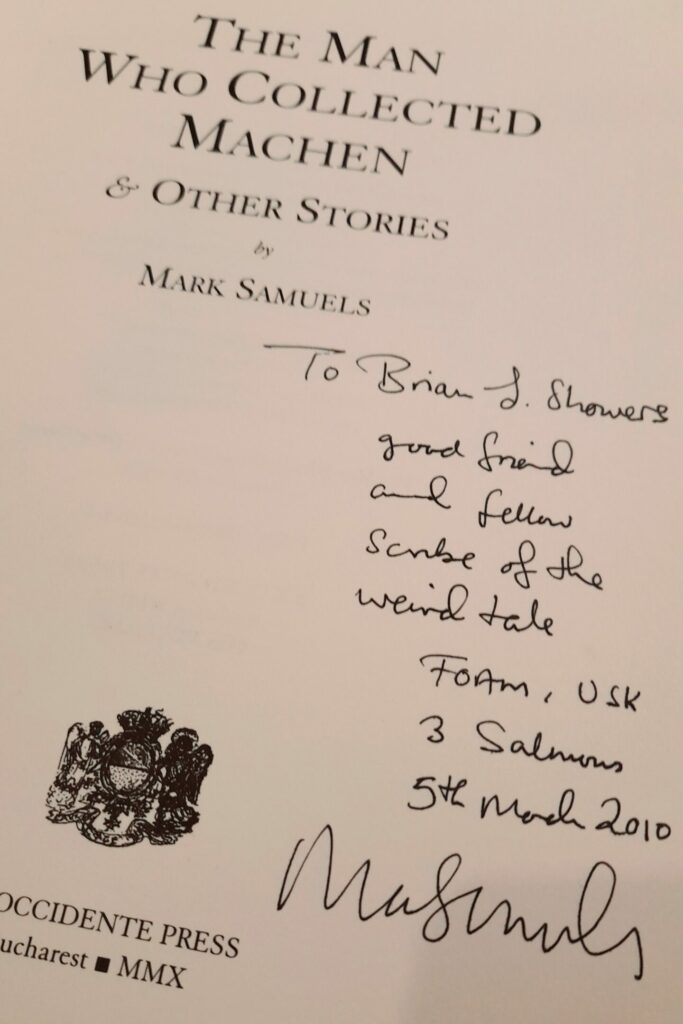
Unfortunately, as many already know, the weird horror community lost Mark Samuels earlier this month. I read Mark’s work in his superb collection The White Hands (2003), the first and only book I bought at Fantasy Centre in London—the hardback Tartarus edition, signed by Mark in green ink. I read it in Sweden. I enjoyed it immensely, and so anticipated Glyphotech (2008), which did not disappoint. In my review for Rue Morgue, I wrote, “Yes, his work can probably be shunted into the urban horror genre, but within this definition he manages a great deal of diversity, and a clear writing style free from over-indulgent descriptions of decay. In Samuels’s world we find misanthropic outcasts, polluted realities and grotesque caricatures that imitate the man-made.”
Although I’d met Mark a number of times over the years—he always happily inscribed his books for me too!—I most fondly remember one carefree summer (remember those?) a personal walking tour of Machen’s London, followed by pints at the Clifton Hotel in St. John’s Woods, a pub not only frequented by Machen, mentioned in The London Adventure, but one that features in a memorable photograph of the Welsh writer. Mark and I dutifully recreated that photo.
I’d only had the pleasure of publishing Mark once: “The Court of Midnight” in Uncertainties 2 (2016), later collected in The Prozess Manifestations (2017). Mark was consistently an excellent writer of weird fiction and has left us with a substantial body of work to be explored. If you’re not familiar with his writing, perhaps the easiest way to sample it is by picking up a copy of Hippocampus Press’s The Age of Decayed Futurity: The Best of Mark Samuels. You might also be interested in reading Quentin S. Crisp’s tribute to Mark as well.
Farewell, Mark. Raising a pint to you!
In less mournful news, Swan River Press celebrated its twentieth anniversary this October. The occasion came and went pretty quietly, if only because I was otherwise occupied to plan a proper commemoration. However, I did write a short blog post on the history of the press. So for what it’s worth, here it is. One of these days I’ll finish writing that Swan River bibliography . . .
Of course, as always, I am grateful to the Swan River Press team: Meggan Kehrli, Jim Rockhill, Steve J. Shaw, and Timothy J. Jarvis. These folks help keep things running smoothly and our books looking the best they can be.
Before I retire to the warmth of my reading mattress (I don’t have a reading chair just yet), I would like to thank everyone who supported Swan River Press this year. Those of you who bought our books, posted about us on social media (we’re on Bluesky now too), sent feedback (especially if you’ve felt inspired by something you’ve read), or showed up on the doorstep of Æon House. Thank you, thank you, and thank you! Until then, please stay healthy; take care of each other and your communities. I’d like to wish you all a restful holiday season, and hope to hear from you in the New Year!
Brian J. Showers
Æon House, Dublin
10 December 2023
Steve: In preparing for this chat, I reread all three of your collections [The Moon Will Look Strange, You’ll Know When You Get There, Now It’s Dark], and what struck me was that your style was pretty much intact from the beginning of your writing career—it wasn’t a case of “freshman to sophomore to senior”, or anything like that. Do you see an evolution in your stories?
Lynda: I definitely see an evolution in the way I write them, in that I have a lot fewer false starts and write far fewer first drafts. I’m a very instinctive writer, and my instinct is better. I have a better grasp of how to achieve certain effects. I think my prose is more precise now in terms of what I want to convey and I have a stronger sense of who I am (and am not) as a writer. But I don’t know if that answers your question? In a way, I don’t know if this is an answer that a writer can give. Maybe that’s something for readers and critics to decide.
I should probably add before we go any further that in keeping with the title of this collection, I am increasingly of the Lynchian mindset of “never explain”, although I have always very much felt that once a story is out there, it belongs to the reader who is reading it at any given moment.
Steve: Talking about style, there’s a story in Now It’s Dark where you’re picking up an idea from the much missed writer Joel Lane and developing it into a finished piece. Did you approach this differently from the way you normally develop a story?
Lynda: I did! I really wanted to honour Joel’s style and approach, so the first thing I did was read and reread a bunch of his work. My aim was to achieve a kind of cohesion between his themes and style and my own. I hope it doesn’t sound disrespectful when I say that I felt quite close to him in a creative sense as I was writing it. I definitely think of it as something apart from the rest of my work (although still very much a story by me, that I would write).
Steve:That’s exactly the way it struck me when reading it.
Lynda:Thank you! At least one person who knew him much better than me told me that he thought Joel would have liked it, which was about the best compliment I could get.
Steve:You mentioned the process of achieving effects, and Now It’s Dark employs, very successfully I think, a number of different modes of storytelling, from the “omniscient author” voice to the first-person narrator. This is something that interests me as a writer: do you always know the mode the story will be told in before you start writing it?
Lynda: Back to that instinct thing—I don’t consciously think about it in that way (I generally know very little about a story before I start writing it), but I think I always have a sense of it, that it’s going to be a stronger omniscient authorial voice or first-person or whatever. I’m trying to remember, but I don’t think I’ve ever changed a point of view once I’ve started writing a story. That choice is really embedded in what the story is, so you have something like “The Seventh Wave” where the voice of the first-person narrator was very strong in my head from the first sentence whereas I had a very different sense of how “The Dying Season” was going to start.
Steve: We’ve talked before about the writers who know how a story will end before it’s written, and those who genuinely don’t . . .
Lynda:Yes! I am in the latter category. Although I generally have an idea of the feeling I want to convey at the end, or maybe an image—I’ve always said I’m not very interested in plot and this was recently really brought home to me again in a huge way when I saw Enys Men the other night. Plot and “what happened next” is the least interesting aspect of storytelling for me in many ways. But it doesn’t mean I don’t care about endings—I do, a lot; they can make or break a story, and I will sometimes spend nearly as much time on the final paragraph as I do on the rest of the story.
Steve:One of the things I love about your stories is the open-endedness: as with all the best weird fiction, the weirdness resonates beyond the conclusion.
Lynda: Oh, thank you! That’s what I aim to do. I like stories that haunt me in that way—like Robert Aickman’s “The Hospice” or Shirley Jackson’s “The Demon Lover”.
Steve: Talking of Aickman, there’s a kind of homage to him in Now It’s Dark, which was written for the anthology Aickman’s Heirs. There are also stories that reference, indirectly or otherwise, Arthur Machen and Stephen King. What would be your dream invitation to a tribute anthology?
Lynda: In this collection and in previous stories, I’ve done for this several writers I admire and who have influenced me: Shirley Jackson is one for whom I’d still very much like to write something. Maybe Algernon Blackwood, specifically his mysticism. I actually had M. John Harrison partly in mind when I wrote the title story of my first collection, The Moon Will Look Strange, riffing a bit on Yaxley and the idea of unspeakable rituals from “The Great God Pan” or The Course Of The Heart, although no one picked up on it—the resonance with Don’t Look Now was a bit more overt, apparently! There’s J. G. Ballard, which might surprise people because his work is very different from mine but I’d love a chance to do a Ballardian turn. Alan Garner, lots of children’s writers—Susan Cooper, L. Frank Baum. I’m sure I’ll think of more as soon as we finish this interview!
Steve:Any anthologisers reading this might want to take note of that . . .
In this new collection, as in the two that came before, you take your readers to a variety of places, and do so very convincingly. Rightly or wrongly, I link this to the amount of travelling you’ve done in real life, and I was wondering which of the places you’ve been to have yet to find their way into stories?
Lynda: Oooh! I’ve been thinking about this recently. One place that I’ve never been able to write about successfully is Nepal, where I was a Peace Corps volunteer in the ’90s. I’ve got one completed and several failed story attempts, but it’s not something I’ve tried to do for at least fifteen years, if not longer. In a way, I think that entire experience was too intense for me to write about it for a long time, and I just didn’t have the skill—and I’ve been thinking lately that I might be ready now.
Steve: Let’s hope so. David Bowie said that in the mid-1970s it became creatively necessary for him to leave Los Angeles and travel to a place he’d never been, and once there, immerse himself in the experience, lay himself open to new influences. Is that the way you approach new places?
Lynda: Oh yes. I’m delighted, by the way, to find this creative parallel with Bowie. It’s one reason I love to travel alone—to really get that full-on immersive experience. And I do think of it as something that goes hand in hand with my writing; I wouldn’t be happy if I couldn’t write anymore or couldn’t travel any longer.
Steve: Along with the sense of place, your stories are marked by an acute insight into the psyches of their protagonists—for me, these are the twin foundations of a typical Rucker story. (Put this another way: you don’t do many monsters.) Do you think that’s an accurate description of your work?
Lynda: I do, actually! In not all but most of my stories, setting is hugely important, often almost taking on the role of a character. And I’m endlessly interested in people, how they think, why they do the things they do, how fractured our minds can be. I know so many people who love monsters and I love the enthusiasm with which they love them, but for the most part I’ve never been a big monster person myself. Even in a great monster story like The Thing—it’s not so much the Thing itself that’s compelling as how the characters respond to it.
Steve: You do like a haunted house, though, so that’s something for the more traditionalist reader.
Lynda: I absolutely love a good haunted house story. And a good ghost story, whether or not the ghost is hanging round a house.
Steve:With three volumes of short stories under your belt, are you tempted by the longer story form? Have you, as the saying goes, a novel in you?
Lynda:YES. Or more accurately, god I hope so. I love short stories, but I love novels too, yet it’s a form I’ve really struggled with. Without going into too much detail, I’ve recently had some revelations about some of those struggles. I’m actually doing research for a historical novel that I want to write, and I’m also toying with a novella.
Steve: Finishing up: if you had to pick one story from Now It’s Dark to represent the best of Lynda E. Rucker—maybe for a Year’s Best collection, say—which one would you pick?
Lynda: This is a terrible question! I honestly don’t think any one story is representative—different stories display different facets of what I do. I will say I do have an inordinate fondness for “So Much Wine”, partly because it has always felt a little underloved to me. But writers are terrible judges of what their best stories are. I don’t think we can bring that kind of perspective to our own work very well.
Steve: The correct answer is “The Séance”, but I honestly think that any one of the stories wouldn’t be out of place in a Year’s Best. Thanks so much for talking to me!
Lynda: I did think about that too! Thank YOU!
Steve Duffy has spent the last twenty-five years trying to improve his writing over six short story collections. The most recent of these, The Faces at Your Shoulder, is out now from Sarob Press. In 2001 he won the International Horror Guild award for Best Short Story, and in 2015 the Shirley Jackson Award for Best Novelette. Hopefully another twenty-five years should see him getting somewhere.



 The cover is by
  What’s not to love? It apparently was a lot of other people’s thing too, because the entire hardback run briskly sold out. Michael Dirda wrote in the Washington Post, “Nobody can do more with a sentence’s cadence, diction and imagery than Sinclair”; while Michael Moorcock said it was one of the best collections of fiction he had read, going so far so to choose Agents of Oblivion as his Book of the Year in The New Statesman.
 Instead of doing an interview for this volume, which I normally like to do, I instead asked each contributor: “What draws you to write tales in the weird/uncanny mode?” You can
  But Treatises on Dust was on another level entirely and I was excited to publish it. In an
 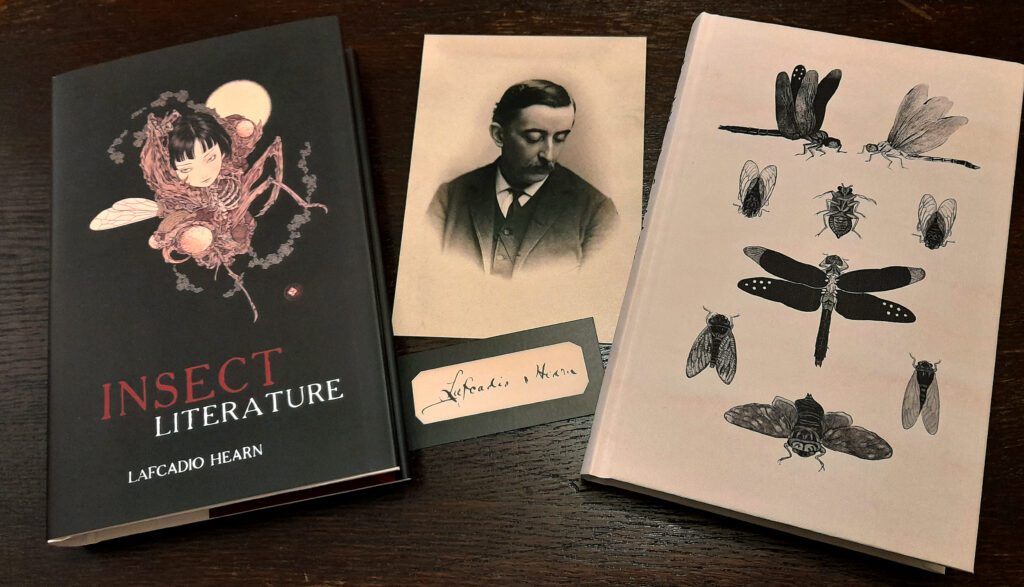 The last hardback of the year was a reprint, something that we rarely do: Lafcadio Hearn’s
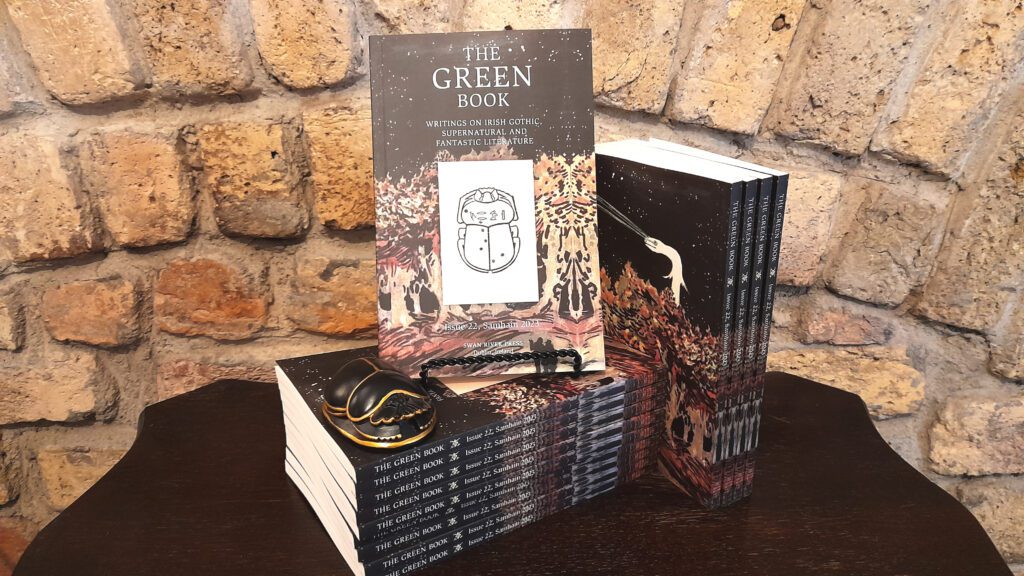 We had a few paperback publications this year too, and I believe most of our back catalogue, save for contemporary anthologies, is now available in this format. Let’s see . . . we’ve got:
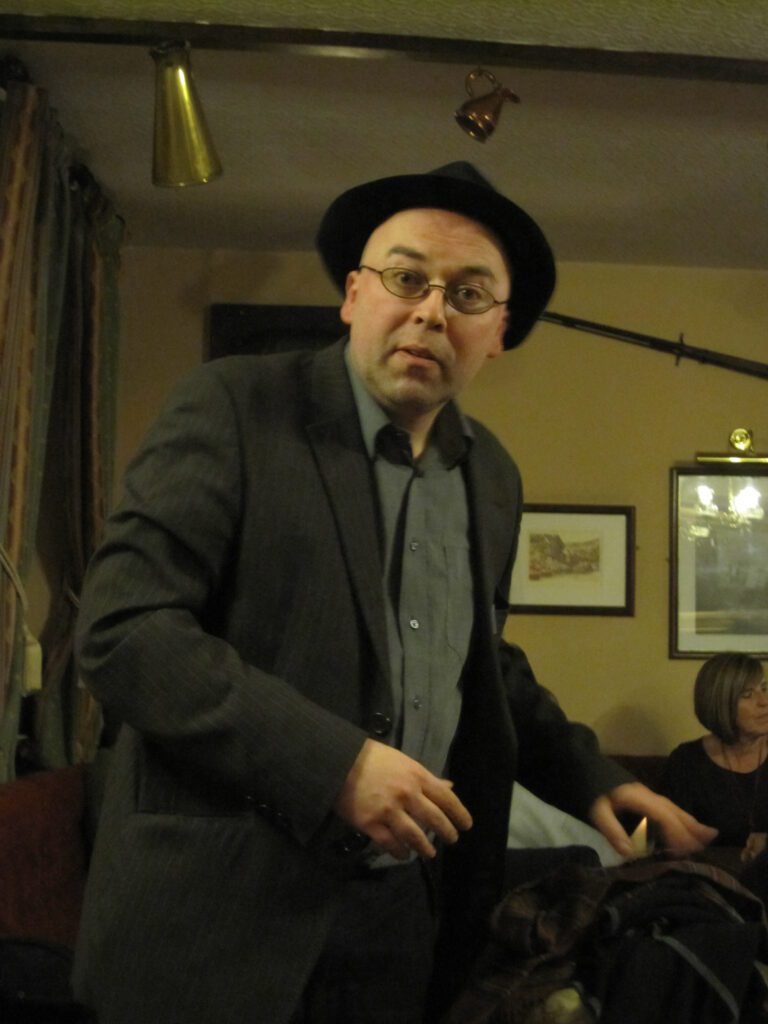 Unfortunately, as many already know, the weird horror community lost
 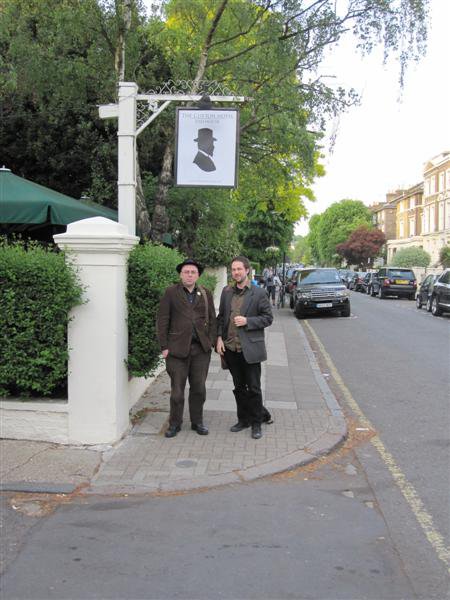 I’d only had the pleasure of publishing Mark once: “The Court of Midnight” in
  In less mournful news, Swan River Press celebrated its twentieth anniversary this October. The occasion came and went pretty quietly, if only because I was otherwise occupied to plan a proper commemoration. However, I did write a short blog post on the history of the press. So for what it’s worth,


 Lynda: Yes! I am in the latter category. Although I generally have an idea of the feeling I want to convey at the end, or maybe an image—I’ve always said I’m not very interested in plot and this was recently really brought home to me again in a huge way when I saw Enys Men the other night. Plot and “what happened next” is the least interesting aspect of storytelling for me in many ways. But it doesn’t mean I don’t care about endings—I do, a lot; they can make or break a story, and I will sometimes spend nearly as much time on the final paragraph as I do on the rest of the story.
 Lynda: Oooh! I’ve been thinking about this recently. One place that I’ve never been able to write about successfully is Nepal, where I was a Peace Corps volunteer in the ’90s. I’ve got one completed and several failed story attempts, but it’s not something I’ve tried to do for at least fifteen years, if not longer. In a way, I think that entire experience was too intense for me to write about it for a long time, and I just didn’t have the skill—and I’ve been thinking lately that I might be ready now.
 Lynda: YES. Or more accurately, god I hope so. I love short stories, but I love novels too, yet it’s a form I’ve really struggled with. Without going into too much detail, I’ve recently had some revelations about some of those struggles. I’m actually doing research for a historical novel that I want to write, and I’m also toying with a novella.