Thoughts on “Lucifer and the Child” by Albert Power

Swan River Press 2020Those sensitive to mild spoilers may wish to avert their eyes. – Ed.

In a ‘blurb’ for its new edition of Ethel Mannin’s novel Lucifer and the Child, the Swan River Press claims that this book was for many years on the list of ‘banned books’ in Ireland. If so, it was with good cause. This is a book that glamorises the Devil, irreligion and pursuit of the path of wickedness. It is an insidious book. It draws one in. It is a book that exerts a quiet and ensorcelling, but not a wholesome, power. Like Jenny Flower herself, it gives off, in spots, a heady whiff of ‘gutter panache’ in spite of its often exquisite penmanship. A discerning reader should run no risk to his or her immortal soul, but the same cannot be said of enduring peace of mind.

Among his aromatic armada of apothegms in the Preface to the second and expanded version of The Picture of Dorian Gray, Oscar Wilde memorably avouched: ‘There is no such thing as a moral or an immoral book. Books are well written, or badly written. That is all.’ Advance extenuation perhaps for the work that lay before the reader to read. Wilde need not have worried. But Ethel Mannin’s Lucifer and the Child puts one on uncomfortable proof of this maxim; or else goes to refute it. The book is certainly well written, emphatically so, and sparked up, at times, with passages of striking beauty. But is it a ‘moral’ book? Well . . . As Lucifer might have said within, ‘it all depends on what you mean by moral.’

The principal character, and the ‘child’ of the title, is Jenny Flower, ‘a thin, dirty, under-sized wisp of a gutter-kid,’ who may or may not be of the family of two sisters burned for witchcraft in the early 1600s. She is the natural daughter of Nell Flower, a barmaid at the Seven Bells in London’s docklands, and is brought up as the child of her mother’s brother Joe and Joe’s wife Ivy. Joe is a handsome if sparely spoken sulker, his wife a disappointment-bitten shrew. They have two sons. Home life is not especially happy.

Jenny was born at Hallowe’en, 1924, one of four witches’ sabbaths in a year. On another of these, Lammas, 1st August, 1931, during a school trip to the countryside, Jenny gets lost in a wood and meets a dark and handsome stranger, with horns, who befriends and introduces her to the natural wonders of the woods. When she grows tired, he takes her back home to London by train. If she needs him, he says, she will meet him again.

1945-09-02 Observer AdReturned to ordinary life, Jenny befriends an ancient witch-like woman, who purports to be in fact a witch, and who lives in a filthy novel in the evocatively named Ropewalk Alley, a rickety tumbledown place near the Thames. This is Mrs. Beadle, to whom Nell Flower had applied for a herbal mixture to induce abortion, when she got pregnant with Jenny. More often than not, Mrs. Beadle’s cauldron-concocted remedies don’t work, but people keep coming back and send their friends, ‘on the principle that what doesn’t work in one case might in another – the old Ropewalk Alley principle that you never knew’. Mrs. Beadle’s house is a trove of witchcraft lore and demonology – and cats.

There is a young school teacher, Marian Drew, daughter of a somewhat unconventional clergyman in Wales, who befriends Jenny and tries to reform her. Her efforts towards friendship at least seem not wholly unavailing, until Hallowe’en, 1931, Jenny’s seventh birthday, when at an annual fair in the docklands waste ground, the high point of which is a huge bonfire re-enacting the Great Fire of London (a deft authorial touch, which prefigures the climax of the novel during the London ‘blitz’ in 1940), the dark stranger, sans horns, reappears. Off a ship, perhaps. From this point on, the dark stranger, whom Jenny thinks of as Lucifer, is a recurrent element in the girl’s life, though he appears seldom, in the first year only on witches’ sabbaths, and thereafter less often still. Marian meets him and finds herself attracted to him, even as she tries to persuade him to stop acting the part of the Devil and seeks to wean Jenny from his influence.

Arrow Books 1964aThe stage is set for a drama among vividly drawn personalities, of whom hardly one of them is especially likeable. Mannin divides her novel into halves of unequal length. The first, and longer, depicts Jenny’s life from her first encounter with Lucifer on Lammas of 1931 to her fourth – following, in addition to Hallowe’en, Candlemas: 2nd February and May Day: 1st May – on Lammas of 1932, when Lucifer takes Jenny and Marian Drew on a day-long excursion by train to the country. By this stage, Jenny has already, in an eerie invocation scene at Mrs. Beadle’s, received a witch’s mark above the heart and a familiar, a black kitten called Satan.

The second part – just over a hundred pages in the Swan River Press edition – in effect touches, in a kind of saltant style, on key events throughout the remainder of Jenny’s life. It culminates in an incident that reaches genuine tragedy, during the London ‘blitz’, on 7th September 1940. We discover how Marian prevails on the dark stranger to keep out of Jenny’s life for, first a year, and then for over three years. She also persuades him to encourage Jenny to stay for a summer holiday with Marian’s rector father’s family in the Welsh countryside. None of this avails, because, as Lucifer, rather gloatingly tells Marian, ‘ . . . you can’t put anything into a child, you can only bring out what is there.’

Jenny advances apace along the downward path to witchcraft. Her trip to the rector’s house in Wales is a failure. She practices spells, none of especial malignancy until late in 1939, and then the intended end of her enchantment is very bad indeed; and worse because it actually works.  At times, this second half of Lucifer and the Child suggests a sequence of randomly linked set-pieces to prepare for the denouement of tragedy. But though the journey may strike one as haphazard in places, the hand that guides is assured. The end, when it comes, cannot leave a sensitive reader unaffected. And well before that end arrives, Marian recognises that she has lost the battle. Partly it is her own fault: ‘Some people would say that you had gone to the Devil – you, the professing Christian, with your illicit love.’ (This invites a question as to the inducement that Marian had used to persuade the dark stranger to leave Jenny alone for so long.) But, at the last, perhaps it is just a human thing, never quite to achieve that which one has it within one’s gift to achieve. ‘One means so well and does so badly; always this sense of personal failure,’ muses Marian. The spirit of Arthur Machen infuses and broods over much of this work, both in the nature scenes and in London. With Marian’s resigned recognition of fatalistic insufficiency, one can, perhaps, hear in echo the Welsh-born author’s bleaker and even more terse acceptance of inability to scale anything near the heights that one perceives, whether in truth or in fancy, to be recorded: “I dream in fire but work in clay.”

Mannin 3aIn a short introduction, Ethel Mannin posits the possibility that the question of whether the stranger was really the Devil and the child really a witch can be predicated on either natural or supernatural bases dependent on a reader’s willingness to suspend disbelief. But to the mind of this reader, here we have special pleading which is quite implausible. One is put in memory of Ann Radcliffe’s herculean efforts in her gothic romances to introduce a natural cause for incidents that up to then had seemed the effect of ghostly intervention: but the natural explanation is so contrived that it would have been easier to believe in the ghosts. With Mannin, there are just too many coincidences heaped on coincidences for anything like a ‘natural’ explanation to ring remotely true. In the case of Jenny, she believes and that is the prime ingredient to her acquiring the witch’s power and, later, the ‘asexual passion of loving’ which she feels for Lucifer. As Lucifer tells Marian in one of their disputatious yet cordial exchanges, if he had sought to persuade Jenny that everything that had befallen her in the regard of him, including their first encounter in the forest when she saw him with horns, was liable to natural explanation, she would not believe it – even coming from him. ‘That for her would be the make-believe! She has been touched by the fatal lightning.  She knows! She has seen the stranger in the forest with horns on his head . . . ’  That is amply sufficient to make miracles of evil occur; and occur they do.

Ethel Mannin’s novel drips with frequent delightful jewels of poetic beauty – not least in many passages devoted to description of life in the London docklands and the more irenic if sometimes darkly enticeful charms of the countryside. At one point the author takes time to show her social conscience side, as she expatiates on the manifestations of loneliness in the sexual realm and the futile attempts by impoverished humanity to improve its lot. ‘Lucifer at least has looked upon the face of God, known Infinite Beauty, whereas these, grunting and guzzling in their human sty, what do they know of heaven or of hell?’

Jarrolds 1946In the final analysis, Ethel Mannin’s Lucifer and the Child is – to cite the author’s own words in the penultimate chapter – a tale of ‘ . . . two worlds, the material, and that strange phantom world beyond the bounds of the material, that invisible world for which there is no name, since to call it fantasy, or dream, or imagination, does not suffice, emotion being involved in experience of it, and its phenomena charged with such meaning that the whole texture of the real world is changed, such commonplace things as a curtain blowing out in the wind, or a second glance from a stranger in a crowd, becoming endowed with diabolic significance, exciting, terrifying, sinister, or possessed of a fatal and terrible beauty.’ As Rosanne Rabinowitz points out, in her partly elucidatory, partly biographical introduction, that sensibility which can recognise the innominable character of the effect of sometime strangeness on the humdrum human world of everyday affairs, bodes well for overdue recognition of Mannin’s remarkable novel as a classic in the literature of the weird.

There are few books of which it justly can be said, that having read it will leave a reader changed. Thought-provoked, conscience-smitten, challenged. Lucifer and the Devil is one of them. So, give succour to thy soul with the balsam of goodness – then read.

Order a copy of Lucifer and the Child.


Albert Power is the author of Slaver Heap – A Gothic Novel and Georgian Gothic – A Novella Quartet. His short fiction is published by Egaeus Press. He has written articles for The Green Book.

Thoughts on Uncertainties 4

IMG_2365

Uncertainties is an anthology series — featuring authors from Britain, America, Canada, Australia, and the Philippines — each exploring the concept of increasingly fragmented senses of reality. These types of short stories were termed “strange tales” by Robert Aickman, called “tales of the unexpected” by Roald Dahl, and known to Shakespeare’s ill-fated Prince Mamillius as “winter’s tales”. But these are no mere ghost stories. These tales of the uncanny grapple with existential epiphanies of the modern day, when otherwise familiar landscapes become sinister and something decidedly less than certain . . .


Over the last year or so, I’ve been working on putting together the fourth in Swan River Press’s series of contemporary supernatural and strange tale anthologies, Uncertainties. It’s the first time I’ve edited a fiction anthology and it’s been one of the most rewarding things I’ve done in writing. It’s been great seeing the thing take shape — as it started to come together, it began to take on a life of its own. Brian J. Showers at Swan River was incredibly helpful throughout the process, sharing his wealth of experience. He pretty much gave me free rein, his only brief being that I bring in some writers who hadn’t featured in the series before, and who might be new to the press. It has long been my feeling that innovative writing can enhance the uncanniness of a supernatural tale, so I solicited contributions from writers who I thought would be playful and experimental with their tales. And as cohesion was really important to me from the outset, I also asked writers whose work I thought would share points of similarity. As the pieces came in, I saw this had worked better than I’d dared hope and that there were lots of potent synchronicities between the stories. But there was also a lot of variety, so I starting thinking about how certain juxtapositions might work and also how to ensure an overall flow. The tales are all experimental in some way, but run the gamut from melancholia, to outright horror, to comedy. I wanted to balance and shift between tones in a hopefully satisfying way. It took me back to the days of making mixtapes for friends, and thinking about flow, moving between moods, and setting up a kind of loose overall narrative from disparate parts.

This was an incredibly satisfying process. It was also really satisfying to work with the talented Swan River team of Meggan Kehrli, Ken Mackenzie, and Jim Rockhill, whose design and editing skills ensured the finished article looks superb. And it was a real privilege to have for the cover a powerful piece of art by modern surrealist, Brian Catling, from a series of paintings inspired by the writing of M.R. James — it mingles the ghostly and the bizarre in much the same way as the tales within.

The section below is taken from my introduction to the volume. I wanted to try to give a flavour of the stories and illustrate my thesis about the contemporary supernatural tale, and did so by relating a couple of incidents that had been much in my thoughts, and which seemed to me to show what I conceived to be the difference between the traditional ghost story and the tale of uncertainty.

Timothy J. Jarvis B&WI have twice, in the last year, visited a supposedly haunted site not far from where I live in rural Bedfordshire: Old St Mary’s, a derelict fourteenth-century church on a hill above Clophill, a picturesque village about thirteen miles to the north of Luton. Old St Mary’s gained a sinister reputation in the 1960s following a spate of desecrations — over a period of several weeks, on moonless nights, graves were broken open and bones disinterred, and the ruins were daubed with disturbing graffiti. It was thought to be mostly aimless vandalism, the work of bored young people aping, but the original violation apparently bore clear signs of a knowledge of the occult and of the practices of dark rites. That time, the skeleton had not been just scattered but deliberately laid out inside the ruin in a pattern associated with the Black Mass, and a Maltese Cross had been daubed on the floor in what was thought, from feathers found strewn about, to have been cockerel’s blood. Afterwards the place became a bugbear for locals, with teenagers from Luton daring each other to visit it at night. Now it is a heritage site and well maintained, but it still has a charge.

The first time I went up to the church, it was dusk, following a grey late autumn day. There were two of us out walking. As my friend and I approached the ruins they were thrown into stark relief when the sun, setting behind them, a ball of orange fissured with red, like the blood-threaded yolk of an egg, dropped below the cowl of cloud. The effect was Gothic. My friend and I wandered about the churchyard for a time, took in the views, then went back down the path towards Clophill. Between Old St Mary’s and the village, the path passes through copse, and as we walked under the canopy of reddening leaves, where all was gloom, my friend and I saw, out of the corners of our eyes, a hand reaching between us. We startled, looked round, but there was of course no one there.

The second time I climbed up to Old St Mary’s, there was a group of us. It was a warm summer’s afternoon, the sun bright and high in a clear sky, the only clouds frothy white streaks, like cuckoo spit. As we approached the top of the hill, a blue van towing a low trailer heaped with junk drove past and pulled up in front of the gates to the churchyard. Two nondescript men, one balding, the other tall, both middle aged and dressed fairly smartly in chinos and linen jackets, like stockbrokers in weekend attire, got out of the cab, leaving the engine idling, and began circling the vehicle. After some moments stretching their legs they wandered off among the graves.

As we neared the van — which spluttered on, the smell of diesel exhaust acrid in the air — we saw, atop the pile of broken things in the trailer, an old cathode ray television, screen smashed, with, in the body of the set, a Murano glass sculpture of a clown, of the kind popular in the ’70s, which now, as the generation that bought and cherished such things dies off, floods charity shops. The clown was set there in that wrecked TV like statues of the Virgin are in roadside niches in southern Europe.

20200214_175350
Rounding the van, we saw that the men who’d got out of it were cavorting strangely in the churchyard. The balding was flailing his limbs in some kind of jerky dance and the tall was darting hither and yon. Then he stopped running about and stood before a headstone. We realized a moment later that he was pissing against it. The other kept on dancing. We decided then, without a word between us, not go on up to the church. We were halfway back to the village again, just emerging from the copse, when we heard the van’s engine revving behind us, and it careered past, kicking up clouds of dust, forcing us into the ditch. As the trailer went by, I could swear the glass clown turned its head to look at me and grinned.

I’ve exaggerated some of the details here for effect (though not actually by very much). Two incidents that gave rise to the uncanny. But the first, closer in tenor to the classic Victorian ghost story, was far less disconcerting than the second, which has more in common with the stories of uncertainty found in this volume. We almost expect to see ghostly hands at haunted sites — there’s no real ontological rift. Preternaturally animated Murano glass clowns, we do not anticipate. The other key difference is that in the second story, the actual moment of the supernatural is not as important in creating the effect as the bizarreness of what led up to it — tales of uncertainty often show us a world always already off-kilter.

Buy a copy of Uncertainties 4.


Timothy J. Jarvis is a writer and scholar with an interest in the antic, the weird, the strange. His first novel, The Wanderer, was published by Perfect Edge Books in 2014. His short fiction has appeared in The Flower Book, The Shadow Booth Vol. 1, The Scarlet Soul, Murder Ballads, and Uncertainties I, among other places. He also writes criticism and reviews, and is co-editor of Faunus, the journal of the Friends of Arthur Machen.

A Flowering Wound by John Howard

67143631_1806947816074520_6074629506683895808_n

John Howard was born in London. His books include The Defeat of Grief, The Lustre of Time, The Silver Voices, Written by Daylight, Cities and Thrones and Powers, and Buried Shadows. Secret Europe and Inner Europe are joint collections written with Mark Valentine. Howard’s essays on fantastic fiction and its classic authors have appeared in Wormwood and other places, and many are gathered in Touchstones: Essays on the Fantastic.


An Interview with John Howard Conducted by Florence Sunnen

Florence Sunnen: Although the stories in A Flowering Wound are consistent in tone and sensibility, your writing is difficult to pin down to a genre. How do you find your writing categorised most often, and how do you feel about these categories?

John Howard: As an unashamed long-time reader of genre fiction (especially science fiction) I’ve never had a problem with being identified with genre. But yes, as you say – which ones, if any? I think most of my work has appeared in places which are clearly genre, but which don’t worry overmuch about exact labels. I suspect my stories are most often characterised as supernatural, fantastic, strange, weird, dark fantasy, horror (and once or twice as sf). I like Robert Aickman’s term “strange stories” – but I’m not bothered by these or any other labels, because that’s all they are. As a reader I know that I want first a good story, and if it’s genre I tend not to feel the need to over-analyse and trouble myself about further subdivisions.

FS: The uncanny often crops up in this collection as a sort of sensory haunting; in “We, the Rescued”, for instance, the protagonist experiences a romance gone wrong as bouts of unseasonal heat. Is the sometimes inexplicable misfiring of the sensory apparatus something that unsettles you?

070608_07JH: Yes, I’m sure it would unsettle me a hell of a lot – and if me, then others. However, I think the main impetus behind the heat was that I wrote the story in the depths of winter and was trying to imagine myself warm! As I get older I find extremes of temperature more and more tiresome to have to cope with, even if unavoidable. When it’s hot I get lethargic and want to lie down and sleep; when it’s very cold I want to go to bed!

FS: Do you feel affected by ghost stories? Is there a ghost story (or uncanny story) you have encountered recently that particularly resonated with you?

JH: I don’t find the term “ghost story” very helpful. For me the term is too restrictive – or vague. But yes, a good ghost story (or uncanny story, a much more helpful term) will always be welcome. For a start I try to keep refreshed in the classics: the best of the likes of Algernon Blackwood, Arthur Machen, H. P. Lovecraft, J. Sheridan Le Fanu, Fritz Leiber, Robert Aickman, both Jameses (M. R. and Henry), Thomas Ligotti, Charles L. Grant, Clark Ashton Smith, and so on and on.

Recently I re-read Machen’s The Three Impostors, which always gives me a kick (although usually a different one each time). Inspired by James Machin’s recent book on weird fiction in Britain I’ve been reading my way through John Buchan’s uncanny stories, many of which I’d heard of for years but never read – such fine tales as “The Wind in the Portico” and “Skule Skerry”. I’ve read Francis Brett Young’s Cold Harbour (1924) and To Walk the Night by William Sloane (1937) several times each over the decades, and their chill and subtle otherness has never let me down.

Written by Daylight.jpgCurrent writers whose new collections and novels go straight on the to-read pile include Christopher Priest, Nina Allan, Peter Straub, Rosalie Parker, R. B. Russell, Steve Rasnic Tem, Mark Valentine, and Colin Insole. Mark Valentine is one of my oldest friends (and we have collaborated on several stories) so I might be biased, but I think his story “The Fig Garden” is one of the finest evocations of the strange and numinous that I’ve read in years. Stephen Jones reprinted it in his Best New Horror #28, so I’m not alone!

FS: Longing to the point of obsession seems to be a theme in a number of your stories. I’m thinking here of “A Glimpse of the City” and “Ziegler Against the World” where protagonists fall prey to obsessive delusion which lapses into haunting. What does it take to write about obsession, be it with another person, a pattern, an object, or with an action that must be performed?

JH: I think you’re right in noting the recurring themes of longing and obsession. I suppose what it takes to write about them must come from the writer’s personality (however it was shaped, and continues to be). I know that if I am particularly interested in something or someone, then I want to know as much as possible about it or them. I have a strong collecting instinct, and like to seek out and gather things I’m interested in (or obsessed by). Unfortunately for my bank balance and shelf space this applies especially to books by authors I admire!

It seems to me that action is a good way of helping to secure memory. If you meet someone and have a good time, the place is important, and returning there could help to ensure it happened again.

Near where I live there’s a short road lined on both sides with trees which meet overhead, so when the trees are in leaf there’s a tunnel effect. One August evening I was walking past the end of that road. The low angle of the sunlight, the glow of the sky and cloud effects, the shadowy interior of the “tunnel” all went to create a marvellous effect. I experienced what Lovecraft called “adventurous expectancy” and I had to detour for a few minutes and walk along the road under the trees. Then I came to make a sort of ritual of it and went out for a walk at the same time each evening for a week or so in order to try and relive the experience again. And every year since, at about the right time, I’ve done the same. Of course, I never have quite relived those feelings – but it doesn’t matter. And I’ve seen many new things too: you never know what you might come across while out walking in an ordinary suburb!

FS: Do you apply a similar ritual to your writing process? Do you try to write in the same place when working on a story, or are you one of those lucky people who can immerse themselves in their stories no matter where they are?

JH: I get story ideas at any time or anywhere. When I’m working on a story, I often get ideas for plot developments, dialogue, and even endings at the most inopportune times – for example while I’m walking to work. When I get there I have to go straight to my desk and jot things down.

Otherwise, in order to actually get on with producing a story, I find it best to attempt to be disciplined and try to be in front of my laptop at home at roughly same time each evening. If I can write five hundred words or more between about nine and eleven then I’m pleased. It’s the same when I’m revising a story.

FS: In stories like “Portrait in an Unfaded Photograph” and “Twilight of the Airships”, how do you approach story research, especially when they have a particular historical setting? Do you base your research around this, or do the story ideas come to you while researching?

The Silver Voices.jpgJH: With “Portrait in an Unfaded Photograph”, as that was written for submission to a theme anthology (a tribute to Gustav Meyrink) the extent of my research was to read up on details of his life, looking for any odd or interesting happenings, anecdotes, etc that I could then hang a story on. Thank you, Wikipedia! I think I also did a little research on settings while writing the story – but only to ensure that basic details were right. I was writing a story rather than a travelogue.

“Twilight of the Airships” was set in my fictional town of Steaua de Munte. Since I am its creator, as far as the setting was concerned I didn’t really have any research to do! I just did the usual thing of trying to ensure consistency. So the railway station is always on the north side of the river, Castle Hill is to the east of the town centre, Bruckenthal Square is located in the New Town and not the old walled town, and so on. Early on I drew a basic sketch map showing the river, the major streets, the railway etc. That helps me to maintain consistency, but doesn’t prevent me from adding things and places as and when I think of them.

I have read quite a bit of Romanian history, so when I write I am confident about the background – but when necessary I always double-check dates and the chronology of events. I read up a little on the airship programmes of Germany and the Soviet Union, but as my airships were made-up I did pretty much as I liked. I have been fascinated by the colossal rigid airships of the interwar years since childhood, and was glad to be able to use them in a story.

I’m somewhat wary of research. I think it can be used as a tactic, an excuse, for not getting on and writing the story. So I tend to jump in and get started after minimal (if any) research. I will check facts as I go (as I think I need to) or as part of the revision process. Most times when I begin a story I’m not at all sure how it will end. I trust that the ideas will continue to come.

FS: How important is visual thinking to your writing process? Do you imagine scenes in visual terms, rather than through language?

JH: The visual is highly important. In the first instance at least, a scene or incident or object often comes to mind visually, as a sort of mental snapshot or film clip, and I then have to try to use and build around it in terms of language.

FS: Do you prefer writing about cities and places with which you are very familiar (such as Berlin, in the case of this collection), or places you’ve only come into passing contact with, and whose description makes more demands on your writerly imagination?

JH: If I’m writing about real places, I tend to prefer those I’m familiar with (or think I am). If I’m using a certain location there may well be facts to get right – for example, St. Paul’s Cathedral has a dome, not a spire – and I dread making factual errors. Otherwise it’s a case of writing in general terms – letting the imagination run free. Not making any definite “commitments”, but just the intention to create a sense of a real and definite place.

As a reader, if someone writes a story set in a city I don’t know, or hardly know, as long as it feels right, they’re safe from me. But if I spot an error, that will throw me off-balance for a moment, and I’d be wondering why the author didn’t do a little more research or double-check what they thought they already knew.

FS: Which are your favourite cities to write about? Are they the same as your favourite cities to be in?

JH: I’ve set many stories in London and Berlin – and I’m sure I will continue to do so. London will always be first in my heart, if I can put it that way! And I like being there: I know my way around, speak the language(!) and understand the Tube. I feel at home in London.

In many ways Berlin reminds me of London. It’s a collection of separate places grown and stuck together, it sprawls, a river runs through it, it has a train system with a colourful map as complex as the Tube (but which is really quite simple to use). It’s been some years since I was last there, so even though English is widely spoken I’d want to hope that my German would return!

Steaua de Munte is largely based on aspects of Sibiu and Sighisoara, and those are two cities which, together with Bucharest, made a strong impression on me. Unfortunately time in them was limited, so I was not able to see and explore very much. I would love to return and linger in all three.

Otherwise, unfortunately, I’m not at all well-travelled. In England my favourite cities to be in are places such as Liverpool, Lincoln, Norwich, Oxford, Shrewsbury . . . In particular, Liverpool is always a pleasure to go to. It’s lively and refreshing, and its setting is magnificent.

A Flowering Wound.jpgFS: The stories in A Flowering Wound all amble along a similar path, one evocative of loneliness, difficult communication, sensory distortion, and obsession (with buildings, with people, with patterns). Do you feel that the first and last stories are start and end points of a journey, spanning several decades and countries?

JH: I feel that publishers and editors are better than I am at discerning links and themes. Readers too. The publisher suggested that those particular stories lead-off and conclude the book, and I was happy to agree. I think the notion of reading a collection of stories as also being a journey is a valid one – and am glad that in this instance particular stories helped to create and sustain that idea.

Buy a copy of A Flowering Wound.


Florence Sunnen was born in Luxembourg City and has lived and studied in Germany and the UK. Her academic background is in philosophy and creative writing. Her stories and collages have appeared in The Learned Pig, Mud Season Review, a glimpse of, Datableed, and Brixton Review of Books. Her story “The Hook” was published by Nightjar Press in 2018. She blogs at interiordasein.wordpress.com

The Green Book 11

Green Book 11EDITOR’S NOTE by Brian J. Showers

Our previous issue saw a fabulous array of reminiscences of Lord Dunsany — and also some contemporary assessments of his works — written by his Irish colleagues, including Yeats, Bowen, Gogarty, Tynan, A.E., and others. Issue 10 was fascinating to assemble and the process gave me a better understanding of and more insight into Dunsany’s literary standing in Ireland during his lifetime. If you’ve not yet had a look at our Dunsany issue, and you are in any way interested in this important author, I urge you to track down a copy.

The focus on Dunsany’s contemporaries in Issue 10 was an approach that evolved during research and production. However, during that time I also received a handful of modern appraisals of Dunsany and his work that I simply couldn’t fit into that issue. That’s why I’d like to start this instalment with just a bit more Dunsany.

First up we have Dunsany bibliographer Darrell Schweitzer’s career-spanning survey of the fantasist’s considerable body of work — where a new reader could start, what aficionados might have overlooked, and which titles can, perhaps, be left until later. Next, Martin Andersson, co-editor of the posthumous Dunsany collection The Ghost in the Corner (also reviewed in this issue), explores a lesser-known episode in Dunsany’s life: his Nobel Prize nomination. Finally, novelist Mike Carey offers an appreciation of Fifty-One Tales (1915), a collection not as widely celebrated as Dunsany’s other titles, but maybe one that should be given another read.

The remainder of this issue sees The Green Book in a little bit of a transition.

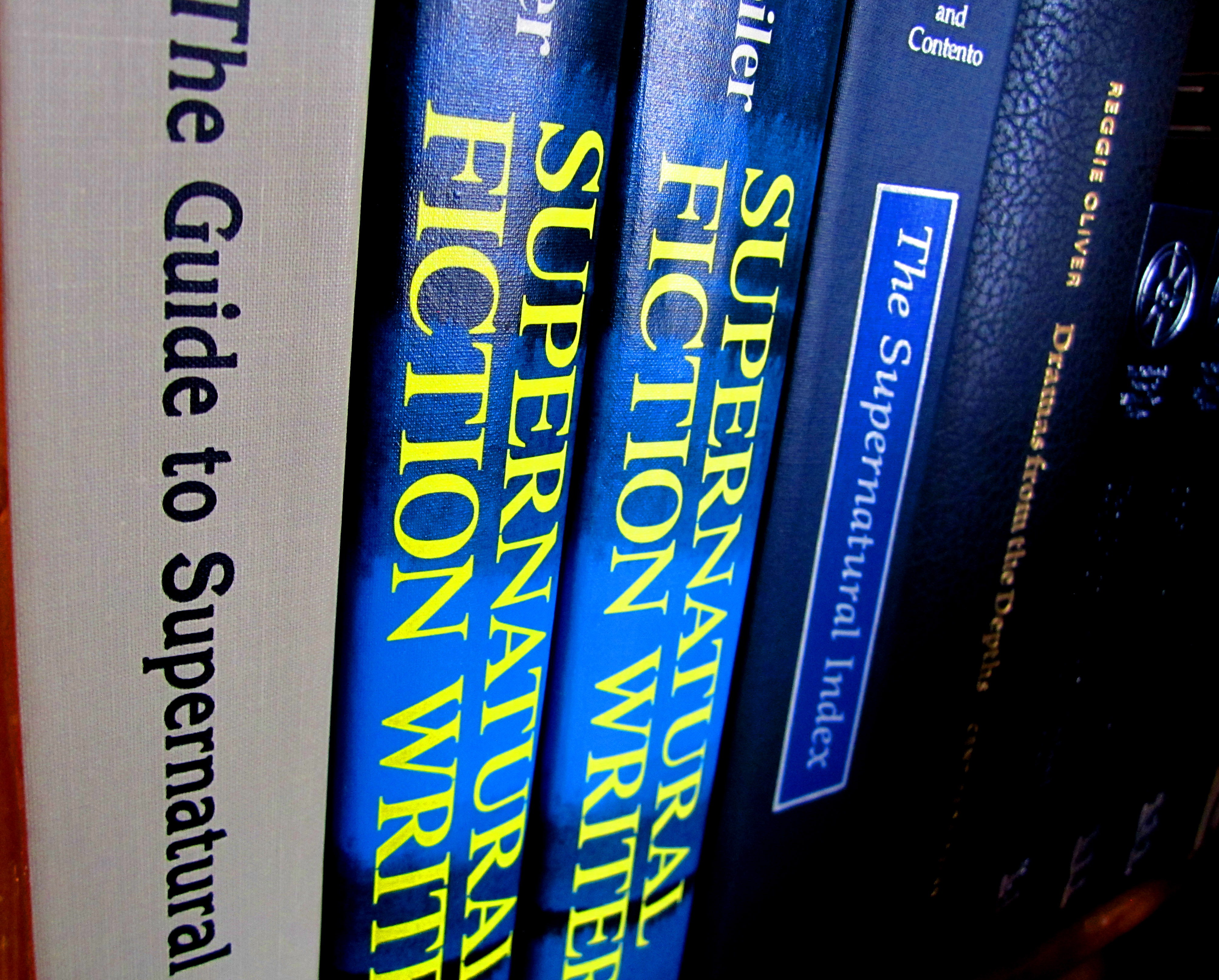
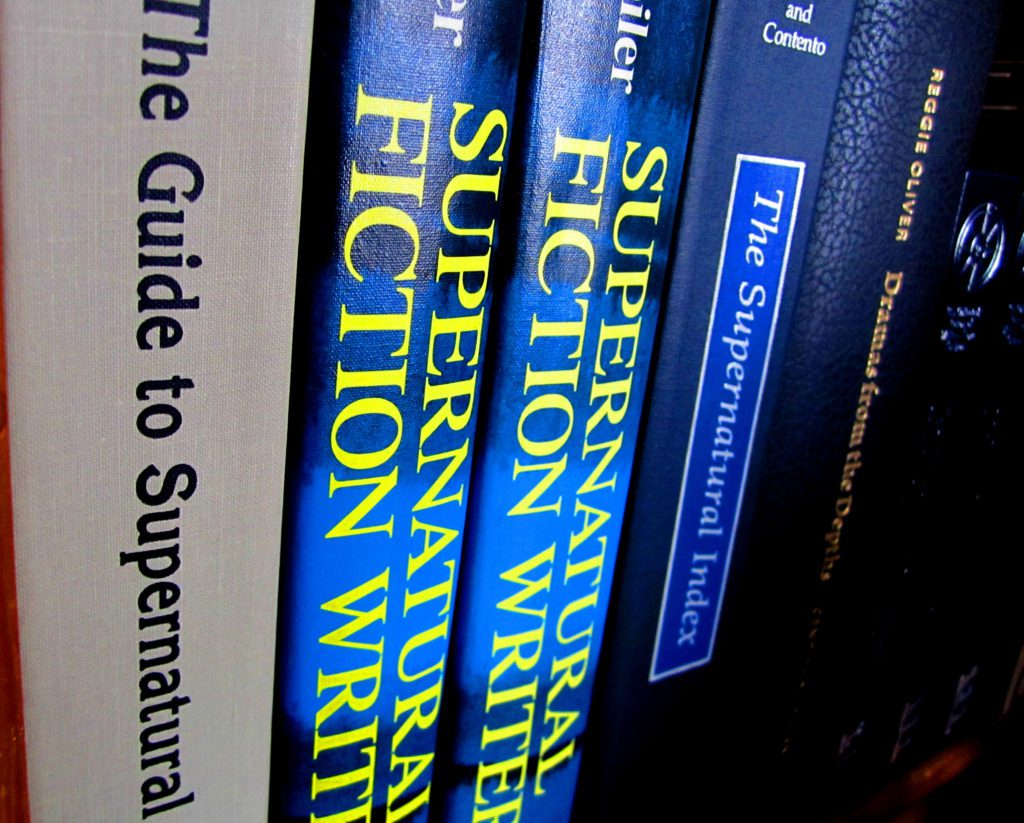
I’ve long had a penchant for bibliographies, indices, literary guides and encyclopaedias: I frequently take down from the shelf E. F. Bleiler’s Supernatural Fiction Writers (1983), wander the pages of Jack Sullivan’s Penguin Encyclopedia of Horror and the Supernatural (1986), and of course Neil Wilson’s Shadows in the Attic (2000) can keep me captivated for hours. I could go on . . .

Last year I commissioned a series of short articles for a book tentatively entitled A Guide to Irish Writers of Gothic, Supernatural and Fantastic Fiction. Over the past twelve months, Jim Rockhill and I have been working with a range of literary scholars, each exploring an Irish author that has in some way contributed to the broader literature of the fantastic. The results have been nothing short of captivating.

Therefore, in addition to the usual essays and reviews, I’d like to present, for the remainder of this issue, a selection of eight entries—some names you will recognise, others won’t be as familiar — but I do hope you’ll discover new writing to explore.

You can buy The Green Book 11 here.

Contents

“Editor’s Note”
Brian J. Showers

“How Much of Dunsany Is Worth Reading?”
Darrell Schweitzer

“Lord Dunsany and the Nobel Prize”
Martin Andersson

“Appreciating Fifty-One Tales
Mike Carey

“Regina Maria Roche (1764-1845)”
Albert Power

“B. M. Croker (1848-1920)”
Richard Dalby

“Edmund Downey (1856-1937)”
Gavin Selerie

“Conall Cearnach (1876-1929)”
Reggie Chamberlain-King

“C. S. Lewis (1898-1963)”
Reggie Oliver

“Denis Johnston (1901-1984)”
Reggie Chamberlain-King

“Louis MacNeice (1907-1963)”
Reggie Chamberlain-King

“Conor McPherson (1971- )”
David Longhorn

“Reviews”
Bram Stoker’s Powers of Darkness (Albert Power)
Lord Dunsany’s The Ghost in the Corner (Jay Sturner)

“Notes on Contributors”

Death Makes Strangers: An Interview with R. B. Russell

Death Makes Strangers of Us AllConducted by Michael Dirda, © February 2018

R.B. Russell is the author of three short story collections, three novellas, and a novel, She Sleeps. With his partner, Rosalie Parker, he publishes classic works of curious and macabre fiction under the Tartarus Press imprint.


Michael Dirda: Death Makes Strangers of Us All must be your sixth or seventh published book. Is that right? What is this book’s place in your oeuvre? How does it differ from your three previous short-story collections? Is there a common theme to the stories?

R.B. Russell: This will be my eighth book, which means that anybody who has read more than one will probably have noticed recurring themes that I am unaware of myself. I know that different interpretations of reality and of memories are preoccupations of mine, and this appears in several of the stories in the new book. This collection mainly offers recent work, although the title story is a re-telling of something that I first tried to write more than thirty years ago.

I did my best not to set too many stories in bookshops, but yet another one has crept in.

MD: Is your fiction inspired by any previous writer or writers? More generally, do you think there’s a recognisable English — or should I say British — tradition in the ghost story and weird tale? What defines it? Do you feel part of that tradition?

RBR: An old friend of mine, a gifted songwriter, says that it is easier to come up with original work than try to sound like somebody else, and I find the same with writing. However, I know that I am indebted to just about every writer I have ever read. I go out of my way not to write like the authors I most admire because the results would be hollow imitations.

I’m not sure that in the West there are any true national literary traditions in the gothic/ghostly/weird genres — since Horace Walpole we have all been influenced by writers overseas. The British have obviously assimilated writing from America and Europe, just as Americans have been influenced by Britain and Europe, etc, etc. And, of course, we have all taken on board ideas from non-literary disciplines, such as scientific and philosophical thinking, from wherever it has emerged. Individual writers reflect their own regional background, naturally, which enriches the whole tradition.

As for being a part of a tradition myself, I’m just another writer who has been inexorably drawn towards The Weird.

outside oscar'sMD: I think all readers are interested in the writing and reading habits of favourite authors. Are you a quick study either as reader or writer? Your prose is remarkably clear, eerily effective, but seldom flamboyant. Does it come easily to you or is it the result of determined polishing and buffing. For instance, can you tell us about the gestation and development of the new collection’s first story, “Night Porter”? Aspects of it reminded me of L. P. Hartley’s classic, “A Visitor from Down Under”, while its ending is almost as enigmatic as one of Aickman’s stories.

RBR: I tend to write quick first drafts, enjoying where a story is taking me, trying to get down ideas and atmospheres as they occur to me. And then I edit and re-work stories a great deal. I have heard it said that no piece of fiction is ever “finished”, it is merely abandoned when it is published. I could probably edit forever, which is why I never re-read any of my published writing — I would notice alterations I would want to make.

I am wary of being over-descriptive or lyrical — a simple adjective is often enough to give complexity to a scene. And there is the danger with over-description, of coming into conflict with the images that a reader has already conjured for themselves.

The set-up of the “Night Porter” was inspired by a contemporary film, the title of which I cannot remember. Changing the background and creating my own central character gave me a completely different story with its own impetus. I didn’t know how it would end until I arrived there myself, and the denouement seemed to me to be the most frightening I could imagine. It wasn’t meant to be enigmatic — it ought to mean that the central character has to re-think everything that has happened in a fundamentally different light.

MD: Speaking of Aickman: You recently told me that you had sold a number of books from your library in order to fill out your Robert Aickman collection. I gather that you now own most of his books in dust jacket and several of them signed. A couple of years back you also made a short documentary about Aickman. And, as all readers of supernatural fiction know, Tartarus has long been a champion of that writer’s “strange stories”. What is it about Aickman that draws you to him? How do you compare him to, say, Arthur Machen, the other supernatural fiction writer you have published in extenso?

RBR: First and foremost Aickman is a great storyteller, but at his best he wrong-foots me as a reader, and shocks me. Just when I think I might understand him, and perhaps sympathise with his characters, he reminds me that we are fundamentally very different. The fact that the stories, and the author, are so open to (mis)interpretation makes me go back to him, time and time again. I want to understand him, although it is probably best that I don’t.

The Dark Return of TimeMachen is very different. He is a magician with words. His love of the countryside and his fascination for the city both resonated with me when I left rural Sussex aged eighteen for the city of Sheffield, and his work still moves me profoundly. He has his faults as a writer (characterisation, mainly), but this is more than made up for by the depth of his vision and the power of his lyricism. There is an inherent humanity in Machen that I don’t find in Aickman.

MD: With Rosalie Parker, you share the publishing work demanded by the highly active Tartarus Press. You also compose music, produce artwork for books (your own and those of others), devote time to the Friends of Arthur Machen, produce wonderful short films, and I don’t know what else. How did you manage to get so good at all these activities, while also keeping up an active literary career as well? Would you rather be writing fiction full-time? Or is it somehow beneficial to switch back and forth among all these enterprises? Do they somehow enrich your imagination or keep you fresh?

RBR: There never seem to be enough hours in the day! I tend to have enthusiasms for my various (non-Tartarus) interests, and when I am not inspired to write, for example, I will have been itching to compose music and I can immediately move on to that. By the time I get stuck with the music, then something else has been demanding my attention.

My various interests feed into each other, as with my fascination for shortwave radio numbers stations. As I was researching them I was starting to write some new music, and was thinking of the individual compositions as soundtracks to stories that might lie behind some of the transmissions. At the same time I was putting together videos to accompany the music. And then, half way through this process, I realised that I wanted to write an extended piece of fiction about the broadcasts, and I now have a draft of a novel inspired by the strange world of these strings of numbers that bounce endlessly around the ionosphere.

MD: Speaking as both a writer and a publisher, what led you to Swan River Press for Death Makes Strangers of Us All? What is it you like about the books that Brian J. Showers has been bringing out? They are quite handsome but quite different from Tartarus publications in their appearance. What is gratifying about being published by a small press such as Swan River or Tartarus?

RBR: I share many of Brian’s tastes in literature, and, like Tartarus, Swan River mixes classic authors with contemporary writers, based on the publisher’s own enthusiasms. It also helps that I like the aesthetics of his book production. With his designer, Meggan Kehrli, and typesetter, Ken Mackenzie, they publish very handsome, well-made books.

MD: In the title story, “Death Makes Strangers of Us All”, you seem to be almost Kafkaesque, as Katherine wanders through a mysteriously empty city covered with fine dust, tries to retrieve her disjointed memories, and is confronted by threatening policemen. But the story takes an unexpected turn near its end and the ending itself comes a short, sharp shock. Can you comment a little on “Death Makes Strangers of Us All”? Is there a reason you chose to name the collection after it?

RBR: I am not sure I can comment without offering spoilers! There is an idea that underpins the story, but I am afraid that it would diminish the tale if it was spelt out. What I will say is that the idea was first expressed in an attempt to write a novel in the late 1980s. It did not succeed then because it should really have been a short story. And in the novel version I made it very clear exactly what was happening, which undermined it. The original was written at the same time that I was reading European authors in the Penguin Modern Classics series, and reading Lovecraft, Hodgson, and Machen.

MD: What are your current projects?

RBR: I am working on what I fervently hope is the final draft of a second novel. If it is not published then I will probably continue to rewrite it ad infinitum. A third novel, inspired by shortwave radio numbers stations, is in an early draft, but requires a great deal more work. I have been writing a great deal lately, and I am starting to feel the need to compose music soon . . .

MD: Thank you, Ray, for taking the time to answer these questions.


Michael Dirda is a weekly book columnist for The Washington Post. His own books include Browsings: A Year of Reading, Collecting, and Living with Books, the Edgar Award-winning On Conan Doyle, and several collections of essays. He is currently at work on a book about late 19th and early 20th-century popular fiction in Britain. He holds a Ph.D in comparative literature from Cornell University and received the 1993 Pulitzer Prize for Distinguished Criticism.

Order Death Makes Stranger of Us All here.

Our Haunted Year: 2017

IMG_1979

The end of the 2017 is upon us and I’d like to take a moment to look back at the books we’ve published over these past twelve months. While I’ve always defined Swan River as an Irish press, this year all of our books were either by Irish authors or have a strong Irish connection.

IMG_1604The publication date of our first book was pre-determined: the Selected Poems of A.E. (George William Russell). Last April was the 150th birth anniversary of Ireland’s under-appreciated mystical poet.  And as no other edition of his books were properly in print, I knew it fell upon us to do something to mark the occasion.

The genesis of this book dates a few years back. I was casting around for an A.E. project to mark the sesquicentennial year, and for a brief time considered assembling a collection of my own favourites. That’s when I acquired a first edition of Selected Poems, the dust jacket of which bore a request from the poet himself: “If I should be remembered I would like it to be for the verses in this book.” So that’s exactly what I did. On the boards is reproduced a painting by A.E., and rounding out the book is an excellent afterword by Ambassador Dan Mulhall. If you’re interested in learning more about A.E., we’ve a few past blog posts for you to check out.

IMG_1869Our next book was a real pleasure to work on. Following on from the success of Mervyn Wall’s beloved cult classics, The Unfortunate Fursey and The Return of Fursey, I wanted to bring back into print his equally delightful short story collection A Flutter of Wings, which hadn’t been available for over forty years. To this new edition we added Wall’s nightmarish bureaucratic drama, Alarm Among the Clerks, which had been out of print for an alarming seventy years.I hope people will like this book as much as the Furseys.

What makes this edition even more special are the illustrations by Clare Brennan. In addition to being an excellent artist and designer, Clare has the distinction of being Mervyn Wall’s granddaughter. If you like Clare’s illustrations for A Flutter of Wings, you’ll be delighted to know prints are available to buy from her website. And of course, with an introduction by Val Mulkerns, this book has become one of my favourites of the year.

IMG_1935

In November we were happy to publish a new collection by Bram Stoker: Old Hoggen and Other Adventures. It’s not every day a new collection of short stories by Stoker gets published, which is what makes this book extra special. It brings together for the first time a number of adventure tales that have been rediscovered in recent years. You can read more about how the “lost” volume of stories was assembled, and its relationship to Dracula’s Guest and Other Weird Stories, in the Preface. Old Hoggen also provided a joyful opportunity to work with Stoker scholar John Edgar Browning, who has been leading the charge  in all things Bram in recent years. The striking cover is by long-time Swan River conspirator Jason Zerrillo, who I’m sure we’ll see more from in the new year.

Alan Hanna'sThe final book of the year was The Scarlet Soul: Stories for Dorian Gray, an anthology edited by Mark Valentine and including ten new stories of art, obsession, love, lust, and sorcery by Reggie Oliver, Caitriona Lally, Lynda E. Rucker, John Howard, D. P. Watt, Rosanne Rabinowitz, Avalon Brantley, Timothy J. Jarvis, John Gale, and Derek John. In addition to this fine volume of tales, which I hope you will enjoy, this book is the first time I’ve worked with artist John Coulthart, who designed the front cover and boards.

Green Book 09Turning now to our journal, The Green Book, which has now entered the double digits! Issue nine focused on Irish women writers, with included, among other pieces, two essays by Elizabeth Bowen, an article on Rosa Mulholland by the late Richard Dalby, and an uncollected story by Dorothy Macardle called “The Boys’ Room”. Issue nine was one of the strongest issues we’ve had to date.

Green Book 10Issue ten, published in the autumn, was devoted to the fantasist Lord Dunsany, and comprised of writings about him by his contemporary Irish peers. With pieces by W.B. Yeats, Francis Ledwidge, Forrest Reid, Elizabeth Bowen, Katharine Tynan, and others, my intention was to remind readers that Dunsany once held a firm position in early-twentieth century Irish literature. I hope people read this issue from cover to cover as it illuminates Dunany over the course of his entire career.

2017-08-05-Irish-Writers-PoWhile not a book publication, another project that came to fruition this year was the Irish Writers of the Fantastic poster that I designed with Jason Zerrillo a couple years back. The poster showcases twelve writers, spanning three centuries, each of whom made significant contributions to Irish literature.

While the poster was designed in late 2015, it wasn’t until this October that Alison Lyons of Dublin City Libraries and Dublin UNESCO City of Literature agreed to produce copies of the poster to distribute for free around Dublin, coinciding with the Bram Stoker Festival. Copies of the poster are still available, and I urge everyone (especially if you’re a teacher or librarian!) to pick up a copy. Absolutely free! For those living abroad, there are other ways of procuring a copy.

This post wouldn’t be complete without thanking Meggan Kehrli, Ken Mackenzie, Maurice Healy, and Jim Rockhill for all the work they’ve done this year. For those who don’t know, these are the folks who make Swan River books look so good. Meggan handles all of our design, Ken takes care of the typesetting, while Jim looks after proofreading. Maurice only recently joined us this year, and has proven invaluable. On a sadder note, most will have heard by now that Richard Dalby passed away earlier this year. Richard acted informally as an advisor, as he did for many small presses, and the void that he leaves behind will be sorely missed.

BorderlandSo there you have it! That’s what we got up to this year, and I hope you found something to enjoy. There’s plenty to look forward to next year as well. We recently announced our forthcoming deluxe edition of William Hope Hodgson’s The House on the Borderland, which will be out for April 2018. I’ve spared no expense with this one, which will bear a cover and interior illustrations by John Coulthart, accompanied by a newly commissioned soundtrack by Jon Mueller. Not stopping there, Alan Moore contributed a new introduction, while Iain Sinclair is looking after the afterword. Everyone who participated in this project has a passion for Hodgson’s cosmic masterwork. As an added bonus, the book will be fully signed by all contributors.

dublin logo final copyAnd perhaps the biggest new for next year is the return of the Dublin Ghost Story Festival. I’m very excited that the guest of honour will be Joyce Carol Oates, with an opening night performance by Reggie Oliver. Even if next year’s festival is only half as fun as last year’s, we’ll be in for a huge treat. The event is already half sold-out, so if you’d like to attend, please don’t delay! We’ll be announcing further guests in the coming weeks. You’ll not be disappointed!

So that’s everything for now. Thank you again to everyone who contributed to the press this year, be it through buying books, supportive emails, or even coming out to see us at festivals and conventions. I’m looking forward to new books and hearing from everyone in the new year.


Introduction to The Scarlet Soul

Final CoverI was staying once in a cottage on the downs, remote from anywhere, one of a pair. The other was unoccupied. The next nearest place was a lighthouse. There was no road. You got to the cottage by a track across several fields, flint-riddled and full of unexpected slopes and hollows. The gaunt gorse bushes were bent by the sea-winds. For a while it was a keen delight to be so on our own, the few of us gathered together there. We would walk in the fields, along the cliff paths, down to the coves, and in the evening we would make food, talk, read, listen to the dim music barely discernible from the wavering wireless signal. But by the time it came to the evening before we were due to leave, perhaps these things had begun to pall a bit, or maybe something in the mood of the place made us want to mark in some way its mysteries.

The cottage, which was rented from an ancient estate by a friend, had a number of curios arranged on its old wooden shelves or in alcoves, some of them things picked up on the downs, some of them things brought back from further afield. There was a cluster of sharpened flints that might have been arrowheads, bigger flints that had perhaps been kept because they looked like something else, there was a corroded sheep’s bell, maybe medieval, with tints of green and bronze about it, there was a blurred coin whose head and emblems and lettering could not be discerned, and there was a small ossuary of beast and bird bones bleached by the sun and scoured by the winds, picked up on walks from where they had fallen. Idly, desultorily at first, we began to arrange some of these things on the mantelpiece, trying to get the effect of strange juxtapositions.

I had with me a copy of The Picture of Dorian Gray. It was the edition issued by The Unicorn Press of 8 Charles Street, St James’s Square, in 1945, Martin Secker (Director), one of several imprints that discerning bookman ran in his time. The leaf before the title page read simply: OSCAR WILDE / Born 1856 / Died 1900. And that stark statement was all the introductory matter there was, apart from the writer’s own preface of elegant maxims, beginning, “The artist is the creator of beautiful things.” But not only beautiful things, surely? Grotesque things too, even ugly things, curious things and uncanny things, as the book itself surely showed. Still, Secker had done the best he could under the exigencies of war-time to make this a lovely object. There was a white buckram spine, with gilt lettering and ornaments. Certain letters in the titles had long laces to them, like golden flourishes. The paper over the boards was a muted, memorial sort of colour, like gravestone moss, somewhere between grey and green.

Well, possessed by I don’t know what languid devilry, I placed this book on the shelf above the fire, and I put a horned ram’s skull from the little informal ossuary on top of it. Then I moved next to it a bronze cobra candlestick, in which a white candle guttered above the hooded head. We had turned off the lights and the room was illumined only by the smouldering fire and a few candles. In the dim glow of the serpent flame the hollows of the skull looked eerie, full of a curious light, and there was a glimmering on the gilt titles of the book. Our shadows played upon the white walls, the wood smoke pervaded the air.

DPQG4S2XcAAMq1_.jpg large
Courtesy of John Coulthart

We moved the pieces of this macabre composition around, trying to work out what looked right—or wrong, as it may be. We took some black-and-white photographs of these arrangements, conscious that this was all quite perilously close to a sort of ritual. Surely all we were doing was making “artistic” effects, there could not be anything else in play. But that was not quite how we felt. At last, this stealthy uneasiness prevailed. With a certain edge to my movements, I carefully put things back where they had originally been, and picked up the book. But still influenced by the sense of a spell in the air, I tried a piece of bibliomancy, opening it to a page and reading out aloud the first words I found. They were: “Pray, Dorian, pray.”

That night, a storm raged in from the sea and swept in fierce gusts over the downs. The windows and doors rattled, the roof-tiles clattered, and there was a moaning through every crack and crevice in the place. The electricity cut out. A tree by the gate cracked. In low voices—though who was there to hear?—we made light-hearted but uncertain comments to each other about what it was we had raised, grinning ruefully. Of course, we did not really believe there was any link between the idle sorcery with the book, that book, and the fury of the elements. The angle of the thorns and the gorse bushes showed how often and how fiercely there were storms along this coast. But, even so, we were subdued in the morning as we moved around the cottage, trying to clear up as best we could, without any power, and raking out the ashes of the grate in the cold and the grey of the early day.

Later, always drawn to it, as if some leftover from that minor rite remained with me, I found for myself other editions of the book. One of the most poignant is perhaps the one that proved once and for all that Wilde’s reputation was now redeemed, that he was part of the literary canon: the copy in the “uniform edition of Wilde’s authentic works” edited and compiled by Robert Ross. This “popular five-shilling edition” was issued by Methuen, but the volume of The Picture of Dorian Gray in the series bore instead the imprint of “Paris / Charles Carrington / Publisher and Bookseller /1910 / And at Brussels, 10 Rue de la Tribune.” At the back of the book, Carrington offers some of his other titles, including The Sorceress, a Study of Superstition and Witchcraft by Jules Michelet; and Escal Vigor, “a novel from the French of George Eekhoud”, which “has been compared to Oscar Wilde’s Dorian Gray”.

This unusual publishing arrangement was because Carrington, like Ross a loyal champion of Wilde in the darker days, owned the rights to Dorian Gray: but both he and Ross thought that the fantastical novel must not be omitted from Wilde’s collected works, and so came to an accommodation. Ross provided an editorial note to explain this, and Carrington a brief publisher’s note.

“The practice of adding introductions to thoroughly well-known works,” remarked Ross trenchantly, “for the benefit of an already well-informed public, has become almost ridiculous. Only in rare instances have the works been illuminated . . . ” However, he wished to take the opportunity to assert that “the characters of this novel were entirely imaginary, in spite of assertions to the contrary by claimants to the doubtful honour of being the original of ‘Dorian Gray’ ”, though he added that Wilde, “consciously or unconsciously . . . has put a great deal of himself into the character of ‘Lord Henry Wootton’.”

DPQHxqwW0AEO51P.jpg large
Courtesy of John Coulthart

We certainly should not essay what Ross himself disdained to do, by saying very much further about Wilde’s book, except to note that its influence was to resonate throughout the literature of the late-nineteenth century and into the Edwardian years and beyond. It may be seen in the decadent horror fiction of Arthur Machen and M.P. Shiel, and even in the often arch and precious character of Conan Doyle’s Sherlock Holmes. Walter de la Mare, later noted for his ethereal and dream-like poems and stories, began as an aesthete in the Wildean manner, and once planned a periodical, to be called The Basilisk, which was to be printed in purple ink. The black humour in the tales of Saki owes some of its brittle wit to its example, and the lush verses of James Elroy Flecker and Rupert Brooke reflect the book’s dandyish style. Even the cadences of T.E. Lawrence’s Seven Pillars of Wisdom, despite its austere story of desert warfare, can be seen to bear the impress of Wilde’s prose.

But while the book belongs in style to the mannered prose and the languid pose of the Eighteen Nineties, it has endured because its themes are perennial. It asks fundamental questions about our inner selves. Are we a noun or are we a verb? Are we one or are we many? The assumption, heavy as lead upon our thinking and our custom, has always been that an individual is a single entity that can be categorised, defined, commanded and held to account. That belief marches in step with a monotheistic faith, a single version of truth, and in many other often unquestioned orderings and mores. Yet it is not the prevailing wisdom in other societies and cultures. While no-one can doubt there is (for the time being, until science comes up with other offers) a single physical shell for each of us, the “identity” within that shell can be seen as fluid, flexible, a stream of thought and actions, not a constant. We are nearer to racing cheetahs than we are to stolid statues.

And in the closing decades of the nineteenth century, a number of writers began to see this, to prise open the hermetically-sealed box of the self and peer inside. Robert Louis Stevenson’s Strange Case of Dr Jekyll and Mr. Hyde (1886) suggested the existence of at least two selves: the respectable, ethical, dignified public face and the savage, wild, inner demon. It took only a chemical change to release the darker creature. Readers uneasily understood that this was not merely a satire about the risks attendant upon the advance of science. Indeed, its author, from a family of lighthouse engineers, had a healthy respect for what modern invention could do. No: the chemistry was incidental, a device. This was really a book about our secret selves. But Stevenson’s remarkable work was not the only study of that question in its time. For, similarly, Dorian Gray suggests several selves: the beautiful, alluring outer self; the wracked and doubt-ridden inner conscience; and, of course, the symbolic “thing in the attic”, the representation of all that is darkest and ugliest about us.

DPQJoFdX4AAJGIC.jpg large
Courtesy of John Coulthart

So, because it deals with the deepest questions of what it means to be a human individual, The Picture of Dorian Gray is not simply a book of its time, and not merely a witty entertainment with gothic trappings. Thinking about this, it seemed likely that its questions about art, love, lust, obsession, and the uncanny could still have significance for writers today. And so we asked ten contemporary writers to respond to the book with their own “stories for Dorian Gray”. We were confident that in these hands we could expect strong responses, and we were not disappointed. Some of the stories here are set in Wilde’s time and milieu, others in fantastical realms, and some in our own time, taking us into some of its darker recesses. Whatever their setting, each of them takes some key element of Wilde’s story and offers a bold re-imagining.

And, though they are each strikingly individual, these stories all suggest that we can never quite know when a simple choice, a word spoken, a leap of desire, a curious allure, a blaze of emotion, an encounter with a stranger, maybe even just playing around with an old book, might lead us on and on into terrain we cannot explain, where we and all the things we thought we knew can never be the same.

Mark Valentine
31 August 2017


Mark Valentine is the author of studies of Arthur Machen, and the diplomat and fantasist Sarban. His essays on book-collecting, folklore and the uncanny have been gathered in Haunted By Books (2015) and A Country Still All Mystery (2017) from Tartarus Press. He edits Wormwood, a journal devoted to literature of the fantastic. His books of fiction include Selected Stories (2012) and Seventeen Stories (2013), both from The Swan River Press.

The Scarlet Soul is now available as a limited edition hardback from Swan River Press. Edited by Mark Valentine, with stories by Reggie Oliver, Caitriona Lally, Lynda E. Rucker, John Howard, D.P. Watt, Rosanne Rabinowitz, Avalon Brantley, Timothy J. Jarvis, John Gale, and Derek John. Cover illustration by John Coulthart.

Charles Maturin (1782-1824)

1 Maturin“I have traversed the world in the search, and no one, to gain that world, would lose his own soul!” –Melmoth the Wanderer (1820)

Charles Maturin, novelist and playwright, was born in Fitzwilliam Street on 25 September 1782. In his youth he had a fascination for the gothic novels of Walpole, Radcliffe, and “Monk” Lewis. His early novel, The Milesian Chief (1812), won the praise of Sir Walter Scott; while his play, Bertram (1816), though successful, drew harsh criticism from Coleridge. A lifelong member of the clergy, serving as curate of St. Peter’s Church on Aungier Street, Maturin is now best remembered for his sprawling gothic novel Melmoth the Wanderer (1820). Maturin’s great-nephew, Oscar Wilde, paid tribute to the gothic novelist by adopting the name “Sebastian Melmoth” during his final years of exile in France. Maturin died in his home on York Street on 30 October 1824.

Melmoth_the_Wanderer_1820Notable Works

Melmoth the Wanderer (1820)

“Leixlip Castle” (1825)

Find out more about Irish Writers of the Fantastic.


Remembering Richard Dalby

brighton4The first thing one learned about Richard Dalby as a person was that Richard didn’t use email. Or at least that was the first thing I learned. Communications came by typed letter, occasionally handwritten (especially the later ones when he was having eye trouble), and even, though less frequently for me at least, by telephone. But let’s face it, there’s something quaint and reassuring about getting correspondence in the post.

Last week I got out all the letters I could find that Richard had sent to me over the years. While I’m sure we started corresponding earlier, I couldn’t find anything dating prior to May 2010. There were no catalogues either—with that little gold return address sticker at the top—which I must have binned after placing my orders. I circled items in Richard’s catalogues the same way I circled toys in the Sears Christmas catalogue when I was a kid. The books always arrived wrapped in brown paper, then newspaper, then another layer of brown paper (this layer bound also with string, sometimes with an added layer of bubble wrap), then under that a plastic bag (carefully taped shut), and then the book. Books Richard sent were wrapped so well they had to be extracted from the packaging by meticulous operation. Nothing ever arrived damaged though. Not once.

Richard’s death last month startled more than a few. I remember exactly what I was doing just before the message came through on my phone. I was at my parents’ house in Wisconsin, flipping through an old issue of All Hallows, looking at the extensive interview I had done with E. F. Bleiler in 2006, thinking Richard would be an excellent subject for a similar career-length interview. The scope of his knowledge and decades of experience, as a scholar, as a book collector and bibliophile, as an editor, and later as a colleague and friend would have made for a fascinating exchange. That’s when my phone buzzed on the nightstand delivering the news.

I first met Richard in Brighton at the World Horror Convention on 27 March 2010. Thinking back now, we certainly must have corresponded before 2010 as conversation was immediately familiar and friendly. I don’t think I’d ever seen a photograph of Richard prior to meeting him in Brighton, so was struck by his boyish appearance. It conflicted with the fact that his publication history goes right the way back. Jesus, how old was this guy? Not that old at all as it turned out.

IMG_1844But Richard wasn’t just boyish in appearance; he had something of that youthful manner about him too. Maybe curiosity is a better word for it. He was inquisitive. After brief salutations and nice-to-finally-meet-yous, Richard immediately launched into questions. I’d been working on Stoker a lot in those days, and he wanted to know what I knew about “X” edition, or if I had ever been able to track down the exact publication date of “Y”. Of course I hadn’t. Sure, I know more than the average person does about Stoker, but Richard’s knowledge far exceeded mine and by no small amount. And yet he asked me questions anyway because that’s how Richard seemed to work. He probed, asked questions, compiled, collected, and collated. I think that’s one of the key qualities Richard possessed that made him such a good researcher, bibliographer, and anthologist.

That’s pretty much how our correspondence went too: Richard would ask me questions and I mostly answered with the written equivalent of a blank stare and a shrug. I asked Richard questions and he responded in more detail and depth of knowledge than I ever would have imagined. He was generous that way, and I’m sure I’m not the only one who benefited from his knowledge.

So there we were stood in the Royal Albion Hotel in Brighton. He’d just asked me numerous questions on Stoker-related bibliographic mysteries, and what could I say? How could I respond? I opened my bag and took out my well-thumbed Bram Stoker: A Bibliography that Richard had co-written with Bill Hughes. I asked him to sign it. He did. As he wrote in my book, I kept thinking: “Why are you asking me these questions, Richard? You literally wrote the book on the subject.” But he treated me as a colleague right from the start. This Stoker bibliography—which I still consult—is one book of two that I now have in my collection kindly inscribed to me by Richard.

bss5Richard was also kind enough to edit one of Swan River Press’s Bram Stoker Series booklets, To My Dear Friend Hommey-Beg: The Great Friendship of Bram Stoker and Hall Caine, which I published in 2011. Much of our early correspondence centred on Bram Stoker, but also Algernon Blackwood, Lord Dunsany, and as the years went by an increasing number of more obscure Irish writers. By autumn of 2010, Swan River Press had shifted from publishing chapbooks and booklets to limited edition hardbacks. Not only was Richard enthusiastic about this, but frequently offered his advice and expertise.

I remember Richard was especially keen to see Mervyn Wall back in print, and in advance of Swan River’s reissues of The Unfortunate Fursey and The Return of Fursey in 2015, Richard allowed me to reprint his article “Mervyn Wall: Irish Author and Satirist” in the second issue of The Green Book. He also sent me a photocopy of Dorothy Macardle’s rare ghost story collection Earth-Bound, which I eventually reprinted in 2016. So too did Richard help fill in my A.E. collection by sending me stray volumes that he accumulated over the years. He was eager to see the sesquicentennial edition of A.E.’s Selected Poems, which I published in early April 2017. I sent him copies of the book—I’d gotten into the habit of sending him a few copies of everything I published—but I did not hear back from him, nor would I. I knew he was still having eye trouble, but I hoped that he had time to open the package and that he liked the book.

Richard’s generosity continued over the years, and even as I look around my office here in Dublin, I see a great number of books he had sent me. He knew I was on the lookout for obscure volumes, mainly Irish, and occasionally Richard would send letters with lists of books he had acquired, offering them with the note “free to you”. I sometimes think he picked up spare copies just so he could send them to people who were looking for them. There are early editions of Stoker and M. R. James from Richard on my shelves, books by Cheiro, some Le Fanu, a cherished first edition of Blackwood’s The Bright Messenger, and an odd little volume, Thirty Stories by Elizabeth Myers (simply because he thought I might like it), among many others.

Not long before his eyesight became even more troublesome, I got another such letter telling me he would soon be “downsizing” his Dunsany and Blackwood collections. Although he never got around to sending me a list of those titles, he wrote that he would soon be getting rid of the first editions which he “no longer needed to keep”—“Free to you,” he added. Generous as always, no doubt, but even then there was an odd hint of closing-time about that handwritten letter. It was always “Free to you”. Richard was either a very good bookseller or a very bad one—depending on your perspective, I suppose.

Earlier this year I asked Richard if he would contribute to an ambitious project I have embarked on. Inspired by Bleiler’s Supernatural Fiction Writers, Neil Wilson’s Shadows in the Attic, and other similar reference books, I’d decided to put together an encyclopaedia of Irish supernatural and fantastical fiction writers. With his scope of knowledge, Richard was one of the first people I approached. I sent him a letter with my list of authors and waited. What came back was a half-page list of ten authors about whom he wanted to write—many on which he’d already written; authors who he had revived and got back into print; authors who were on my list because Richard had introduced me to their work in the first place. Apart from the date in the corner (January 2017), there was no further comment, just the handwritten list. A week or so later I received what would be a short, final letter: a Christmas and New Year’s greeting, a few brief but enthusiastic comments about the encyclopaedia project, and the hope that with regard to his eyesight “all will improve this year”.

IMG_1843The last time I saw Richard was at the Friends of Arthur Machen annual dinner in York on 5 March 2016. I didn’t know he would be there, but was glad to see him again. We chatted a bit about the then forthcoming Dublin Ghost Story Festival, he regretted that he couldn’t make it, but was hoping to attend if we decided to host another. Richard that day wore an oversized jumper and I remember watching him inspect books that were to be auctioned off before the dinner. He picked them up one by one, bringing each one close up to his eyes to read the titles before depositing it back on the table. Richard bought two or three odd volumes costing not more than a few pounds. I don’t remember what the titles were, but I do recall wondering what his interest in them was. As for me, I bought a copy of The Haunted Chair and Other Stories by Richard Marsh, which Richard had edited for Ash Tree Press back in 1997. Richard was sat beside me in his oversized cream-coloured jumper, his hair was whiter than I’d remembered. I asked him if he would sign the book. He did. It’s the second book in my collection inscribed to me by Richard.
He made a quick exit shortly after that. Said he had to catch a bus back to Scarborough. I wish he would have stayed for the dinner.

IMG_0013

Richard Dalby has left his scholarly imprint on many hundreds of books and journals, not just those he edited or compiled himself, but those volumes that he shepherded into publication with the generosity of his knowledge and genuine love for supernatural literature. Back in 2014 Richard wrote to me: “I still have around thirty ideas for excellent collections and anthologies.” I suspect he was being modest. And it might be a selfish thing to write, but I hope hints of those books might still be discovered among his papers.

The loss of a friend and colleague is and always will be a horrible thing, and with someone like Richard that loss goes for double—along with him went a vast amount of knowledge. Commiserations regarding Richard’s death have been circulating the literary and small press communities these past weeks, and no doubt the void he left will not be filled any time soon.

I got an email from Peter Bell a few days ago. Like Richard, Peter also signed up to contribute to my Irish encyclopaedia, offering to write the entry on Katharine Tynan. Like many of us, Peter had looked to Richard for advice and assistance. Before he died, Richard gave Peter a copy of Tynan’s 1895 collection An Isle in the Water. “Some time ago,” Peter wrote to me in the email, “I’d asked Richard for more information about Tynan. With strange serendipity I opened the copy of Isle in the Water, and inserted I found notes on her Richard had sent with it . . . As if his spirit were still abroad!” Something tells me we are still in good ghostly company.

Richard, you are missed.

This reminiscence originally appeared in A Ghostly Company Newsletter 58, Summer 2017. Mark Valentine’s obituary for Richard can be read on the Wormwoodiana Blog.

Irish Writers of Gothic, Supernatural and Fantastic Literature

IMG_1828I’ve long been a fan of checklists, indicies, bibliographies, literary guides, and genre studies. From Lovecraft’s Supernatural Horror in Literature to E.F. Bleiler’s Guide to Supernatural Fiction, and many more besides. One can spend hours immersed in these books, discovering new avenues for exploration and making mental notes on obscure titles to look out for. My shelves groan with these sorts of volumes, and despite severe bowing in some places, I don’t regret it one bit.

Those of you who regularly peek at this blog might also recall the poster I designed with Jason Zerrillo a couple of years back featuring “Irish Writers of the Fantastic”. It was a reaction to the all-male “Irish Writers” poster and the subsequent all-female response. The goal of the exercise was to promote genre writers from Ireland. Naturally with posters there are some restrictions, and for one reason or another we couldn’t include everyone we would have liked without turning a simple poster into a city block-length mural.

finalWell, I decided to do something about that. For the past few months I’ve been in the early stages of assembling an “Encyclopaedia of Irish Writers of Fantastic Literature”. Loosely inspired by E.F. Bleiler’s Supernatural Fiction Writers and Jack Sullivan’s Penguin Encyclopedia to Horror and Supernatural, my first step was to compile a list of authors who I felt in some way contributed to Irish fantastic fiction. This list includes obvious writers such as Bram Stoker and Elizabeth Bowen, but also writers who are less well known, or whose contributions might not have had such a detectable effect on their peers.
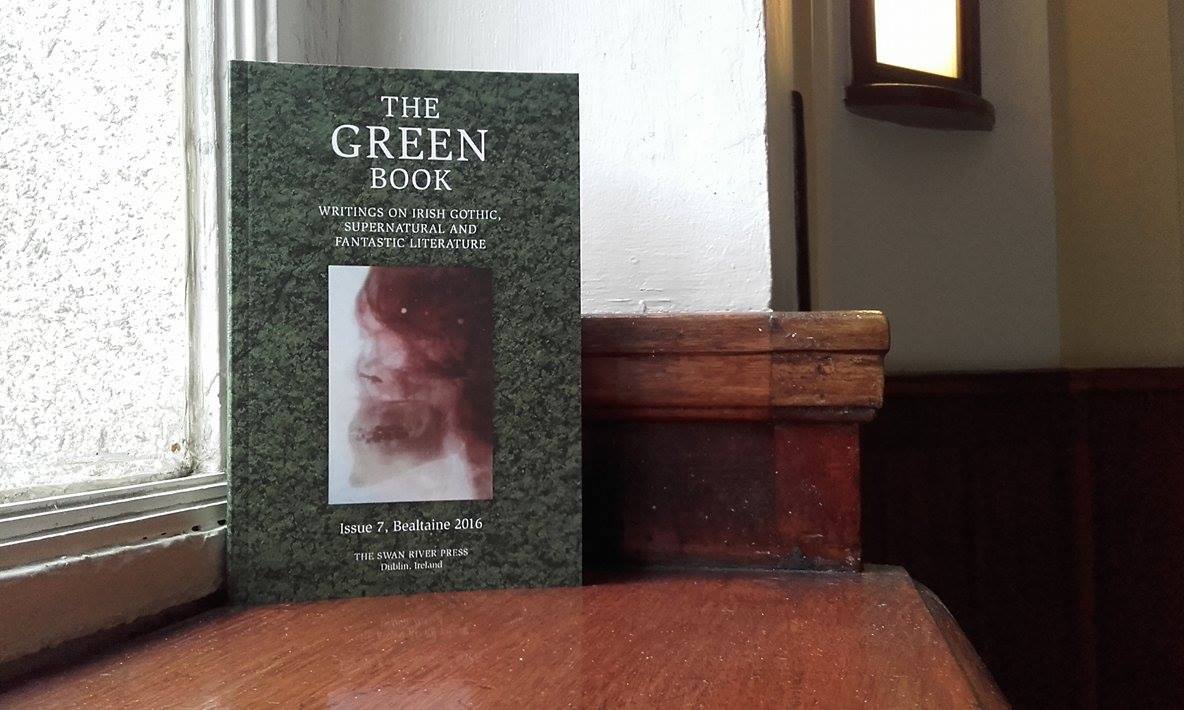
Naturally any such list will be highly idiosyncratic. I have chosen to focus primarily on fiction. Generally I’ve erred on the side of inclusion (if only because someone once told me that the Dublin-born painter Francis Bacon “wasn’t really Irish, now was he?”). On the whole I have shied away from oral tradition, mythology, and folklore. No doubt these modes have had a profound impact on Irish literature, but to include them would make scope of the project unwieldy.  I am also keeping away from Irish science-fiction, not only due to my lack of knowledge on the subject, but because Ireland’s contribution to that genre could easily fill a book on its own. That said, do expect occasional overlaps.

While I have contributors for most of the entries on my list, there are a handful of yet unclaimed authors who need to be written about. This is where you come in. If you’re interested in and have the ability to write such an article, I would love to hear from you. I’ve currently got a list of 75 writers, with a growing roster of contributors that currently numbers around 25.

Enquiries are welcome. gothicdublin[at]gmail[dot]com

I do appreciate enthusiasm, but when writing please tell me a bit about your background qualifications and interest. I’ll be glad to tell you more about the project and which entries are available. Generally speaking, the deadline for articles is 1 December 2017 and the article length should be around 2,000 words depending on the author. There is payment involved.

If you have any suggestions for authors to include, I would be happy to hear them, along with rationale as to why they should be included. And if you’re interested in writing about your suggestion, all the better! I’m looking forward to hearing from you.

Finally, anyone with an interest in Irish genre fiction might like to know that Swan River Press publishes a twice-yearly journal called The Green Book: Writings on Irish Gothic, Supernatural and Fantastic Literature. You might find something of interest!

12829209_1296539113694623_2572341596649588490_o