Best Horror of the Year 2023 Recommendations

Ellen Datlow announced the contents for Best Horror of the Year back in April of this year.

As is the custom this time of year, Ellen also announced a long-list of recommended stories from 2023.

I’m delighted to see a number of inclusions from books we published. All three titles are still available if you’d like to support these authors:

Now It’s Dark by Lynda E. Rucker
“Knots”

Treatises on Dust by Timothy J. Jarvis
“Day’s Horse Descend”
“To Have a Horse”
“We Recognise Our Own”

Uncertainties 6 edited by Brian J. Showers
“Unfinished Business” by Ruth Barber
“The Sands” by A. K. Benedict
“Consumed as in Obsessed” by Meabh De Brún
“The Switch” by James Everington
“Where Are They Now?” by Alison Moore
“The Bracken Box” by Naben Ruthnum

If you’d like to see the full list of recommendations, here’s both Part One and Part Two.

In her summation of 2023, Ellen also notes that Now It’s Dark is a “strong” third collection from Lynda R. Rucker; that Iain Sinclair’s Agents of Oblivion is “perfectly illustrated” by Dave McKean; while Timothy J. Jarvis’s Treatises on Dust is “an excellent collection of fourteen weird, often dark” stories and vignettes; of Uncertainties 6, Datlow writes, “a regular series of anthologies of new weird . . . with notable dark ones”; and The Green Book edited by Brian J. Showers is “an excellent resource for discovering underappreciated Irish writers”.


Holiday Postage

Hi folks—It’s that time of year again when you’ll hopefully want to order some books for your loved ones for the coming holiday season.

As always, the post office can be a hectic place as our colleagues there do their best to get everything on its way as quickly as possible.

Below are An Post’s advised final shipping days should you want to receive orders before the end of December. Of course the sooner you order, the better. And I’ll be making daily trips to the post office to accommodate.

Please note: Due to a postal strike in Canada, we will not be able to send books to our Canadian readers until further notice. While this is surely a difficult time for small businesses and residents of Canada, Swan River Press fully and unreservedly supports worker rights and Canadian postal service employees’ right to strike.

As paperback orders ship differently, recommended shipping dates issued by IngramSpark are slightly different:

If you’d like to read about our standard postage guidelines, you can do that here.

Regardless of when books are ordered, we will endeavour to ship them as quickly as possible.

Thank you again for all your support this year. – BJS


Irish Women Ghost Writers

The below is a response sent to the editor of the Irish Times and published on their website on 2 November 2024:

Dear Editor,

I note the recent article, “Irish Women Ghost Writers: Rediscovering Lost Voices” (30 Oct. 2024) by Jen Herron.

Characterising Irish women ghost story writers as “lost”, “forgotten”, or otherwise is misleading.

That the general reading public is not aware of particular writers does not indicate they are “lost” or “forgotten”. Indeed, the popular literary mode known as the ghost story has enjoyed a decades-long history of scholarship and publication, particularly in independent publishing. I point to the efforts of those such as Montague Summers, Lady Asquith, E. F. Bleiler, Mike Ashley, Jessica Amanda Salmonson, Richard Dalby, Melissa Edmundson, Hugh Lamb, Maria Giakaniki, Janis Dawson, among others, who have devoted themselves to this field.

Publishers such as Dover, Ash-Tree, Arkham House, Sarob, Nezu, Handheld, Tartarus, etc. have long championed women writers of the supernatural. Herron will be delighted to learn that Dublin’s own Swan River Press publishes a series entitled “Strange Stories by  Irish Women”. In fact, the names Herron lists in her article mirrors very closely the contents of our anthology, Bending to Earth, reviewed in your publication (29 June 2019): Katharine Tynan, Ethna Carbery, Rosa Mulholland, B. M. Croker, L. T. Meade, Lady Wilde, Clotilde Graves, Dora Sigerson Shorter, Beatrice Grimshaw, and the much-celebrated and decidedly not “lost” Charlotte Riddell.

While the general popularity of the ghost story may not be as pervasive as an enthusiast might wish—though less so this time of year!—it is always enjoyable to read accounts of those who discover for themselves the pleasing terrors of this established and celebrated literary tradition. There is more work yet to be done . . .

Sincerely,
Brian J. Showers
Swan River Press

Anyone who would like to investigate more closely these remarkable writers, you are invited to have a look at this poster we designed entitled “Strange Stories by Irish Women“. And if you’re still looking for more, our journal, The Green Book: Writings on Irish Gothic, Supernatural and Fantastic Literature, running now for over a decade, features not only all those names listed in Herron’s article, but additional ones including Althea Gyles, Ella Young, Charlotte Stoker, Keith Fleming, Dorothy Macardle, Anna Maria Hall, Mary Frances McHugh and others.


The Past Is a Different Country

Conduced by John Kenny, September 2024

Carly Holmes is a writer and editor who lives on the west coast of Wales. She is the author of the novels The Scrapbook (Pathian 2014), which was shortlisted for the International Rubery Book Award, and Crow Face, Doll Face (Honno Welsh Women’s Press 2023). Her short story collection Figurehead (2018) was published by Tartarus Press. She has had numerous stories published in journals and anthologies, and has been selected for The Best Horror of the Year three times.


John Kenny: Before we dive into Uncertainties VII, tell us a little about yourself. Where did your love of the uncanny and supernatural come from?

Carly Holmes: I was an anxious, timid child who organised my days around obsessive rituals and magical thinking to ensure that my family would stay safe. I carried so much guilt constantly and was always worried that I’d get into trouble for something, that I’d be found out and then rejected. I think being attracted to dark fiction and the uncanny—both writing it and reading it—are quite natural steps for an anxious child to take as they progress towards adulthood. The uncanny tends to focus on the domestic world and that shift from security to insecurity when what was once safe suddenly becomes unsafe in a way that’s almost too subtle to be able to appreciate. The same goes for the supernatural. We have an understanding of the way things should be based on logic and rationality, and what we’re taught in school. A supernatural occurrence or experience turns everything on its head and pitches us into a world that is made alien. All of our familiar markers for negotiating our way through life are suddenly called into question. I spent so much of my childhood in a state of uncertainty and fear, and everything about the uncanny as a genre speaks to me.

JK: I suppose you could say that dark fiction and the uncanny helped you to negotiate those childhood fears and make some sense of them. Certainly, there’s a struggle to make sense of things in “A Suit of Darkest Blue” by Steven J. Dines, for me one of the standout stories in Uncertainties VII.

CH: When I invited Steve to contribute a story I was very excited to read what he’d come up with. And, of course, he didn’t disappoint. I think, of all the people I know who write in the horror genre, his stories are most similar in spirit and tone to my own; or certainly to the stories I want to write, those that exist in my head before I’ve committed them to paper, when they’re still perfect, pure things. That longing, that aching melancholy, the horror of grief—that’s what I’m drawn to as a reader, and what I aim to convey as a writer.

JK: I’m quite the fan of Dines’ work myself, particularly the stories I’ve read in Black Static. It’s interesting what you say about the stories as you conceive them compared to what appears on paper. Which of your own stories do you think have come closest to that perfect purity in your head?

CH: I don’t know if any of them have, really! The gulf between what I thought my stories might be before I started writing them and what they then became is vast, every time. I’m not saying I’m not proud of some of the things I’ve written, particularly the novels, but I’m not sure I’ve ever written anything that matched what I initially thought it could have been. Of my short stories, maybe “Three for a Girl”, the novelette in Figurehead, came closest. I never plan anything I write, be it short-form or long-form prose. I tend to respond to a fragment of something overheard or half seen and run with it, which means I’m not following a written guide at all and only have the vaguest idea how the narrative will progress. Recently a friend commented on social media that she kept hearing women singing in the walls of her house and after investigating she discovered a hive of wild bees. That beautiful, other-worldly image sparked the idea for a story, and it was going to be the most perfect story I’d ever written. I’m about 1,000 words in and it’s already moving into less perfect territory! I don’t know if it will ever be published but if I finish it then I hope that I will at least be proud of it.

JK: I think most artists feel the same way about the finished piece, be it fiction, art, music, whatever. Although it does feel to me that Craig Rosenberg’s Uncertainties VII story “The Good Old Days” is as near perfection as can be. I wonder how the sense of nostalgia in that story worked for you. It’s tied to a very specific place and period.

CH: “The Good Old Days” is fantastic, isn’t it! Though it’s set in suburban Australia and partially in the mid-1970s, so a place I’ve never been to and a period before I was born (just), the sense of nostalgia for childhood is pretty universal. The childhood sections of King’s IT, set in the 1950s, conjure that same atmosphere most of us who are Generation X or older will remember: bombing around on your bike with your friends, making dens, disappearing for hours without adult supervision . . . Craig handled that superbly, with a wistful nostalgia and a scattering of references to popular culture. You might not have tasted those particular sweets that Robbie and Jon had when they were kids, but you remember the joy of going to the sweet shop and getting your paper bag of pick n mix with your pocket money.

JK: That’s very true. In my case, I recognised and remember with fondness almost all the films, TV programmes, toys, etc. mentioned in the story. One thing I noticed in Uncertainties VII is the equal balance of male and female writers represented in the anthology, with one non-binary author. Was this by design when you were inviting contributions or a happy accident?

CH: Yes, it was by design. I wanted both sexes to be equally represented. I already had a list of male and female writers whose work I admire and who I knew I’d approach, and that was pretty balanced. I would have liked there to be a greater diversity of ethnic voices as well but some of the authors I emailed with the initial invitation to submit didn’t respond, which is a shame.

JK: Tell us a little more about your own work. Your latest novel was published last year by Honno Welsh Women’s Press. And you’ve had a number of short stories chosen for Year’s Best anthologies.

CH: Sadly, there’s a lot less to tell than I’d like! My first novel The Scrapbook was published ten years ago and I got frozen in the aftermath and became a Miss Havisham character who just couldn’t let it go. I hadn’t been prepared at all for the way a book you’d loved and worked so hard over would drop into the collective pool of all the books written and churned out every month, and sink like a stone after a brief fanfare, causing barely a ripple. That’s just the way of it for small indie publishers, I know that now. But I didn’t really know it then, and I couldn’t move on for a long time to try to write something novel-length again. I’d always written short stories and loved the genre so I returned to them and was lucky enough to have a collection, Figurehead, picked up by Tartarus Press. Then Crow Face, Doll Face, my second novel, was published by Honno Press last October, and I’d had years to forget how smartly the publishing world moves on after the initial post-pub promo buzz, so I’ve had to deal with that all over again! Hopefully I won’t leave it another decade before I write another novel though.

As to the short stories, I just don’t have the time or energy to write much of anything these days as my job is stressful and the workload is overwhelming, so for the last two or three years I’ve only written stories for commission—maybe two or three a year. “Dodger”, a story I wrote last year for Darkness Beckons, Flame Tree Press’s ABC of Horror series of anthologies, was selected for reprint in Ellen Datlow’s Best Horror of the Year anthology, out at the end of this year, which is wonderful.

JK: I look forward to reading that. Datlow’s Year’s Bests are superb. Looking at all of the stories in Uncertainties VII, I think the strangest one has to be “Mama Fungus” by Sarah Read. The surreal quality of the viewpoint character’s interactions with the “men” manages to convey a real sense of uncertainty. Are you familiar with any of Read’s other work?

CH: I first came across Sarah’s work when we appeared together in Black Shuck Books’s Pareidolia anthology, back in 2019. Her excellent story “Into the Wood” really stayed with me. I picked up her collection Out of Water and absolutely loved it. There’s a strangeness to her writing—a surreal quality, as you say—that really appeals to me. And her prose is exquisite, both poetic and visceral. I have her latest collection, Root Rot, on my TBR pile!

JK: There’s an interesting experiment with time in Georgina Bruce’s “An Innocent Beast” that leaves you guessing at the end. And another favourite of mine is “Subject Matter” by Philippa Holloway, about the lengths to which an artist’s model has to go to fulfil her contract.

CH: I think both “An Innocent Beast” and “Subject Matter” are perfect distillations of the anthology’s theme: uncertainty. The reader, through that intense and intimate second-person narrative, is as out of their depth and insecure as the narrator in “Subject Matter”, trying to work out what’s going on and how things will end. Though a totally different story in theme and gear, “An Innocent Beast” deals in uncertainty just as deftly, giving the reader pieces of the story from different viewpoints and then ultimately ending where it started . . . Or does it?

JK: I wonder if working with such a wide range of writers for this anthology has in any way influenced or inspired you with your own short fiction? Are there any more stories in the pipeline?

CH: It’s always inspiring to read fantastic stories, especially ones that take you by surprise. I love how we all interpret a theme or topic differently and filter our response to it through our own experiences or perspective. Looking across the range of stories in this edition of Uncertainties they’re all so different, and all of them inspiring to me.

I don’t have any stories in the pipeline right now, but do have a deadline for a commissioned piece for an anthology next year. In the meantime, it would be lovely to start (and hopefully finish!) another novel over the next year or so. I have a vague idea for it but nothing more developed than that.

JK: If I were to notice a theme emerging in many of the stories in Uncertainties VII, it would be that of characters trying to escape their past and inevitably coming face-to-face with it. Is this something you noticed yourself or is it a common theme in tales of the uncanny and supernatural?

CH: The shadow theme I noticed when the stories started rolling in was that of nature turning on humans. The natural world not behaving as humans expect it to, and becoming unnatural . . . The wonderful “Ends Abruptly” by Tim Major is a perfect example of this, narrated by a man walking with his family through a sculpture park (which surely has to be the most human-centric outdoor pursuit ever! Manicuring nature and adding unnatural man-made structures to the beauty that is naturally present in order to “improve” it for the human experience), and it’s also there in “An Innocent Beast” by Georgina Bruce, “Mama Fungus” by Sarah Read, “The Winding of the Willows” by Steve Toase, and “The Son” by Bethany W. Pope, to name a few.

JK: The quality of the stories you’ve chosen for Uncertainties VII demonstrates a genre that is in excellent health. But do you think there are enough outlets for stories of this nature? I’m hearing of several small presses shutting down.

CH: I’m not a writer who is firmly rooted in the horror/uncanny genre; I’m more on the fringes of it, as I don’t think I’ve ever intentionally set out to write a horror story. So I don’t have as much awareness as other writers of the general state of small presses in the genre, particularly in the US. I do read things on social media which bear out what you’re saying, and I also know that the situation in Wales is pretty dire generally for short story writers as we’ve lost a number of journals due to lack of funding over the last couple of years. In the horror genre, as in every genre of writing, the number of writers who want to be published far outweighs the number of outlets available. Without supporting these outlets by taking out subscriptions to journals or buying books, the situation will only get worse.

JK: Is Uncertainties VII your first edited anthology? Is this something you’d like to do again in the future?

CH: I work for a publisher and before that I was a freelance editor, so I’ve edited a lot of books: single-authored story collections, novels, memoir, and anthologies, but Uncertainties VII is the first anthology I’ve edited in the horror/uncanny genre. It’s been a lot of fun but also very stressful, mainly because I work essentially full-time hours in my job and have very little free time to spare. I’m a neurotic perfectionist and was determined to give this book and these writers quality attention. I’m very proud of the end result and very excited to see it in print but I need a nap and a large gin now!


Buy a copy of Uncertainties VII.

In an Uncertain Mode

The Green Book 24

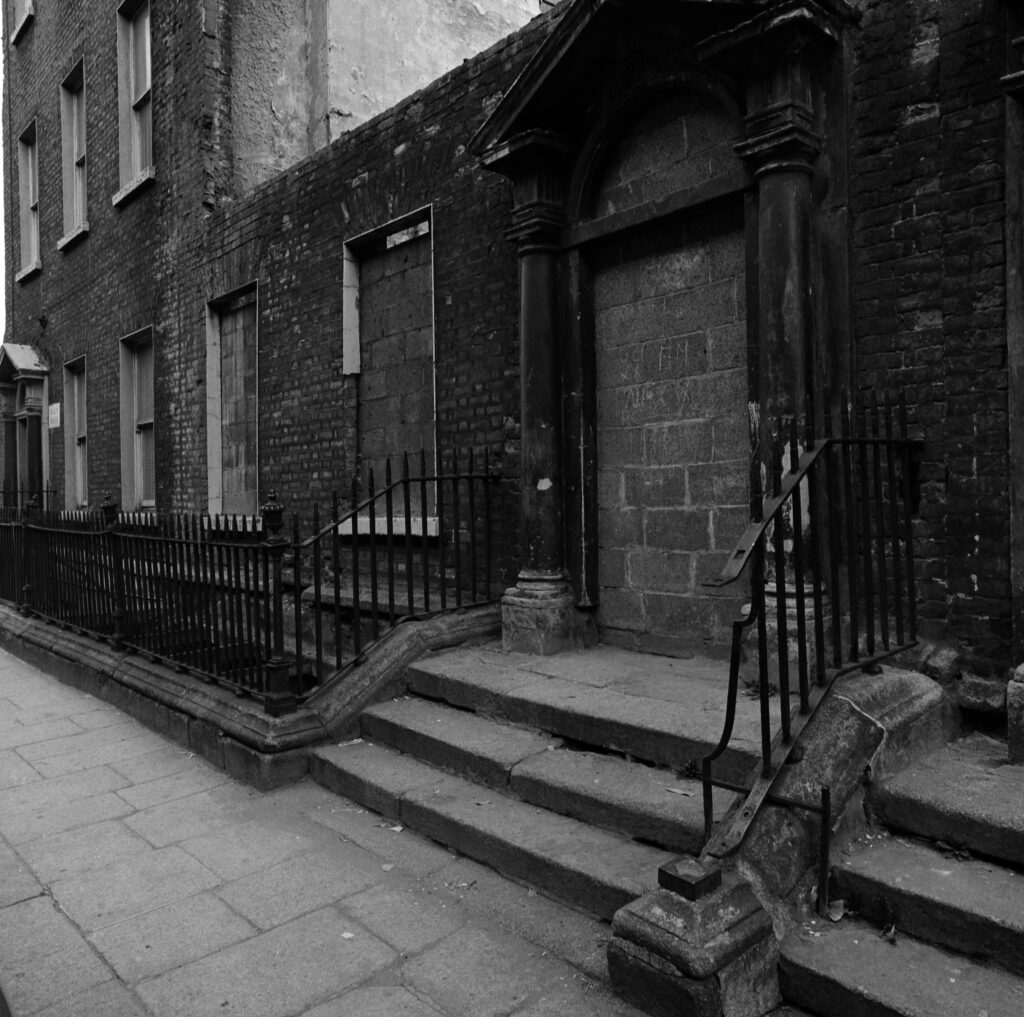
37 York Street, Dublin. Reproduced courtesy of the National Library of Ireland.

“Editor’s Note #24”

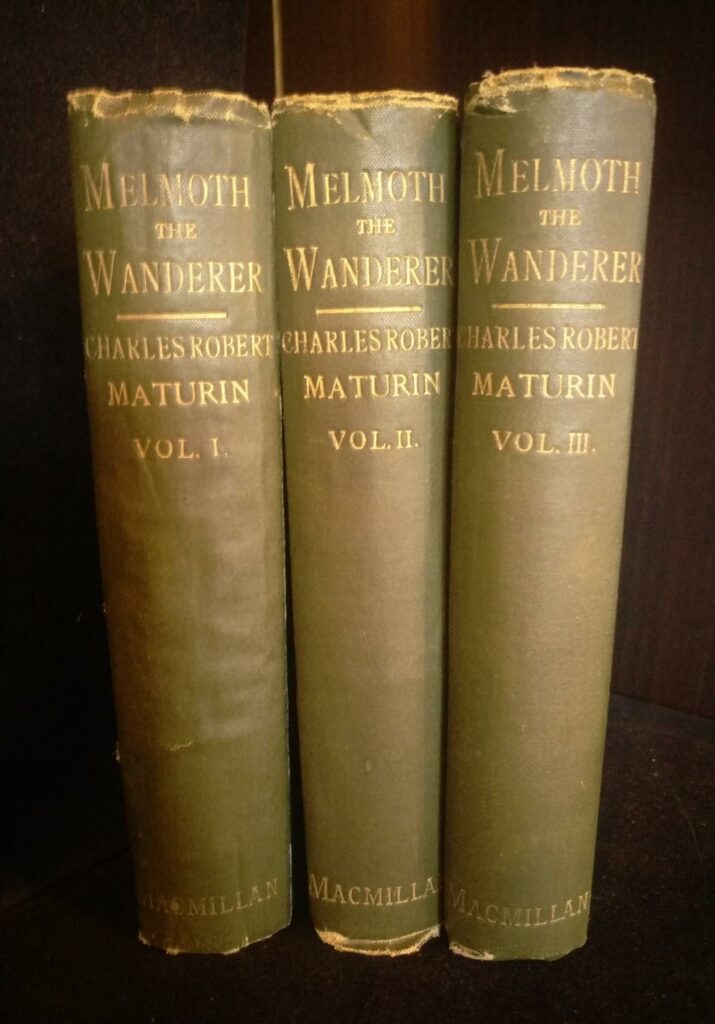
In Issue 23 of The Green Book we featured a sketch of Charles Maturin (1782-1824) penned by James Clarence Mangan, originally published in March 1849. Although we now celebrate Maturin as the author of Melmoth the Wanderer (1820), Mangan identified The Milesian Chief (1812) as his own favourite novel: “the grandest of all Maturin’s productions”. In that essay, Mangan also muses on Maturin’s underappreciated legacy in his native Dublin—“not forgotten because he had never been thought about”. He goes on tell us that the writer William Godwin wished to make a pilgrimage to Maturin’s grave, but Mangan observes, “where the remains of my distinguished countryman repose, I confess I know not”.

The answer to that question in 1849 would have been simple: the churchyard of St. Peter’s on Aungier Street, where Maturin once served as curate. The answer to that same question in 2024, as we approach the bicentenary of Maturin’s death on 30 October, is substantially more complex: St. Peter’s was razed in 1980, the churchyard and its contents removed to make way for urban development. And so what of Maturin’s admirers who, like Mangan, would make that pilgrimage to the Gothic eccentric’s final resting place? Thankfully, opening this issue we have Fergal O’Reilly’s exploration of this literary mystery, taking us on a posthumous odyssey from Aungier Street to various churches and churchyards across Dublin, by way of various archaeological reports, in search of Maturin’s earthly remains—a puzzle worthy of Yeats’s own skeletal jumble. Readers interested in learning more about Charles Maturin will find a full biographical profile written by Albert Power in Issue 12.

In keeping with the forgotten and overlooked, we have another crop of profiles from our “Guide to Irish Writers of the Fantastic and Supernatural” series, although it strikes me that many of these names will hopefully be familiar to most: Maria Edgeworth, Katharine Tynan, and Dorothy Macardle; these writers do, however, rub shoulders with the truly lesser known likes of Filson Young, Shaw Desmond, and Martin Waddell. As always, I hope you will discover new literary paths to explore with these new entries.

And finally, Bernice M. Murphy weighs in on the freshly restored and re-released Irish “folk horror” film The Outcasts (1982), written and directed by Robert Wynne-Simmons—a name some will recognise as the screenwriter of The Blood on Satan’s Claw (1971). For some in Ireland, this film is a dim but impressive memory, glimpsed on late-night television during its only broadcast in 1984. The Outcasts over the decades became a piece of Irish cinema legend, less seen and more peppered into conversations revolving around obscure celluloid. The Irish Film Institute describes this film as “folk horror”, a phrase I find too liberally applied these days to just about anything featuring sticks, rocks, and goats or set in the countryside. The Outcasts does not necessarily strive for the ultimate unified effect of horror. Instead, this film is of a rarer breed, more akin to Penda’s Fen (1974) in its otherworldly ruminations. I’ve come to prefer the phrase “folk revelation” as perhaps a more accommodating description for these sorts of stories. Whatever the case, I hope you get to see this remarkable film.

Buy The Green Book 24

Brian J. Showers
Æon House, Dublin
25 September 2024

Excavating at the Edges of the World

Conducted by John Kenny, September 2024

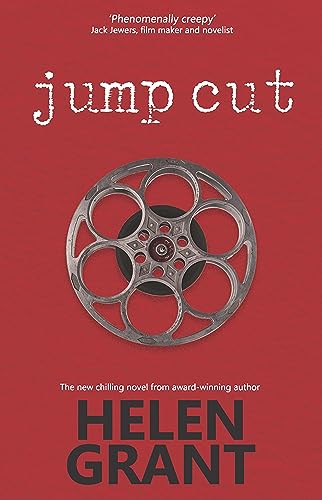
Helen Grant is the author of short story collection The Sea Change & Other Stories (Swan River Press 2013) and her novels include Ghost (Fledgling Press 2018), Too Near the Dead (Fledgling Press 2021), which was winner of the Dracula Society’s Children of the Night Award, and Jump Cut (Fledgling Press 2023), which is about a notorious lost movie called The Simulacrum. Joyce Carol Oates has described her as “a brilliant chronicler of the uncanny as only those who dwell in places of dripping, graylit beauty can be”. Helen lives in Perthshire, Scotland, and is a fan of ghost story writer M. R. James, exploring abandoned country houses, and swimming in freezing lochs.


John Kenny: What is it about Gothic stories that appeals to you?

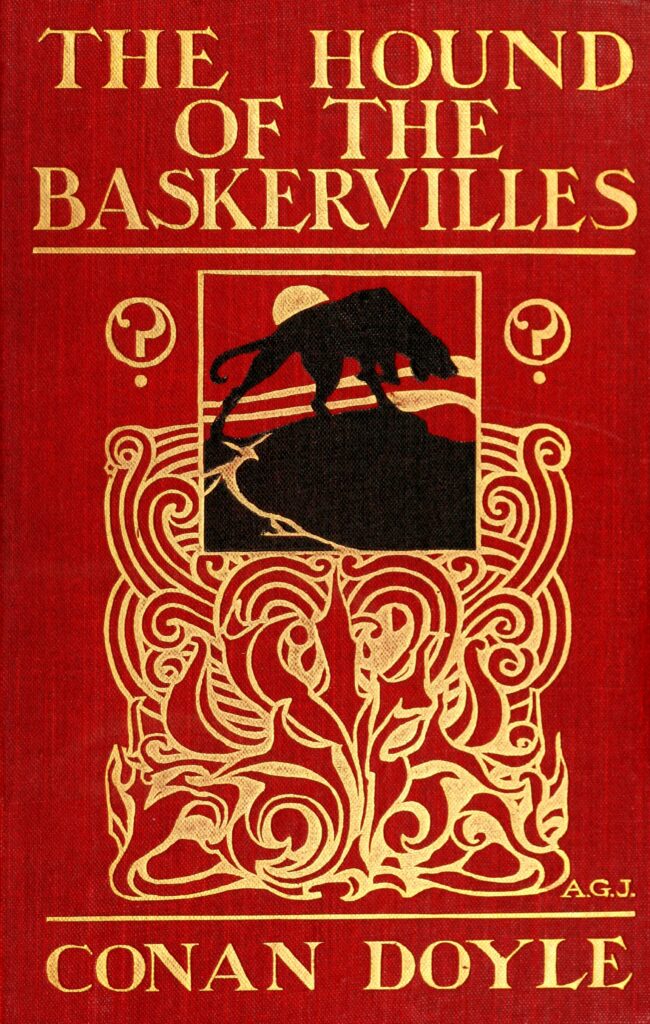
Helen Grant: Oddly enough, when I started writing professionally I didn’t realise I was squarely in the Gothic genre. I’d been naturally drawn to Gothic novels and stories from childhood. The Hound of the Baskervilles was a big fave of mine when I was ten, and I went on to read The Mysteries of Udolpho, The Monk, The Castle of Otranto, Dracula, etc. and later novels like Rebecca without giving much thought to the genre. In more recent years I took an online course in the Gothic from the University of Stirling and it clicked . . . I guess there are a variety of things I love about the Gothic. I like the fact that it is often spine tingling and creepy but not too brutally gory—terror rather than horror, I have heard people say. I like stories with isolated protagonists (I’m not a party animal myself and I like stories where the heroine has to survive on her wits and try to work out what is going on). I love folklore, and old buildings too—one of my hobbies is exploring abandoned country mansions here in Scotland. But the big thing I love about the Gothic is that it is filled with emotion. When something terrifying happens, I’m interested in how that makes people feel. How do they respond to it? How do they cope? Can they tell what is real? I find that fascinating.

JK: I note that you’re a fan of M. R. James’s short stories and have spoken at a couple of conferences devoted to his life and work. I’m curious to know what aspects of his work you discussed.

HG: Yes, I have been a fan of M. R. James’s ghost stories for as long as I can remember. When I was a child, my father used to retell them to us on long car journeys! I still re-read them regularly.

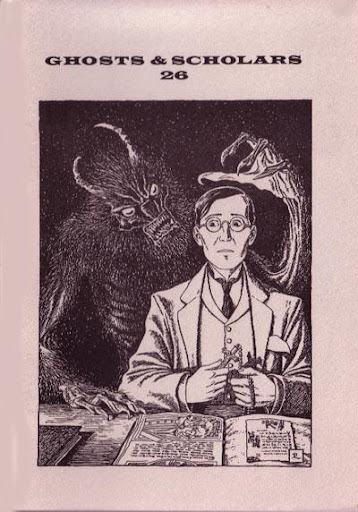
In 2015 I was a plenary speaker at M. R. James and the Modern Ghost Story, a conference held in the Leeds Library. On that occasion I spoke about the demonology of “Canon Alberic’s Scrap-book”, a topic I have also written about for the Ghosts & Scholars Newsletter. I’m fascinated by that story, and particularly by the fact that nothing in it appears to be random—including the dates on which various eldritch things occur.

In 2018 I spoke at another conference, Through a Glass Darkly, this time in York. On that occasion I related the true story of Father Nikola Reinartz, a German priest who travelled to England to view Steinfeld’s missing stained glass windows, after their whereabouts were revealed in “The Treasure of Abbot Thomas”. Father Reinartz corresponded with M. R. James, who was instrumental in helping him to view the glass. In order to piece this story together I translated some articles from the German, published in the early 1900s in an appallingly spiky Gothic script that was very difficult to read!

More recently, in March 2024, I spoke to the Dracula Society in London about M. R. James’s foreign story locations. I’ve visited most of those: Steinfeld, St. Bertrand de Comminges, Viborg, Marcilly-le-Hayer. During the same talk I also discussed the use of technology in the stories, because that’s something that increasingly interests me. At the 2015 conference in Leeds I heard Aaron Worth, an Associate Professor at Boston University, speaking about the “Haunted Cinematography of M. R. James” and that made a big impression on me because I didn’t naturally associate M. R. James with technology. I tended to think: old books, quill pens, odd bits of church architecture. But there’s actually quite a lot of technology in his stories, and it’s frequently malign (think of the magic lantern in “Casting the Runes” for example). My most recent novel, Jump Cut, has old technology at its heart, and it has some very Jamesian moments in it.

JK: Speaking of cinematography, your latest novel, Jump Cut, deals with a “lost” film called The Simulacrum. Is this an actual film? I read something about it online that seems to suggest it is.

HG: So far as I know, there is no actual film called The Simulacrum. There are several simply called Simulacrum (some of them indie shorts, I think) but not The Simulacrum. When I was deciding on the name of the movie in the book, I tried really hard to find one that wasn’t already a film, and especially not one everyone would immediately recognise. I did have various names in mind, but I liked that one because the word comes from the Latin word for a likeness or image, and I felt that gave it a properly ominous tone!

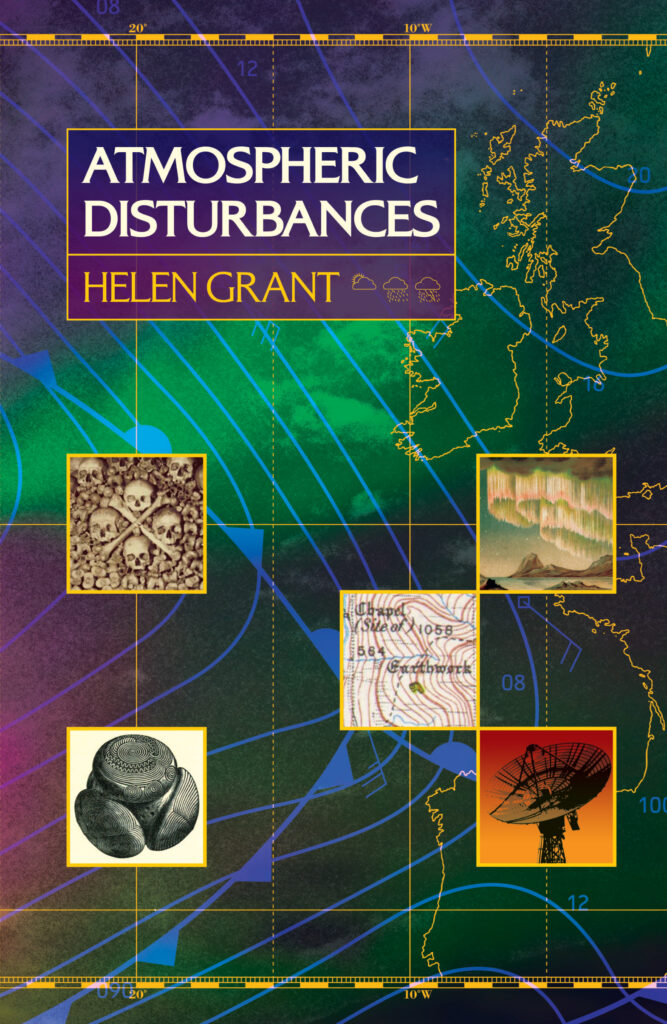
JK: You mentioned earlier your love of exploring abandoned country mansions and I note “The West Window” in your new collection, Atmospheric Disturbances, revolves around this very pursuit. Are there many such abandoned mansions in Scotland and can you just walk in?

HG: There are, amazingly, quite a few abandoned mansions in Scotland, and I have often thought that perhaps this is because many country houses were in quite remote locations; if they were in the south of England, for example, they would have been pulled down, boarded up or turned into a hotel long ago. Often, you can just walk in (though not always). Sometimes they have been fenced off, and sometimes it just isn’t possible to go inside because there is so much debris: fallen timbers, lengths of guttering and masonry. The mansion in “The West Window” is loosely based on Dunmore Park House near Falkirk, although I took a few liberties with the topography, turning the house 360° and blanking out one window. I have visited it four or five times. The room in the story, the library, really was a library and is now much as I have described it. In spite of its ruinous state it does still have a kind of beauty.

JK: The sense of place you create in your stories is vivid. particularly in stories like “The Valley of Achor”, “The Edge of the World”, and “Atmospheric Disturbances”. I see the setting for “The Valley of Achor” is Perthshire, where you live. Is there a burial mound or ruined chapel where you’ve mentioned it?

HG: Ah, interesting you should ask about that particular story location! Well, the place itself is Glen Almond, which is not far from Aberfeldy, and like my heroine Ann, I have cycled down it (and jolly cold it was, too). There is indeed a burial mound or cairn, at a site called Clach Na Tiompan which also incorporated a stone circle, mostly destroyed now. South-west of it there is another site, called Tomenbowie, which has a burial ground very much like the one in the story. I went to see that out of pure nosiness—I love poking about in old kirkyards and ruins. There may or may not have been a chapel associated with this burial ground. The Canmore database, which has records for both of these sites, says “Chapel (Period Unassigned) (Possible)”. Having walked all around the burial ground, I could not see any sign at all of a chapel. If there ever was one, it is no longer visible or not extant at all. That was what gave me the idea for the story, really. Was there a chapel, and if so, why isn’t there one now?

JK: That’s fascinating. Several of your stories in Atmospheric Disturbances have at their centre a kernel of authenticity. I’m thinking specifically of “The Edge of the World” and its petrospheres. The alternate theory as to their purpose that the main character advances is genuinely intriguing.

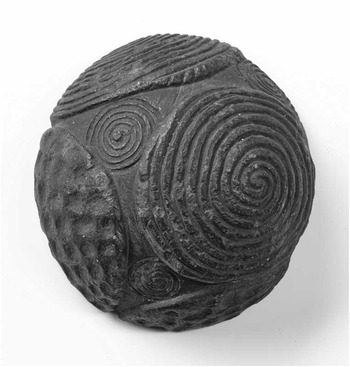
HG: I’m a bit obsessed with petrospheres! I find it extraordinary that there are these things which clearly took a lot of time and skill to make, and we don’t know what they were for. I feel it ought to be obvious, but it isn’t. They must have some function beyond being merely decorative because in a society that was so much closer to subsistence level than ours is, you wouldn’t sit and laboriously carve something out of stone for no reason. People have suggested that they were fishing weights or (that most irritatingly vague explanation) that they had some “ritual significance”, but we just don’t know. I don’t think they are a uniform weight either so they probably weren’t used for weighing things. Blackhouses sometimes have nets over their thatched roofs and those have stones on them to weight the ends down, but the stones are much bigger than the petrospheres so that seems unlikely. My son is an archaeologist but I can’t really get him to speculate about this either! I was going to go nuts thinking about it, so in the end I made up my own explanation.

JK: Another story in the collection that uses a real object as its inspiration is “The Field Has Eyes, the Wood Has Ears”. There are a number of facets to the story that combine to generate a genuine sense of terror: the outbreak of Covid-19, the worsening migraine, the bizarre sketch by Hieronymus Bosch.

HG: Yes—it’s my one Covid-19 story. I haven’t been tempted to set an entire book during the pandemic. It’s hard to explain why. When we were in the thick of it, I was very concerned about how or whether to incorporate it into the novels I was writing (I opted to set Jump Cut just before it, because it didn’t seem credible that the carers of a very rich 104-year-old woman would let strangers visit during Covid) and I’m not sure there was an ideal answer to that.

The short story was prompted by several different factors. I have long been somewhat fascinated by the effects of ergot poisoning (hmmm, reading that remark back, it sounds very dodgy) and I think I have read that some people suspect Hieronymus Bosch’s wild and nightmarish paintings were prompted by it. It’s also true that some migraine meds do contain ergotamine. I can imagine that during the brain fogging many people experienced when they had Covid, a person might lose track of how much of something they had taken, and when. So the set-up is not unrealistic. As for the Bosch sketch, well, that just gives me the meemies. I went to the Bosch exhibition in s-Hertogenbosch some years back and saw a lot of his work. The big oil paintings are surreal and horrifying, but there is something about that simple little sketch that is chilling. The unease followed me home.

JK: One of my favourite stories in Atmospheric Disturbances is “Mrs. Vanderkaust’s Lease”, perhaps because the denouement is implied rather than spelled out. And “Chesham” is similar (although completely different), in that the ending is freighted with all sorts of implications. I sometimes think this approach can really ramp up the tension of a story.

HG: It’s interesting that you picked those stories out. I don’t say I never do pulp and gore (one of my recent stories for Nightmare Abbey was about carnivorous goldfish) but on the whole I think I tend towards the “less is more” approach. Letting the reader’s imagination do the work can be more effective than spelling it all out. At the end of “Mrs. Velderkaust’s Lease”, would the story be improved by describing what has happened in graphic detail? I don’t think so. I mean, Ellen Velderkaust herself doesn’t want to think about what has happened. Plus I think there is a risk of spilling over into the ridiculous. It’s taste, though, isn’t it? I guess some folks love to roll in gore . . .

As for “Chesham”, I think that kind of scenario is literally the stuff of nightmares—the feeling that there is something urgent you should have done or noticed. Incidentally, the house is based on the one I lived in until my mid-teens, and the topography of the town is accurate. Actually some of the minor events in the story are true too. Hmmm. I’m not sure I’m going to think about that too carefully.

JK: Finally, the title story “Atmospheric Disturbances”, which aptly closes the collection, manages to be both deeply disturbing and somewhat hopeful at the end. Do you think the existence of humankind might only be one chapter in the story of this planet?

HG: I was glad the collection closed with that story, because it’s one of the rare ones with an optimistic ending. Humankind is absolutely one chapter in the story of this planet, given that we have been here a relatively short time compared to the dinosaurs. Whether we’re the last chapter is another thing. “Atmospheric Disturbances” springs from a deep-rooted fear shared by those of us who grew up during the Cold War. Occasionally, decades later, I still have nightmares about nuclear attacks. The “four-minute warning” was a horrible concept—long enough to panic, not long enough to reach your loved ones.

In the story, there is a lot of ambiguity. We only know as much as Rob, the protagonist, knows. Given where he is, he may never know anything more. But yes, there are elements of hope at the end. Perhaps that sums up how I feel about the topic—terrified about what could happen, hopeful that it won’t.


Buy a copy of Atmospheric Disturbances.

Shipping Updates

Below I’ll post updates on the publication and shipping status of our various books. I’ll update as information is available. – BJS

Thursday, 12 December 2024—Due to the postal strike in Canada, we’re not currently able to send post to Canadian destinations. We were able to get pre-orders of Atmospheric Disturbances and Uncertainties 7 on their way while the Canadian postal system was still accepting post. However, there may still be delays if packages aren’t being delivered yet on the other end and there will surely be a backlog to boot. Suffice to say, we’ve done all we can on our end. While this is a difficult time for small businesses and residents of Canada, Swan River Press fully and unreservedly supports worker rights and Canadian postal service employees’ right to strike. For our own further postage updates, you can check here.

Friday, 22 November 2024—If you’ve ordered something before this date, it’s in the post now. I’ll be on holiday until Friday, 29 November and will not be filling orders or responding to emails during this time. Thanks again for all the orders, folks!

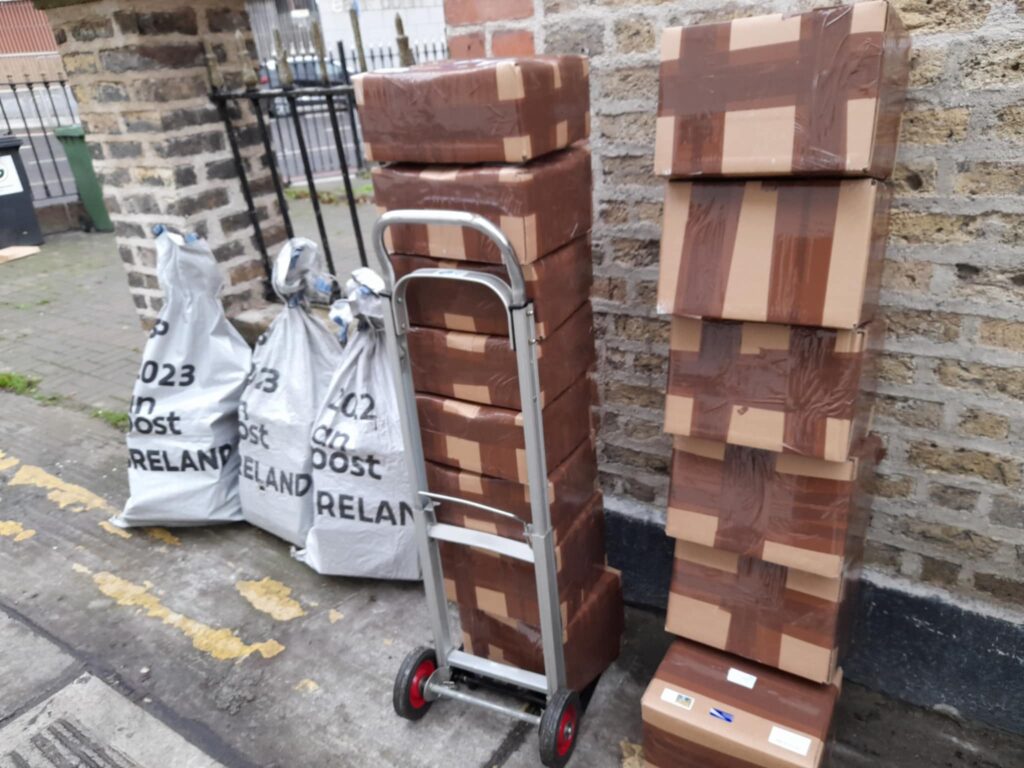
Thursday, 21 November 2024—The remainder of the pre-orders for Atmospheric Disturbances and Uncertainties 7 went to the post office today where they’ll be processed for customs over the coming days. This includes single-book orders to USA, Canada, and the United Kingdom; as well as multiple book orders for the United Kingdom. There were a few more contributor and trade parcels that also went out today. My thanks again to An Post Rialto for their hard work to make this onerous process go more smoothly. Just a reminder as well that I’ll be on holiday from Friday, 22 November through Friday, 29 November and will not be filling orders or responding to email during this time. Thank you again to everyone for our patience.

Monday, 18 November 2024—Here’s what went to the post office this morning: Shipments to those living in USA, Canada, Japan, Europe, Ireland who ordered multiple titles; and single-book orders to Ireland, Europe, and New Zealand. I also shipped the majority of contributor copies, plus some trade orders. One hurdle, which I’ve described below, but will again: there is a bottleneck at the post office whereby customs paperwork needs to be completed for each item. This bottleneck is even more acute this time of year due to the holiday season. Just because the above has gone to the post office today does not mean they will all ship today—however, the postal workers, generous with their energy, especially this time of year, will do their best to help process shipments quickly. When they’ve cleared that batch, they’ll collect another. In the meantime, I will continue packing. Shout out to John Kealy who stopped by on Saturday to help with the packing!

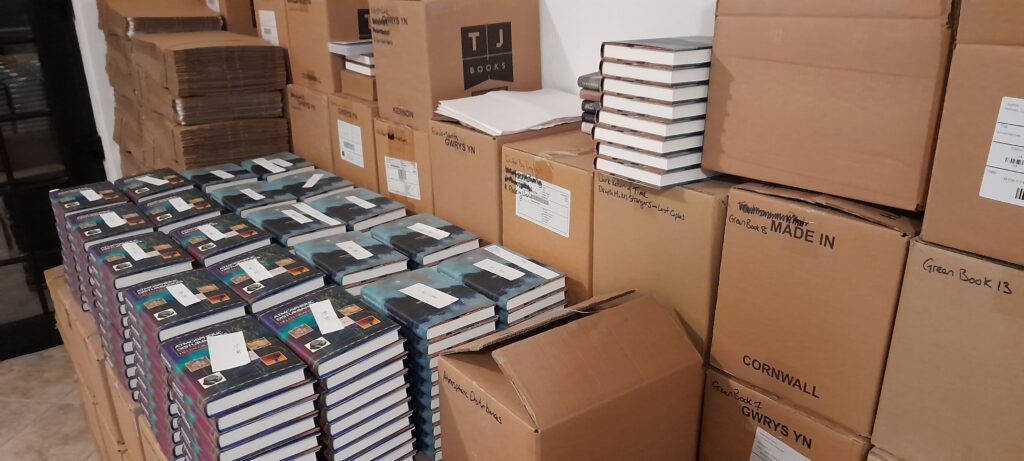
Thursday, 14 November 2024—Just about midnight. I’ve been working since Monday to prep all the books. Like painting a room, so much of the work is about prep and organising before the actual packing. I manually inspected each of the 850 books that arrived. I always find ones that don’t pass my quality control. This time around there was a copy without head/tailbands, another with two signing sheets bound in, plus a whole clutch with poor binding. These will be used for review and deposit copies. After that I did the embossing and numbering, 100 copies of each new title. During all this I sifted through all the packing slips to make sure certain copies go to the right people. There are a lot of piles around here now. I also managed to pack and ship on Tuesday a handful of orders for those who only ordered Uncertainties VII. So you might see others receive their copies soon enough. If you haven’t received yours, please don’t worry. This is a length process and as described below, I have been left with little time at the worst part of the year in which to do this. But I will continue to work diligently as always. Oh yeah, I also managed to pack a number of boxes of contributor copies of Uncertainties VII. Those were meant to go o the post office today, but they weren’t able to collect today because they were just too busy. Not their fault as this is the busiest time of the year for them. This may result in a bottleneck at some point, but there’s little that can be done about that. The culprit in this mess is identified below. Anyway, goodnight for the moment. After I finish my 9-5 tomorrow, I’ll get back to work packing.

Monday, 11 November 2024—Both Atmospheric Disturbances and Uncertainties VII arrived today here in Dublin. The process to ship them onward will be a long one, but I will keep a meticulous record of the progress, so keep an eye here for all details. Now for the difficult part: Unfortunately TJ Books’s abhorrently late delivery (over a month) means that we’ve now hit the holiday season. Underfunded postal services tend to be under even more strain due to the seasonal bulk—and our own local post office is extremely generous with the help they give us on processing customs paperwork. There’s not much that can be done now but to start getting through as much as I can. I apologise again for the disappointment. Anyone who needs a refund, please get in touch.

Wednesday, 6 November 2024—Another update from TJ Books: “The Green Book: Remaining 50 copies have been despatched this morning via Fedex; Atmospheric Disturbances: Waiting to bind, to be despatched on Friday. Once I have the tracking and despatch tickets, I will send these over to you; Uncertainties Vol 7: Despatched today, for delivery by Monday latest via TPN. Tracking number to follow.” Unfortunately this puts us right in the middle of the holiday shipping season. Postal times will be slower and the generous people at the Rialto Post Office who help me with the onerous customs paperwork, while they are still offering their much needed help to our operations, will understandably not be able to process your orders as quickly. This will possibly cause further delays. Having sent these titles to the printer in August/early September, I was very much trying to avoid shipping books at this time of year. I am enormously dismayed with the TJ Books’ service. This comes on the immediate heels of the unacceptable binding job they did on Friends and Spectres last summer. You can read about it here. Personally, this experience is both infuriating and disheartening. I offer my apology to those who have come to expect better from Swan River Press, and will endeavour to get you the books you ordered as quickly as possible.

Monday, 4 November 2024—I’ve just been in touch with the managing director of TJ Books, who not only apologises for “what seems to be an unsatisfactory level of service from the factory” (my italics), but tells me that “Unless there is some other reason I am unaware of, I would expect these to be finished and despatched by Wednesday [6 November] the latest.” For me this means that the books likely won’t arrive until the following week. It will still take me two weeks to pack all the orders, so this also means that we will be hitting the busy season at the post office, and I’ll be expecting slower delivery speeds now too. I really try to avoid the arrivals of new titles this time of year for this very reason. Despite this, I will work as swiftly as possible, posting updates here as to my progress.

Sunday, 3 November 2024—If you ordered only The Green Book 24, then your copy will go into the post on Monday, 4 November. If you ordered The Green Book 24 and either Atmospheric Disturbances or Uncertainties 7, then your copy will ship when the latter two titles arrive. I have not been able to get a new provisional shipping date from TJ Books, despite having asked (again) earlier last week. All I can do is apologise. I wish their communication and service were better. I know everyone is waiting for their books to arrive. Anyone else who is tired of waiting and wants a refund, please let me know. In the meantime, I’ll make another attempt at getting a delivery date this afternoon.

Tuesday, 29 October 2024—Finally, the new issue of The Green Book arrived today. I’ll get to working packing single copy orders. If you’ve ordered this issue as well as either Atmospheric Disturbances or Uncertainties 7, then your copy will ship when the latter two titles arrive. In the meantime, I’ll get copies out to those who only ordered The Green Book 24.

Wednesday, 23 October 2024—An update today from TJ Books regarding The Green Book 24: “We have found that there has been an admin error and your books were packed in boxes with incorrect labels on them by mistake. So, we have 5 boxes of your books still held here and are being re-labelled with the correct information for your book. However, there are 2 boxes of books that have been sent out to a different address labelled as another title. We are working with the recipient of those to arrange collection of these, and then we can get them sent on to you. I just don’t have an exact timescale for this yet.”

Tuesday, 22 October 2024—We’ve just announced and are taking pre-orders for our final book of the year, Uncertainties 7. This title went to print the first week of September and will be arriving with both Atmospheric Disturbances and The Green Book 24. If you’ve ordered any combination of these titles, I will ship them together when they arrive. At the moment, they are expected to dispatch to Dublin on 25 or 28 October. I’ll believe it when they arrive.

Monday, 21 October 2024—Sorry, folks. TJ Books tells me today that Atmospheric Disturbances is “expected to be ready to despatch by this Friday/next Monday”. The sewn book blocks are apparently ready and are waiting for the cases to be printed.

Friday, 18 October 2024—No sign of The Green Book 24 as promised. I was told perhaps Monday, 21 October. TJ Books said they would also check on Monday on the shipping status of Atmospheric Disturbances. Please understand, dear reader, I cannot send these books to you until they first arrive in Dublin. You now have as much information as I do.

Monday, 7 October 2024The Green Book 24 is on track to be delivered on Friday, 18 October. Atmospheric Disturbances I hope will be delivered on Monday, 21 October. I have recently spent some time in hospital so am moving at a much slower pace. I will ship books as I can, please bear with me.

Friday, 27 September 2024—We started taking pre-orders for The Green Book 24 on 25 September. The issue went to the printer on Monday, 23 September. Both The Green Book 24 and Atmospheric Disturbances are due to ship to Dublin from Cornwall on Friday, 18 October. If you’ve ordered both titles, they will be sent to you together.

Monday, 23 September 2024—TJ Books have again revised the shipping date for Atmospheric Disturbances. The new proposed shipping date from Cornwall is Friday, 18 October.

Monday, 16 September 2024—TJ Books have revised the shipping date for Atmospheric Disturbances. The new proposed shipping date from Cornwall is Monday, 7 October. Of course this means the books will arrive in Dublin while I’m in Chester at Fantasycon. This also means that no one will be here in Dublin to receive the books. And that this title will not be available at Fantasycon. And that packing and shipping will also be delayed because of both these things. That’s just how it goes, folks. Sit tight.

Wednesday, 11 September 2024—The current projected delivery date for Atmospheric Disturbances is the week of Monday, 30 September. Keep in mind that, once books are delivered here in Dublin, there is a lengthy process before they go into the post. I’ll also be at Fantasycon in Chester from 10-14 October, and this may delay shipping for some orders.

Sunday, 1 September 2024—I’ve processed all the pre-orders to date for Atmospheric Disturbances by Helen Grant. You should have received an acknowledgement email now. If you have not, please check your spam folder. I will continue to process pre-orders as they are placed. The estimated shipping for this title remains unchanged.

Tuesday, 27 August 2024Atmospheric Disturbances by Helen Grant was sent to the printer. This book is estimated to ship in mid-October 2024.

Delayed: Friends and Spectres

Updates can be found at the bottom of the post.

When a new title arrives here at Æon House in Dublin from the printer, I’ve made a practice of immediately inspecting every copy. Yes, all of them. This is something I got into the habit of doing early on, one of many nuggets of publishing wisdom passed on to me by our sage friends at Tartarus Press.

Inspecting each copy is one of a few processes I conduct here before they are posted on to those who have pre-ordered a book, and also one of the contributing reasons why it can take me up to two weeks to get all pre-orders into the post.

Because I occasionally get “Where’s my book?” emails, sometimes only a day or two after they’re delivered to Dublin, I thought I’d write a short blog post explaining the labour involved in processing and packing so people have a better idea of what goes on behind the scenes when a new title arrives.

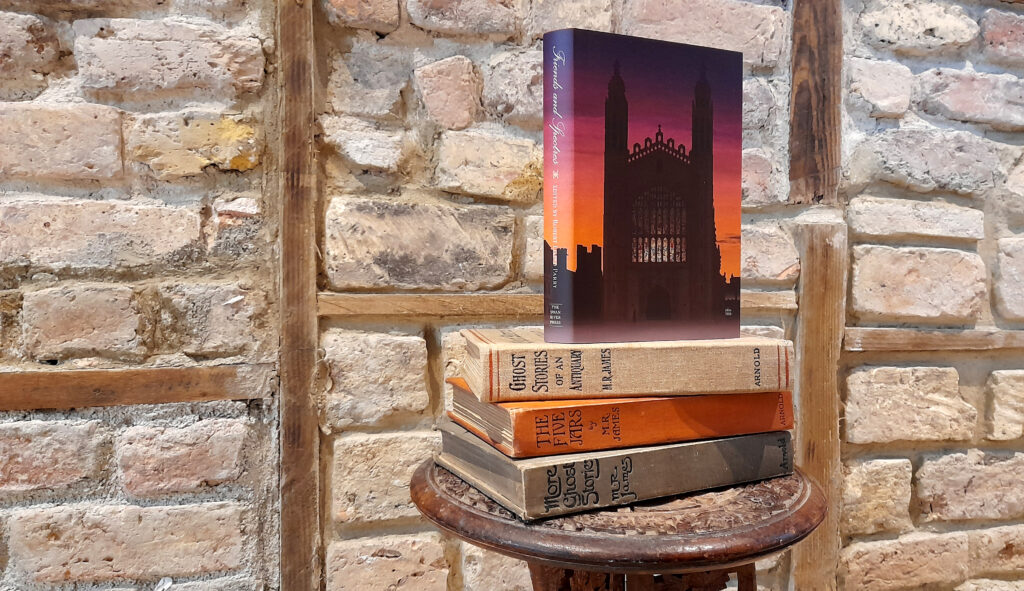
Unfortunately this whole idea was derailed on Friday evening when I sat down to inspect the print run of our newest book, Friends and Spectres edited by Robert Lloyd Parry.

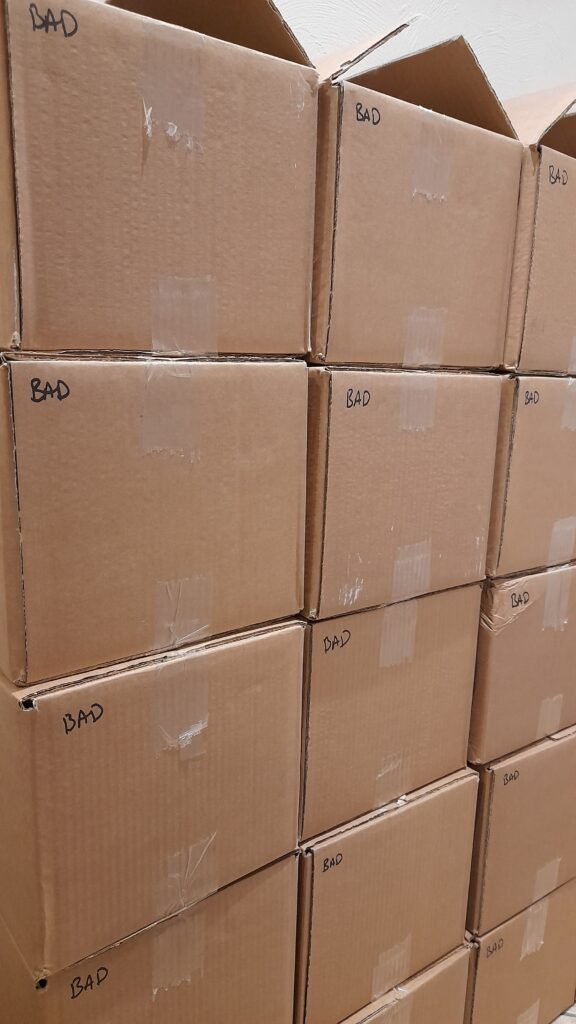
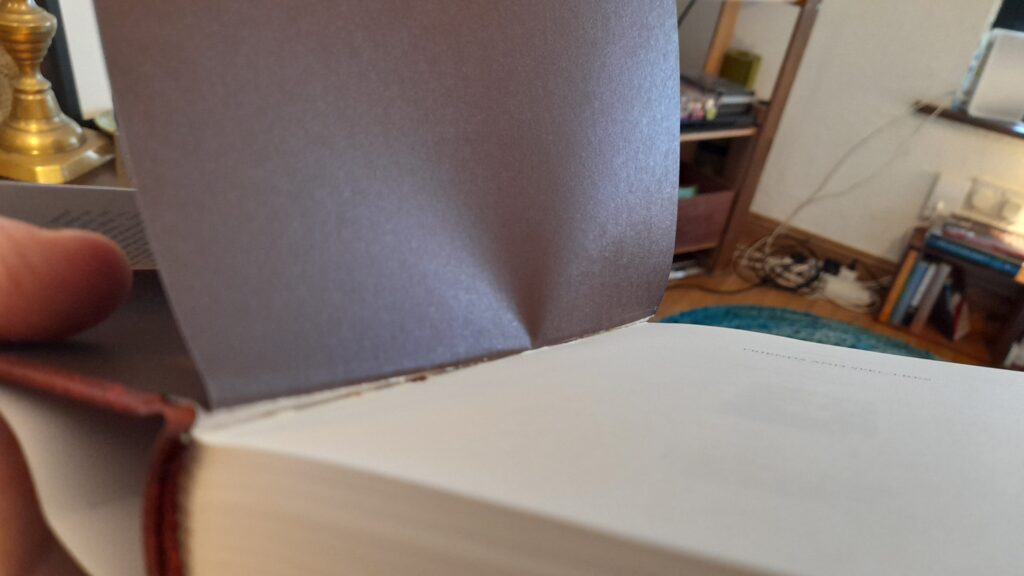
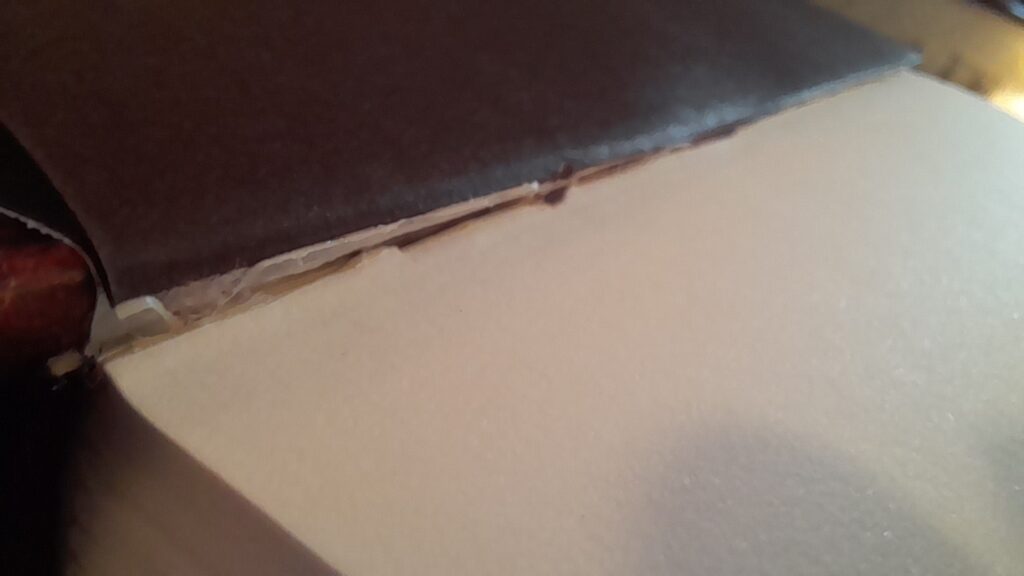
It quickly became apparent that almost the entire print run was poorly bound, nowhere close to an acceptable standard. This poor work did not pass my quality control and I am unsure how it passed that of TJ Books, our longtime printer in Cornwall.

It is not uncommon to pull a few defective copies from each consignment. Sometimes a corner has been dinged or a jacket creased, scuffed, misapplied; I’ve also seen text blocks cut poorly or bound upside down, head- and tail-bands missing, endpapers glued to the boards. A handful of copies. It happens.

With Friends and Spectres, “it happens” happened to over 80% of the 500 copy print run. More specifically, the issue mainly affects the free front endpaper. It seems to have been bound too tightly, causing the leaf to warp and come away from the hinge on the side of the half-title page. To me this is unacceptable and not the quality I want to deliver to readers who, I hope, have come to maintain high expectations of Swan River Press.

Given this unfortunate situation, I have requested that TJ Books seek to rectify the matter as quickly as possible. It goes without saying that this will now delay onward posting of Friends and Spectres, for which I can only apologise—I know a lot of people are keen to read this book, and I’m certain you’ll be pleased when you do.

I will update this blog post (below) as I receive more information, so if you’re looking for an update, please check here first. At the moment I would guess the delay will be in the region of three to four weeks before I receive replacements. Of course, when replacements arrive here in Dublin, it will take time before I can get all copies in the post—given the above, I hope you understand a bit more why that can take so long. I’ll still write that other blog post at some point!

In the meantime, and in the interest of expediency, I will start posting the copies of Friends and Spectres that did pass inspection. That way I will be able to get the remainder in the post much faster when replacements arrive.

I would prefer if you do not email asking if your copy has posted yet. This book has received a lot of orders and answering such a question would require me to search through all the packing slips—and I’m not sure such an exercise would satisfy anything other than anxious curiosity. If you’ve not received a copy, then assume I’ve not yet sent it. If you do receive a copy, feel free to conclude otherwise.

However, if you need me to set aside your copy as a matter of practicality, perhaps posting at an even later date, if you’re going away on holiday or something, please do get in touch. Similarly, if you’d like a refund, contact me as well—but please be aware that the hardback print run is nearly now sold out.

Again, I apologise for this delay. As always, I am grateful for your patience and I will work to get your copy of Friends and Spectres on its way to you as soon as possible. (Please note: all of our other titles are shipping as normal, this strictly affects pre-orders for Friends and Spectres.)

While you’re waiting, you can always read John Kenny’s recent interview with editor Robert Lloyd Parry.

Brian J. Showers
Æon House, Dublin
16 June 2024

Updates

1 August 2024—Trade and contributor copies were collected this morning and will go out in this evening’s post. And that, my friends, are all pre-orders of Friends and Spectres out the door! Thank you again for your patience through all this. Looking forward to the next title, hopefully things will go a bit smoother next time. – BJS

29 July 2024—The last of the pre-orders were processed for customs and went into the post today. From this point on you can set your stopwatch to standard delivery times from Ireland to wherever you happen to be. The only thing left now are the trade and contributor copies, which will be collected Thursday morning and dispatched on the same day.  – BJS

24 July 2024—Just moments ago, all orders were collected and taken to the post office. The good people at the Rialto post office help me with customs paperwork, which needs to be completed for each order. They’ll start doing this today and should have all copies in the post and on their way by early next week. Next I will work on packing trade and contributor orders . . . – BJS

22 July 2024—All orders have now been packed and are awaiting collection. Once at the post office, there’s the onerous task of customs paperwork for each order. This will take a few days. I’m expecting a collection on Wednesday, 24 July. Now I start packing orders for trade orders and contributors. – BJS

19 July 2024—Everything is packed up now save for unnumbered UK orders (well over 100 of those). I’ve taken some stuff to the post office by handmainly EU and Irish orders, but also packages for those who ordered more than one title. Am waiting for collection of the remaining, hopefully on Wednesday, 24 July. Once packages are collected and taken to the post office, then all the customs documentation needs to be filled in for each package. This stage is also extremely time consuming and will take days to accomplish. I’m very grateful to everyone at the Rialto post office for helping me with this bit: they get orders into the post as the customs documentation is completed. Will spend the rest of the weekend packing orders. – BJS

18 July 2024—Unnumbered copies for both Ireland and Europe went into the post today also all review and deposit copies. It’s always easier for me to clear these small piles first because none of them need customs paperwork. I’ll work on the numbered copies next, which are a mix of destinations. [I managed to pack all the numbered copies this evening toothey’ll be ready for collection next week. On to the unnumbered copies destined for USA, Canada, Japan, Australia, and New Zealand.] – BJS

17 July 2024—The replacement copies of Friends and Spectres arrived on Thursday, 11 July. I have hesitated to announce this because I needed to (again) inspect all copies. I’ve just finished that now; insofar as the books are concerned, all is in order. I will now start the lengthy process of packing, shipping, and customs paperwork and will try to post general updates here as consignments go to the post office. Again, I will not be able to tell you on which day your book has shipped as I would rather focus on shipping the books instead of searching through packing slips to see if your copy is still here (or not). Again, if you need your held back for shipping at a later date, please drop me a line. Thank you again for continuing to be patient while I sort out this mess. – BJS

8 July 2024—This morning TJ Books contacted me to let me know that Friends and Spectres should be delivered to Dublin by Friday, 12 July. The real question is: when will your copy arrive in your postbox? The above delivery date is when the books can be expected in Dublin. I go into it a bit more above, but it takes me roughly two weeks to pack the books, transport them to the post office, and complete customs paperwork. A good gauge would be to assume that your book is the last to ship. From that point you can add on a week or two for shipping time. I will do my best to get your book in the post as quickly as possible. I appreciate everyone’s continued patience. – BJS

28 June 2024—From TJ Books: “Just thought I’d drop you a line to say that all the copies have arrived back at the plant in Padstow. I have liaised with the team and they have begun the process of checking each copy and will re-glued [sic] endpapers where possible. Once we have completed the process and ascertained the final figure I shall be in touch again and I hope this to be toward the middle of next week. Enjoy your weekend[.]” I’ve suggested that they also pay close attention to the warping endpapers as this, to my eye, is a bigger issue than gluing, which of course also needs to be addressed. More anon. – BJS

21 June 2024—The entire print run was collected today from Dublin to be shipped back to Cornwall. This means, contrary to my above hopes, that no copies will ship until further notice. TJ Books requested return of the entire run, even the undamaged copies. As soon as I have an estimated date for the arrival of the replacement copies, I will post here. Thank you again to everyone for your patience. – BJS

Of Wraiths, Spooks, and Spectres

Conducted by John Kenny, June 2024

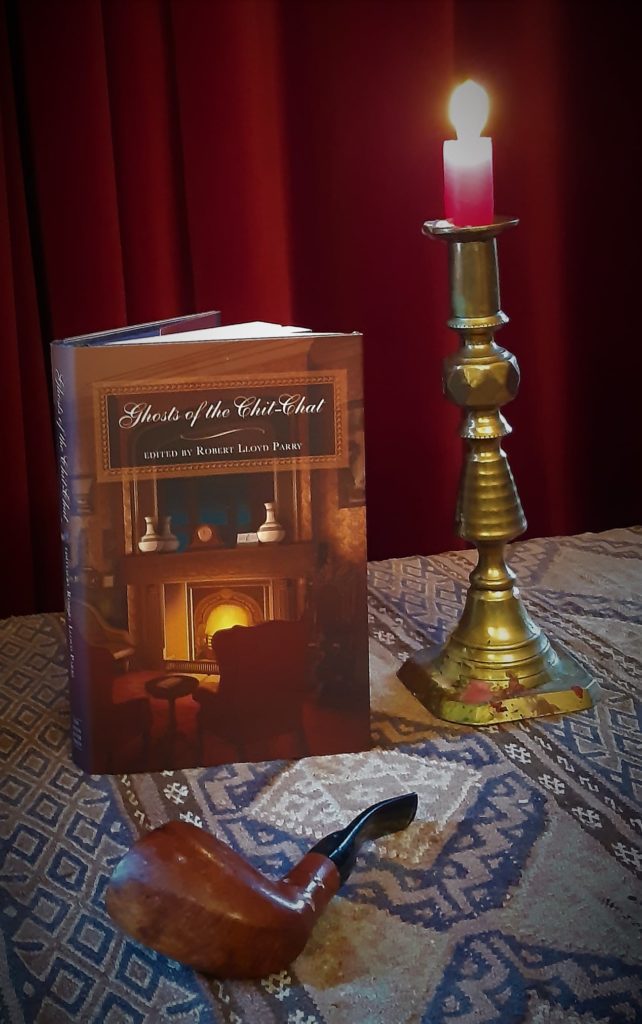
Robert Lloyd Parry is a performance storyteller and writer. In 2005 he began what he now refers to as “The M. R. James Project”, with a solo performance of Canon Alberic’s Scrap-book and The Mezzotint in MRJ’s old office in the Fitzwilliam Museum, Cambridge. The Project has since encompassed seven one-man theatre shows, several films and audiobooks, three documentaries, a guided walk, and numerous magazine articles. For Swan River Press he has previously edited Ghosts of the Chit-Chat (2020) and Curfew and other Eerie Tales by Lucy M. Boston (2011). His audiobooks are available from Nunkie Audio. More information on Robert Lloyd Parry can be found at Nunkie Productions.


John Kenny: It’s clear from your introductory essays for each author featured in both Ghosts of the Chit-Chat and Friends and Spectres that M. R. James was a significant influence in at least their output of supernatural tales. Why do you think that was the case?

Robert Lloyd Parry: Well, he does seem to have been a singularly charismatic figure, someone that certain people in Cambridge, between the 1880s and 1910s, sought to emulate. He was highly respected as an academic, and loved as a college Dean and Provost. But more importantly, perhaps, he was gregarious and funny. He sought out the company of many people, and he sought—successfully—to entertain them. It’s inevitable, I think, that some of those—particularly those younger than him—would have tried to imitate him in various ways. By his own admission, E. F. Benson did. Several years MRJ’s junior, when he first went up to King’s College himself, he remembered that “intellectually, or perhaps aesthetically, I, like many others, made an unconditional surrender to his [MRJ’s] tastes . . . ”

And this gregariousness is central to the creation of the ghost stories. Almost all of them were written for social occasions—meetings of clubs like The Chit Chat or The Twice a Fortnight, or Christmas gatherings at King’s, where they were just a small part of days long house parties. Many of the writers in the two books had front row seats at MRJ’s readings; others were avowed fans of his books—and I think that the sheer quality and entertainment value of the stories inspired them to try their hands at the genre. Not all of them succeeded as well as E. F. Benson perhaps, but I’ve found it fascinating to try and trace MRJ’s fingerprints in the works that appear in the books.
JK: Tracing those influences must have involved a lot of dedicated research, and many of the stories included in Friends and Spectres can be claimed as rediscoveries of “lost” tales. What trails did you follow to ferret them out? Did you have access to Cambridge University records?

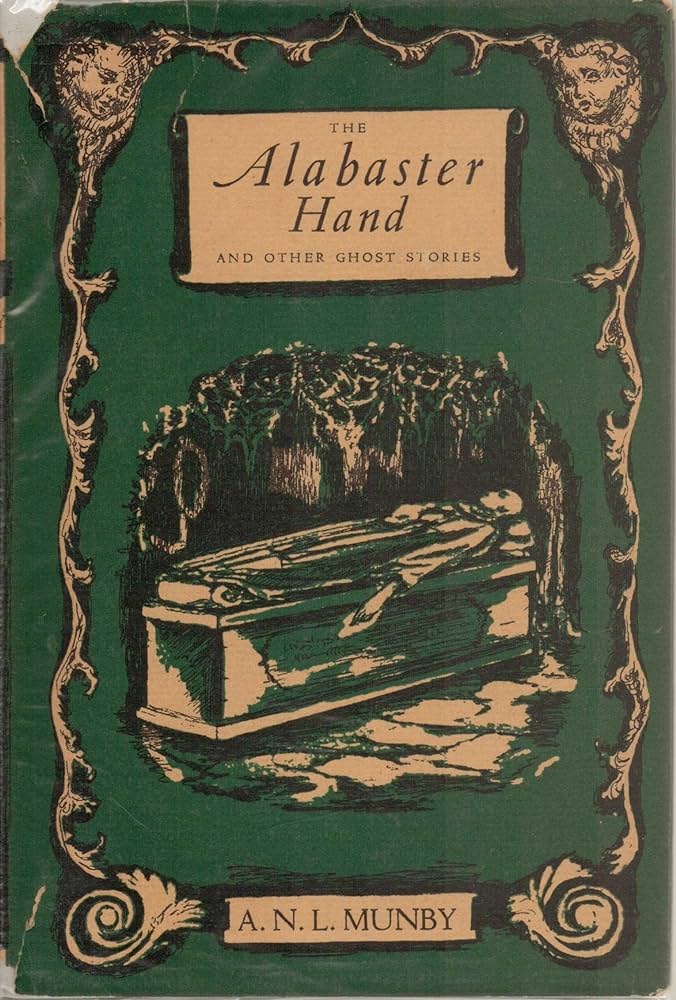
RLP: Much of the research for both collections was done in the Rare Books Reading Room of Cambridge University Library. Pleasingly, this is called The Munby Room after A. N. L. Munby, a librarian who in 1949 published The Alabaster Hand, a book of ghost stories firmly in the M. R. James tradition. There’s a framed photo of Munby on the reading room wall and I’ve spent many hours under his gaze trawling through old copies of university and college magazines. I shouldn’t say “trawling”, though, because that makes it sound like a chore, and it’s something I enjoy very much. Browsing these old magazines gives you a vivid insight into life in Cambridge in MRJ’s day—a subject in which I’ve become deeply interested.

It was from an annotation in the Munby Room’s bound copy of J. K. Stephen’s magazine The Reflector that I learned that the author of a story attributed to “Henry Doone” was in fact Arthur Reed Ropes—a fellow don of MRJ at King’s College. With that alias cracked I was able to then track down other stories by Ropes in back issues of The Cambridge Review.

Now, news of a previously unrecognised ghost story by Arthur Reed Ropes is hardly likely to quicken anyone’s pulse (though “Seraphita” is an interesting and amusing tale). But there are a couple of other discoveries in Friends and Spectres which should be of more interest to fans of antiquarian horror. A series of ghost stories that appeared in Magdalene College Magazine in the run up to WW1, under the name of “B.”, was long thought to be the work of MRJ’s great friend A. C. Benson, and I found definitive proof of this in an unpublished part of Benson’s diary, in the Magdalene College archive—where we learn that not only did Benson write the “B.” stories, but that he read at least one of them aloud to MRJ after dinner. I also discovered a late, previously overlooked “B.” tale in the magazine—“The Sparsholt Stone”, one of his best—which is reprinted in the book for the first time since 1919.
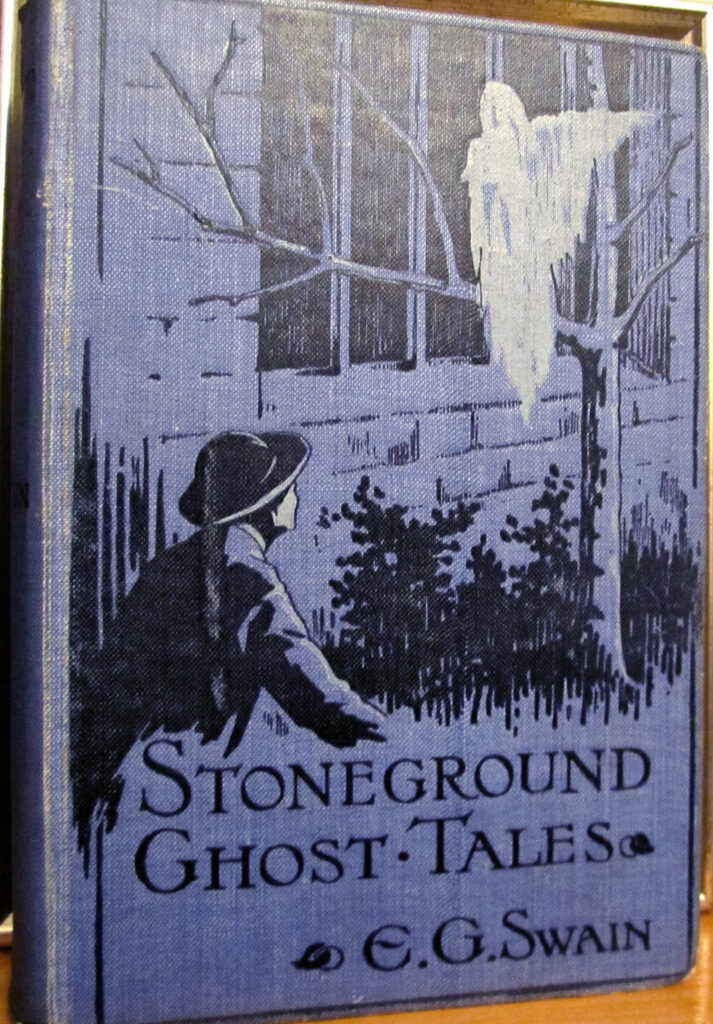
The most exciting discovery was of a lost story by E. G. Swain, author of the much loved “Stoneground Ghost Tales” and another great friend of MRJ. This came about really by simply asking the right question to the right person. The Stoneground tales were written when Swain was the vicar of Stanground near Peterborough, and as the title suggests, they were inspired by his parish. In 1916 Swain left Stanground for a church in Middlesex where he worked for eleven years, and I wondered if he’d found any inspiration there to continue with his ghost story writing career. I emailed the church to ask whether they had any records relating to Swain, and eventually the church archivist got back to me, saying that there was very little—but, out of interest, why did I ask? I told him about the book, and he emailed back an attachment that he thought I “might find interesting”. I did. What was in that attachment you can read exclusively in Friends and Spectres.

So, yes, there’s been a lot of library work and a certain amount of digging in archives, but I must also acknowledge Google. I’ve always loved going on google treasure hunts—following up clues and intuitions. These might not have ended up directly influencing the contents of the book, but they’ve greatly enhanced my knowledge, and my enjoyment of the process.

JK: Browsing through all those old magazines sounds like my idea of heaven, particularly in the environs of Cambridge University. The discovery of Arthur Reed Hope’s “Seraphita” is a very nice find. But finding definitive proof of B’s identity must have been a real thrill. And of the three stories by “B.” included in Friends and Spectres, “The Sparsholt Stone” is especially good. You refer to it as a slice of early folk horror. How far back do you think that tradition goes?

RLP: Yes, perhaps I shouldn’t have said that, because I must admit to being a bit hazy on the history of folk horror—or indeed its precise definition. Does MRJ’s “The Ash Tree”, written in the late 1890s, count as folk horror? I wouldn’t want to push that too far. Machen’s “Novel of the Black Seal” (1895) perhaps? With “The Sparsholt Stone”, it struck me that, with its violent ancient paganism surviving in the placid English countryside, it fits in with classic works like Eleanor Scott’s “Randalls Round”, yet it precedes it by ten years. I particularly like Dr. Frend’s reflections at the end of the story about there being “some secret influence” in the landscape: “I think the earth is full of these currents,” he says, “and that you and I stumbled that day upon one of them.” Perhaps that brings the tale close to what, in your recent interview with him, Mark Valentine called “borderland” or “otherworld” stories, rather than folk horror.

Anyway, I have a personal fondness for the story because it takes place in an area that I know very well. I lived for fifteen years within a very few miles of the villages it mentions—Childerly, Hardwick, Bourn, and I have walked the Portway. Disappointingly for the Bensonian tourist, perhaps, the hamlet of Sparsholt Green is his own invention.
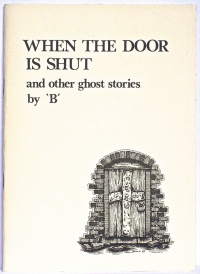
Benson was a complicated man—not always necessarily very likeable—but the more I read by, and about, him, the more appreciative I am of his talent and character. It’s reasonably well known that throughout his life he suffered episodes of crippling depression, for which he was sometimes hospitalised, and that this informed a lot of his writing. But the “B.” stories, and “The Sparsholt Stone” in particular, I think, show something approaching a lighter side. Mr. Strutt’s rhyming couplet about the stone is (surely intentionally?) very funny. When Benson died in 1925, a book of appreciation was published with essays by people who’d known him well. MRJ had been at prep school with him and they’d remained close friends all their lives, and in his essay he sought to emphasise what a cheerful and funny person Benson had actually been.

JK: Speaking of the lighter side, F. Anstey’s “The Wraith of Barnjum” is a real hoot. And your inclusion of “The Breaking-Point” alongside it, which is a very tense and claustrophobic tale, shows Anstey’s great range as a writer. How difficult do you think it is to make humour work in tales of the macabre and uncanny? For Anstey the humour seems to be largely in his turn of phrase.

RLP: That’s an excellent description. I let forth several authentic hoots when I first read “The Wraith of Barnjum”. And I think I might have squeaked a couple of times when I read Anstey’s account of its being written. Certainly as a young man, Anstey could be extremely funny. Not all his jokes land successfully today, but some of his short stories are worth seeking out—I recommend “The Black Poodle”, “The Gull”, and “The Light of Spencer Privett’s Eyes”. Anstey’s turn of phrase is certainly a great strength; but also his sense of the absurd, and an ability to plunge his protagonists into the most awkward and embarrassing situations—all these are there in “The Wraith of Barnjum”, which he wrote when he was still an undergraduate.

And, yes, the two stories in Friends and Spectres do suggest a great range—“The Breaking-Point” is one of the best supernatural (or is it?) stories I know of that deals explicitly with the First World War. Sadly, for him and us, it wasn’t a range that Anstey made much use of—with a couple of interesting exceptions, he stuck with a comic formula that had made him famous early on, with decreasingly successful results. Not necessarily his fault—the reading public wanted what they knew.
As for humour in scary tales—I think it’s very welcome when you find it but I can’t think of too many stories that successfully integrate both humour and fear. Saki pulls it off very well. H. G. Wells’s perhaps in “The Inexperienced Ghost”. And E. F. Benson’s makes a very effective sharp turn from humour to horror in “How Fear Departed the Long Gallery”. I do think that there’s much more intentional humour in MRJ’s collected works than people tend to acknowledge. He mixes jokes and scares very well and often uses jokes to ratchet up the tension. “The Mezzotint” is a good example of that. Or “Number 13”.

JK: R. H. Malden’s “The Sundial” is a worthy inclusion in the book, and features a properly scary chase scene in which the hunter becomes the hunted. You note in your introduction to the story that Malden was indebted to M. R. James for introducing him to the work of Joseph Sheridan Le Fanu. I wonder did MRJ promote Le Fanu’s work generally among his circle of writing friends?

RLP: I’m sure he did. He seems to have promoted Le Fanu throughout his life. He read a paper on him to the Chit Chat Society in 1893, and was still lecturing on him forty years later. I suspect Le Fanu was one of those authors whose work he’d enjoy reading out loud to friends. I might be imagining things, but I sense traces of Le Fanu’s influence is several of the stories in Ghosts of the Chit-Chat and Friends and Spectres. Not in “The Sundial”, though, which on the face of it has a much more obvious model. The relationship between it and MRJ’s “The Rose Garden” is perhaps, however, not as straightforward as has been previously supposed . . .

JK: My favourite story in Friends and Spectres has to be “The Greenford Ghost” by E. G. Swain, which really ramps up the tension throughout and has perhaps the most dramatic ending of the stories included in the book. I was surprised to see from your introduction to the story that this is its first publication in book form. Did Swain publish much in book form after The Stoneground Ghosts Stories in 1912?

RLP: Yes “The Greenford Ghost” is a significant discovery for those E. G. Swain fans, and it was very exciting to come across it. I think of it as my Dennistoun moment. Until now it was thought that the Stoneground tales were all Swain had written in the ghostly vein. The only other book he was known to have published was a history of Peterborough Cathedral in 1932. But “The Greenford Ghost”, aka “Coston House”, was written and published in his local newspaper in December 1920 when Swain was vicar of Greenford—then a tiny village in Middlesex which has now been entirely engulfed by greater London.
It is as you say notably tense and dramatic—and horrible: quite unlike anything in his earlier stories. In their obituary of Swain, the newspaper that ran “The Greenford Ghost”—the Middlesex County Times—says that he wrote more than one story for them. I’ve not found anything else yet but there might be other discoveries to be made.

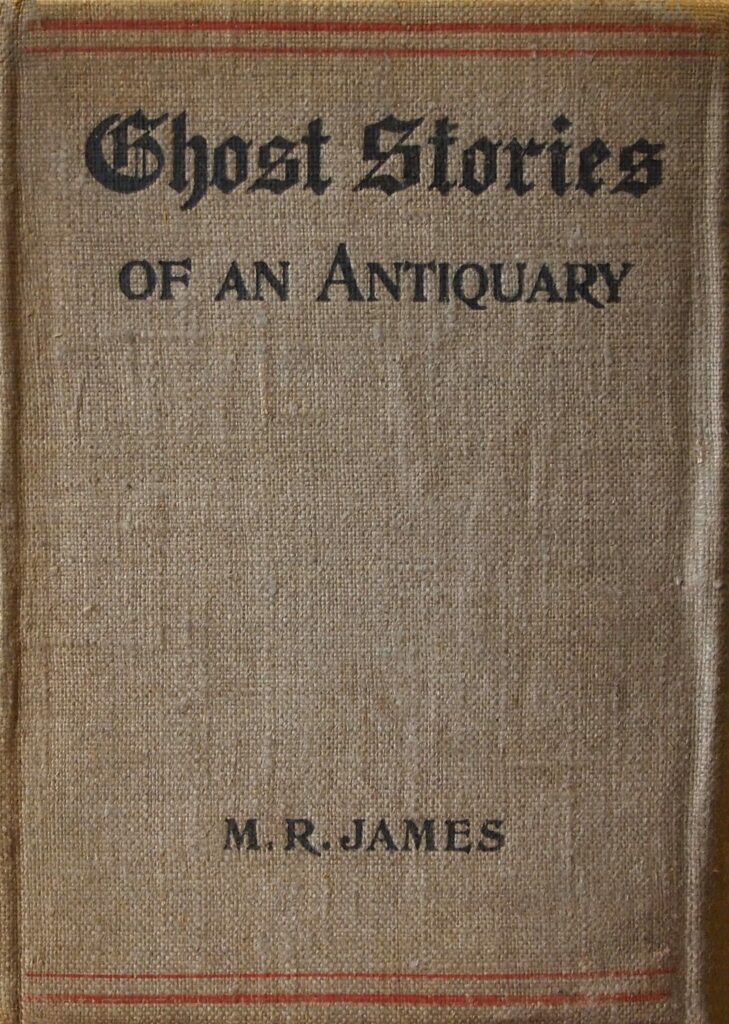
Another discovery, of less interest to ghost story enthusiasts, is that Swain pseudonymously published a volume of plays for schoolchildren in 1903—nine years before The Stoneground Ghost Tales. This was when he was Chaplain of King’s College, Cambridge and very close to MRJ. This book also contains illustrations by James MacBryde who was to illustrate Ghost Stories of an Antiquary the following year.

JK: The last time we spoke, several years ago, you were staging M. R. James storytelling performances around the UK through your company Nunkie Productions. It looks like you’ve really expanded quite a bit since then, into audio books and guided tours. Could you tell us a little more about that?

RLP: Yes, I probably had no idea when I spoke to you back then that I’d still be performing M. R. James stories all these years later. But what can I say? I enjoy it! There are now seven pairs of MRJ stories that I regularly tour in the winter, and I’ve released most of these on DVD. From when I first started performing his work, I’ve pursued an interest in the life and times of MRJ himself and this has led to making three documentaries about individual stories, and, as you mention, a literary walking walk of Cambridge—“Ghost Writers on the Cam”. This has been suspended for the last few years as I don’t live in Cambridge any more, but much of the history and stories it covered can be found in Ghosts of the Chit-Chat and Friends and Spectres.


Buy a copy of Friends and Spectres.