


 Conducted by Michael Dirda, © February 2018
R.B. Russell is the author of three short story collections, three novellas, and a novel, She Sleeps. With his partner, Rosalie Parker, he publishes classic works of curious and macabre fiction under the Tartarus Press imprint.
Michael Dirda: Death Makes Strangers of Us All must be your sixth or seventh published book. Is that right? What is this book’s place in your oeuvre? How does it differ from your three previous short-story collections? Is there a common theme to the stories?
R.B. Russell: This will be my eighth book, which means that anybody who has read more than one will probably have noticed recurring themes that I am unaware of myself. I know that different interpretations of reality and of memories are preoccupations of mine, and this appears in several of the stories in the new book. This collection mainly offers recent work, although the title story is a re-telling of something that I first tried to write more than thirty years ago.
I did my best not to set too many stories in bookshops, but yet another one has crept in.
MD: Is your fiction inspired by any previous writer or writers? More generally, do you think there’s a recognisable English — or should I say British — tradition in the ghost story and weird tale? What defines it? Do you feel part of that tradition?
RBR: An old friend of mine, a gifted songwriter, says that it is easier to come up with original work than try to sound like somebody else, and I find the same with writing. However, I know that I am indebted to just about every writer I have ever read. I go out of my way not to write like the authors I most admire because the results would be hollow imitations.
I’m not sure that in the West there are any true national literary traditions in the gothic/ghostly/weird genres — since Horace Walpole we have all been influenced by writers overseas. The British have obviously assimilated writing from America and Europe, just as Americans have been influenced by Britain and Europe, etc, etc. And, of course, we have all taken on board ideas from non-literary disciplines, such as scientific and philosophical thinking, from wherever it has emerged. Individual writers reflect their own regional background, naturally, which enriches the whole tradition.
As for being a part of a tradition myself, I’m just another writer who has been inexorably drawn towards The Weird.
MD: I think all readers are interested in the writing and reading habits of favourite authors. Are you a quick study either as reader or writer? Your prose is remarkably clear, eerily effective, but seldom flamboyant. Does it come easily to you or is it the result of determined polishing and buffing. For instance, can you tell us about the gestation and development of the new collection’s first story, “Night Porter”? Aspects of it reminded me of L. P. Hartley’s classic, “A Visitor from Down Under”, while its ending is almost as enigmatic as one of Aickman’s stories.
RBR: I tend to write quick first drafts, enjoying where a story is taking me, trying to get down ideas and atmospheres as they occur to me. And then I edit and re-work stories a great deal. I have heard it said that no piece of fiction is ever “finished”, it is merely abandoned when it is published. I could probably edit forever, which is why I never re-read any of my published writing — I would notice alterations I would want to make.
I am wary of being over-descriptive or lyrical — a simple adjective is often enough to give complexity to a scene. And there is the danger with over-description, of coming into conflict with the images that a reader has already conjured for themselves.
The set-up of the “Night Porter” was inspired by a contemporary film, the title of which I cannot remember. Changing the background and creating my own central character gave me a completely different story with its own impetus. I didn’t know how it would end until I arrived there myself, and the denouement seemed to me to be the most frightening I could imagine. It wasn’t meant to be enigmatic — it ought to mean that the central character has to re-think everything that has happened in a fundamentally different light.
MD: Speaking of Aickman: You recently told me that you had sold a number of books from your library in order to fill out your Robert Aickman collection. I gather that you now own most of his books in dust jacket and several of them signed. A couple of years back you also made a short documentary about Aickman. And, as all readers of supernatural fiction know, Tartarus has long been a champion of that writer’s “strange stories”. What is it about Aickman that draws you to him? How do you compare him to, say, Arthur Machen, the other supernatural fiction writer you have published in extenso?
RBR: First and foremost Aickman is a great storyteller, but at his best he wrong-foots me as a reader, and shocks me. Just when I think I might understand him, and perhaps sympathise with his characters, he reminds me that we are fundamentally very different. The fact that the stories, and the author, are so open to (mis)interpretation makes me go back to him, time and time again. I want to understand him, although it is probably best that I don’t.
 Machen is very different. He is a magician with words. His love of the countryside and his fascination for the city both resonated with me when I left rural Sussex aged eighteen for the city of Sheffield, and his work still moves me profoundly. He has his faults as a writer (characterisation, mainly), but this is more than made up for by the depth of his vision and the power of his lyricism. There is an inherent humanity in Machen that I don’t find in Aickman.
MD: With Rosalie Parker, you share the publishing work demanded by the highly active Tartarus Press. You also compose music, produce artwork for books (your own and those of others), devote time to the Friends of Arthur Machen, produce wonderful short films, and I don’t know what else. How did you manage to get so good at all these activities, while also keeping up an active literary career as well? Would you rather be writing fiction full-time? Or is it somehow beneficial to switch back and forth among all these enterprises? Do they somehow enrich your imagination or keep you fresh?
RBR: There never seem to be enough hours in the day! I tend to have enthusiasms for my various (non-Tartarus) interests, and when I am not inspired to write, for example, I will have been itching to compose music and I can immediately move on to that. By the time I get stuck with the music, then something else has been demanding my attention.
My various interests feed into each other, as with my fascination for shortwave radio numbers stations. As I was researching them I was starting to write some new music, and was thinking of the individual compositions as soundtracks to stories that might lie behind some of the transmissions. At the same time I was putting together videos to accompany the music. And then, half way through this process, I realised that I wanted to write an extended piece of fiction about the broadcasts, and I now have a draft of a novel inspired by the strange world of these strings of numbers that bounce endlessly around the ionosphere.
MD: Speaking as both a writer and a publisher, what led you to Swan River Press for Death Makes Strangers of Us All? What is it you like about the books that Brian J. Showers has been bringing out? They are quite handsome but quite different from Tartarus publications in their appearance. What is gratifying about being published by a small press such as Swan River or Tartarus?
RBR: I share many of Brian’s tastes in literature, and, like Tartarus, Swan River mixes classic authors with contemporary writers, based on the publisher’s own enthusiasms. It also helps that I like the aesthetics of his book production. With his designer, Meggan Kehrli, and typesetter, Ken Mackenzie, they publish very handsome, well-made books.
MD: In the title story, “Death Makes Strangers of Us All”, you seem to be almost Kafkaesque, as Katherine wanders through a mysteriously empty city covered with fine dust, tries to retrieve her disjointed memories, and is confronted by threatening policemen. But the story takes an unexpected turn near its end and the ending itself comes a short, sharp shock. Can you comment a little on “Death Makes Strangers of Us All”? Is there a reason you chose to name the collection after it?
RBR: I am not sure I can comment without offering spoilers! There is an idea that underpins the story, but I am afraid that it would diminish the tale if it was spelt out. What I will say is that the idea was first expressed in an attempt to write a novel in the late 1980s. It did not succeed then because it should really have been a short story. And in the novel version I made it very clear exactly what was happening, which undermined it. The original was written at the same time that I was reading European authors in the Penguin Modern Classics series, and reading Lovecraft, Hodgson, and Machen.
MD: What are your current projects?
RBR: I am working on what I fervently hope is the final draft of a second novel. If it is not published then I will probably continue to rewrite it ad infinitum. A third novel, inspired by shortwave radio numbers stations, is in an early draft, but requires a great deal more work. I have been writing a great deal lately, and I am starting to feel the need to compose music soon . . .
MD: Thank you, Ray, for taking the time to answer these questions.
Michael Dirda is a weekly book columnist for The Washington Post. His own books include Browsings: A Year of Reading, Collecting, and Living with Books, the Edgar Award-winning On Conan Doyle, and several collections of essays. He is currently at work on a book about late 19th and early 20th-century popular fiction in Britain. He holds a Ph.D in comparative literature from Cornell University and received the 1993 Pulitzer Prize for Distinguished Criticism.
Order Death Makes Stranger of Us All here.


 The publication date of our first book was pre-determined: the
  Our next book was a real pleasure to work on. Following on from the success of Mervyn Wall’s beloved cult classics, The Unfortunate Fursey and The Return of Fursey, I wanted to bring back into print his equally delightful short story collection
 The final book of the year was
  Turning now to our journal,
  Issue ten, published in the autumn, was devoted to the fantasist Lord Dunsany, and comprised of writings about him by his contemporary Irish peers. With pieces by W.B. Yeats, Francis Ledwidge, Forrest Reid, Elizabeth Bowen, Katharine Tynan, and others, my intention was to remind readers that Dunsany once held a firm position in early-twentieth century Irish literature. I hope people read this issue from cover to cover as it illuminates Dunany over the course of his entire career.
 While not a book publication, another project that came to fruition this year was the
  So there you have it! That’s what we got up to this year, and I hope you found something to enjoy. There’s plenty to look forward to next year as well. We recently announced our forthcoming deluxe edition of William Hope Hodgson’s The House on the Borderland, which will be out for April 2018. I’ve spared no expense with this one, which will bear a cover and interior illustrations by John Coulthart, accompanied by a newly commissioned soundtrack by Jon Mueller. Not stopping there, Alan Moore contributed a new introduction, while Iain Sinclair is looking after the afterword. Everyone who participated in this project has a passion for Hodgson’s cosmic masterwork. As an added bonus, the book will be fully signed by all contributors.
 And perhaps the biggest new for next year is the return of the


 “In Ireland anything may happen to anyone anywhere and at any time, and it usually does.”
 Novels and Collections
 While our deluxe hardback editions of Mervyn Wall’s most beloved novels, The Unfortunate Fursey and The Return of Fursey, are now out of print, we still have available a hardback edition of his short story collection
 Collections
 Elizabeth Bowen has featured numerous times in various issues of The Green Book. The first was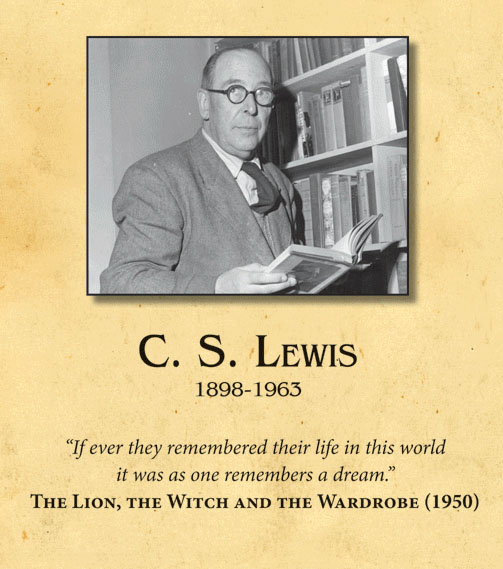
 “If ever they remembered their life in this world it was as one remembers a dream.”
 Novels
 Novels and Collections
 Novels and Collections
 Novels and Collections
 If you’re interested in Lord Dunsany, then you’re in luck! We’ve devoted the entirety of Issue 10 of The Green Book to Dunsany. If you’d like to read the Editorial Note and peruse the contents, please head over to our
 Collections
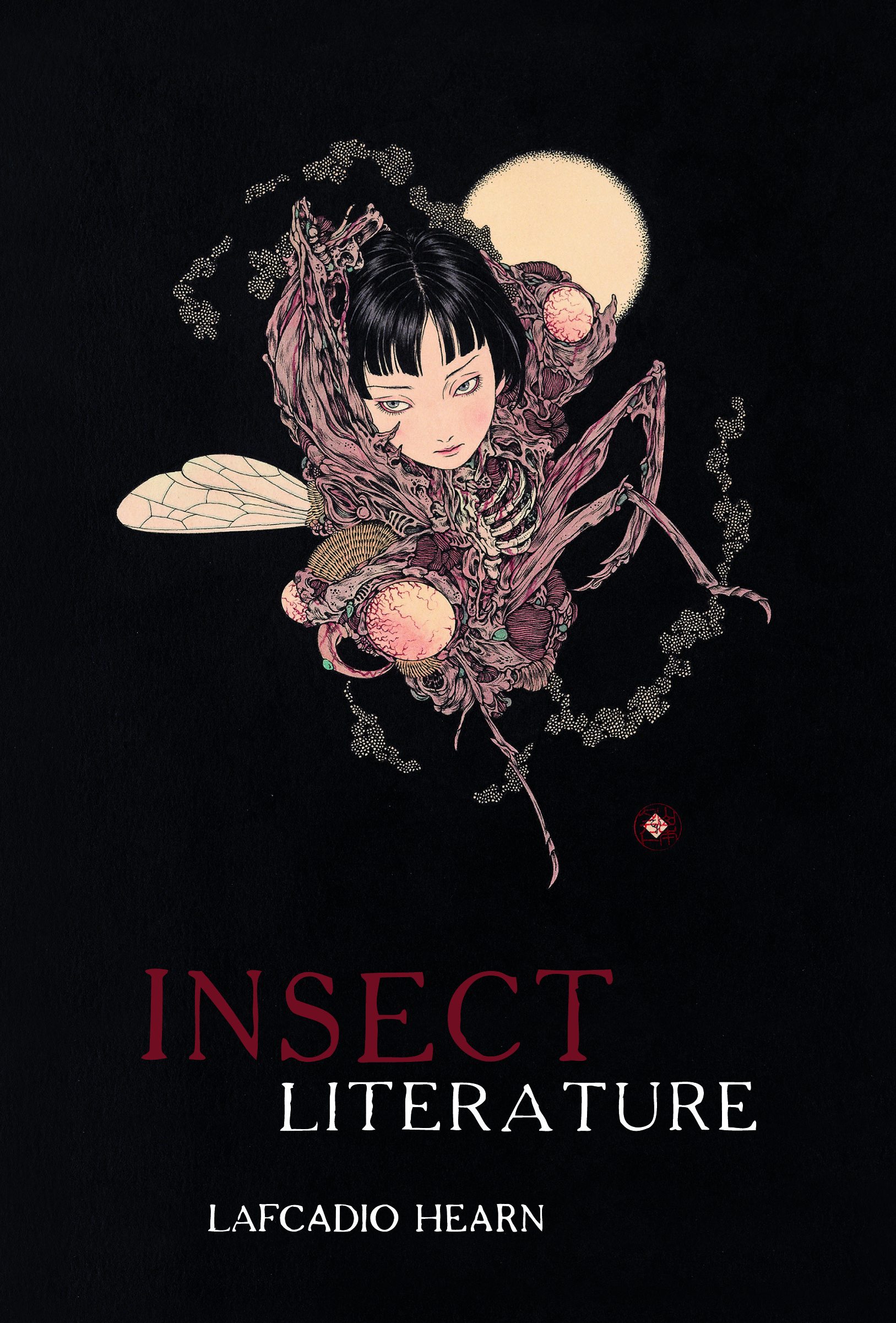 Unfortunately our sole Lafcadio Hearn title,