


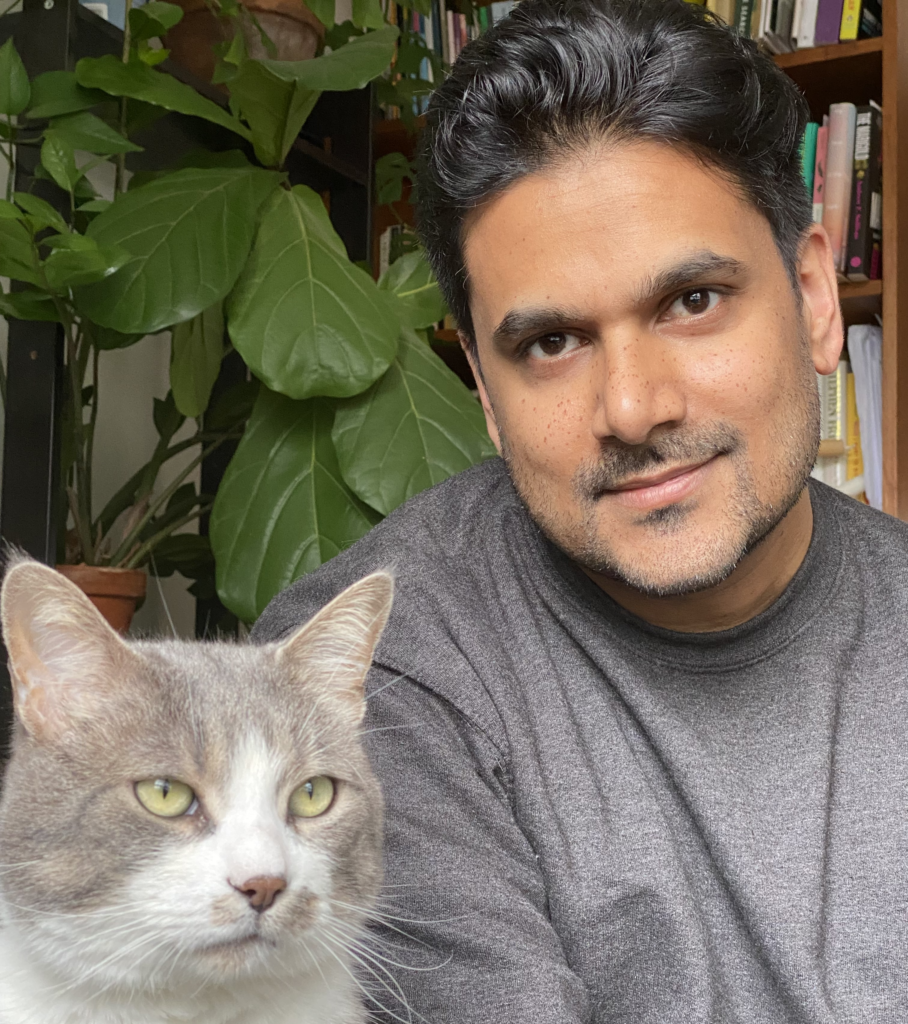
 An Interview with Naben Ruthnum
Conducted by John Kenny © September 2026
Naben Ruthnum is a Canadian author whose books include novels The Grimmer (2023) and A Hero of Our Time (2022), and a novella, Helpmeet (2022). He has also published literary thrillers Find You in the Dark (2018) and Your Life is Mine (2019) under the pen name Nathan Ripley. Ruthnum won the Journey Prize for his short fiction and has been nominated for the World Fantasy Award, the Sunburst Award, and the Ignyte Award.
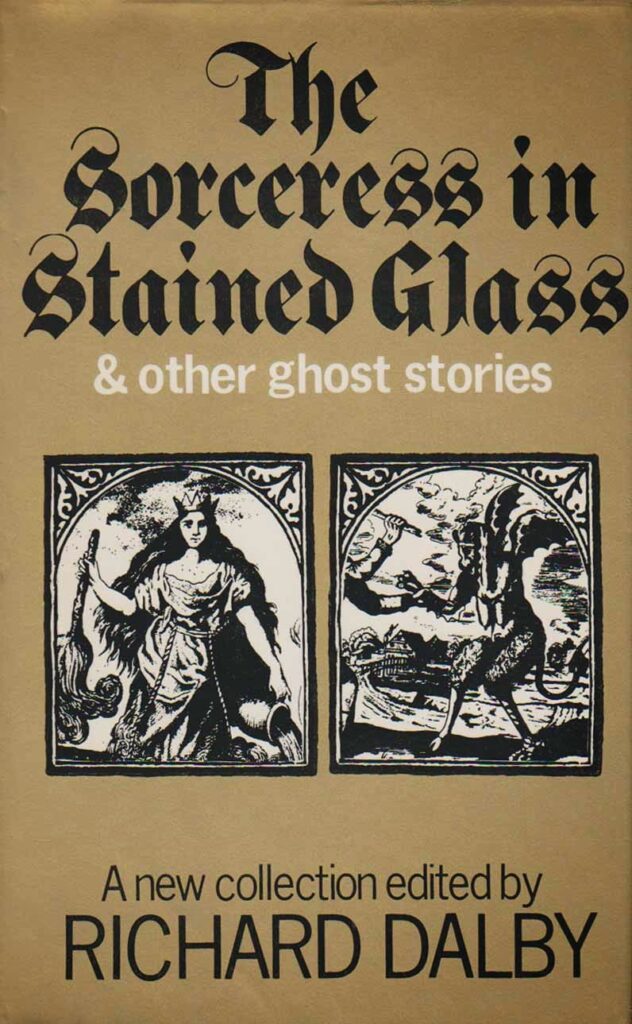
John Kenny: Can you tell us a little about the impact encountering the work of anthologist Richard Dalby had on you?
Naben Ruthnum: Encountering that first Dalby book as a child, The Sorceress in Stained Glass, had the effect of opening up not only the particular pleasures of the ghost story to me, but suggesting the variety of permutations these tales could take on, and their long history. I was already a reader of various “old” entertainments: Sherlock Holmes, Doc Savage—but I think that the Dalby collection and my particular response to it cemented my notion that the literature of the past will always have much to say to the literature and the reader of the present.
JK: How did that love of ghost stories develop into an interest in modern weird fiction and how would you define the weird?
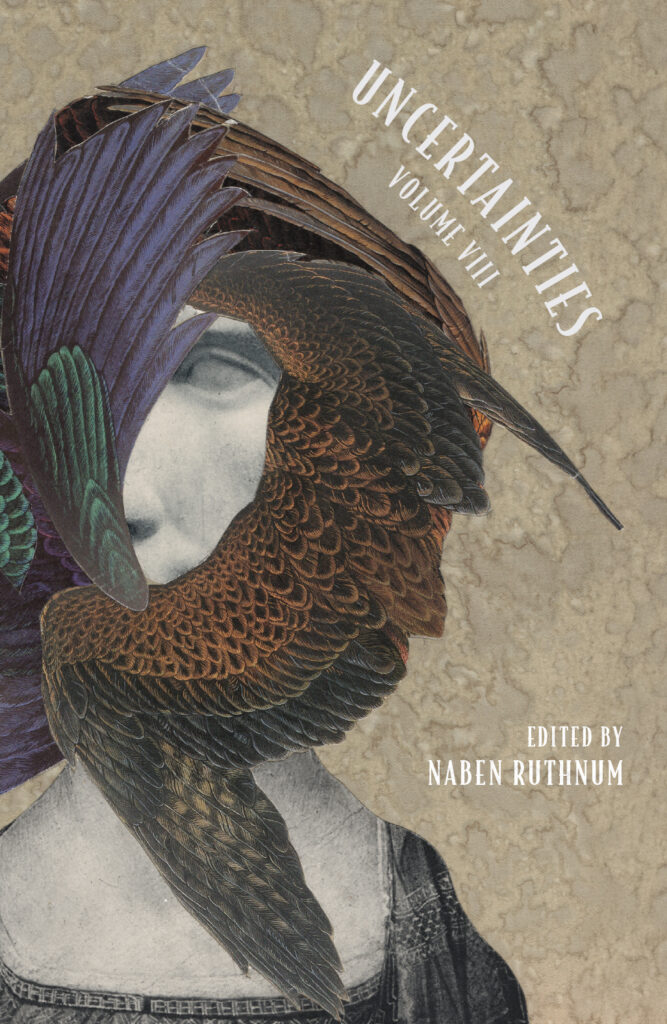
 NR: Though I delve a bit more into definitions in my introduction, I almost prefer to leave the “modern weird” undefined, which is why I love the series title of these Swan River anthologies. Weird, strange, uncertain: these words suggest tales that are built out of style, feeling, and carefully crafted atmosphere, with a vast range of content and preoccupations. I most appreciate not knowing what will be in one of these stories, and the fact that many readers come to them chasing a sensation, a state of thought and feeling that they find between the pages.
JK: Yes, the stories you’ve chosen for Uncertainties VIII are not easily classifiable as straightforwardly “horror” or “supernatural”. A feeling of unease best describes many of them. This is particularly the case in “A Curio” by R. Ostermeier. The ending is genuinely bizarre and chilling. I wonder do suitcases like that really exist, albeit perhaps of a less sinister nature?
NR: What was most important to me is that R. Ostermeier’s suitcase theatre is an entirely believable antique as presented in the story. I didn’t delve into further research but I must say that I completely believe they exist. Ostermeier and the related authors of Broodcomb Press, who write about the history and contemporary life of a region they call “the peninsula”, share the gift and skill of creating utterly convincing physical and psychological realities within the strange tale.
JK: That’s fascinating. Mark Valentine and John Howard, both published with Swan River Press (and elsewhere), do something similar with a fictionalised between the wars middle Europe. Of course, what also makes all the stories in this collection work so well is the deeply human protagonists. I’m thinking of “Îkwatin // Freeze Up” by Jessica Johns and “All the Little Machines” by Rebecca Kuder, for example.
NR: That speaks to why I’m reluctant to define the weird, or even the ghost story: take a Henry James or Joel Lane story from these genres, for example, and the supernatural aspects can seem so tangential to the human and emotional guts of the tale if you read it on the right day or in a certain mood, though no aspect can be reduced or removed without damaging the whole. The stories in this anthology have that balance, including those two you single out.
JK: I guess what we’re talking about here is an emotional truth that underpins the stories, and elevates them from the merely sensational. Is this an aspect you were aware of in the work of the authors when you invited them to submit to Uncertainties VIII?
 NR: Absolutely, John. Works such as the film Possum by contributor Matthew Holness or the story “A Thousand Hundred Years” by Michael Wehunt had that sense of trembling vulnerability I was looking for, a sense that the existence of the characters and their perception of the world around them is held together by a series of compromises that are, themselves, quite fragile.
JK: Matthew Holness’ story in Uncertainties VIII, “The Theatre of Higher Judgements”, is a superb piece, featuring as it does the grisly echoes of a Cromwellian atrocity. The reader is left in that tricky region between the time of the atrocity and the reverberations witnessed by the protagonist today.
NR: I really enjoy how that piece, as rich as it is with intensely physical descriptions of bodily and monstrous horrors, is perhaps most memorable for that sense of temporal dislocation, the sense that what haunting means might be permanence, not a return. If something awful has happened, it is still happening, and will never end.
JK: And “Monumental Horror Image” by Michael Wehunt achieves something similar, albeit very differently, where nothing makes any kind of rational or objective sense. It’s a perfect example of that concept of reticence versus blatancy, or reach and retreat, that you refer to in your introduction.
NR: I like that reading, but also believe that Wehunt, here and elsewhere, is so effective because the story gently convinces you to accept a new version of rationality, and an idea of the separate realities of each character as an intensely subjective vision of the same overwhelming truth: something is coming for all of them.
JK: Of course, underlying the gathering dread towards the end of Wehunt’s story is grief, and grief is a primary element in a number of the stories in this collection, “Caretakers” by Michael Kelly being a good example. One wonders, though, if the purported assuaging of that grief is a given.
NR: Those two stories play off each other well; I believe there’s more comfort, more assuagement, to be found in Kelly’s treatment of these people dominated by grief, while Wehunt’s suggests the danger of surrendering to the relentlessness of grief, chasing what lies beyond it.
JK: Grief and guilt can often go hand-in-hand, and the delicacy of the ending of “Next of Kin” by Miriam Richer suggests this very strongly.
NR: Richer’s story is so wicked and strange, the narrator’s attitude toward her child so atypical, that I think the ending cleverly complicates the notion of grief. I see her as moving through something she came to see as inevitable. I know that’s frustratingly vague, but I can promise the story itself makes the point clearly!
JK: Some of the stories, such as “Taking Possession” by Rebecca Campbell and “Goodnight, Grandma Maggie” by Erica McKeen, could have been published as easily in a mainstream literary magazine or anthology, something I’ve also noted in the work of Joel Lane, who you mentioned earlier, and that of Nicholas Royle. Do you think the whole concept of labelling (or pigeon-holing), particularly today, is purely a construct of the publishing industry?
 NR: As much as I am slippery myself when it comes to defining genre, I find those light divisions we throw up quite useful, even though they are prey to the publishing industry seizing upon one genre or another as the current sensation and forcing in ill-fitting work. As with that Dalby anthology we’ve discussed here, and that I wrote about in my introduction, genre can work as a gathering place to draw in readers and send them outward: I don’t know if I would have been sent into the further works of, say, Elizabeth Bowen and Elizabeth Jane Howard were it not for certain stories of theirs being caught up in the supernatural fiction net and turning up in collections oriented to the reader of ghost stories. Genre is porous, but it gives us useful landmarks to gravitate toward in the bookshop.
JK: I guess it’s similar to music. My interest in rock in the late ’70s had me seeking out the blues, and prog rock directed me towards classical music. And “The Poet and the Jaguar and the Poet” by Quentin S. Crisp, another brilliant story in this new volume of Uncertainties, has whetted my appetite for reading more by Jorge Luis Borges. There’s something of a story within a story within a story to Crisp’s approach to it.
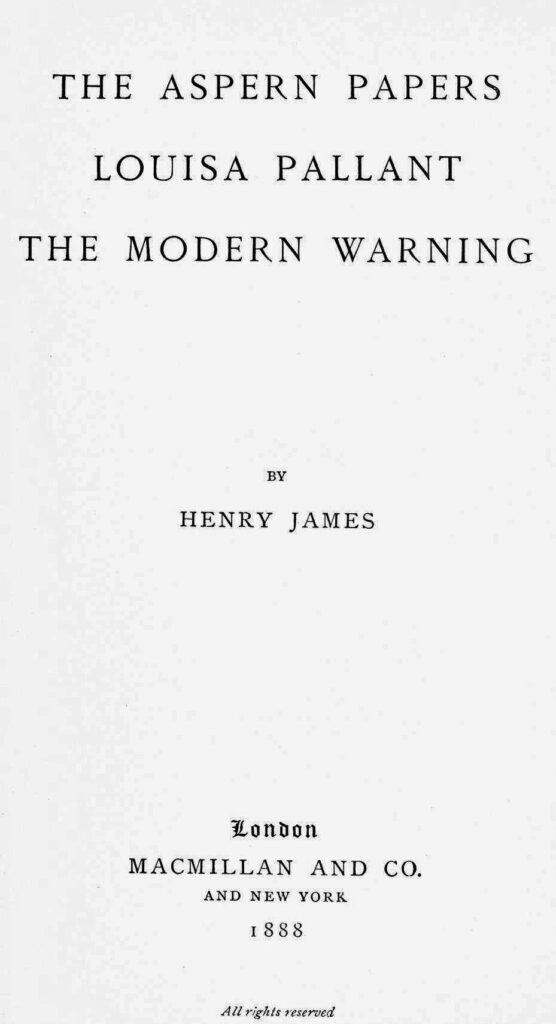
NR: The Crisp story also puts me in mind of Henry James’s stories about artists, The Aspern Papers, for example, with its concern for how a piece of art is made. The sense—and it may only be my interpretation—that an artwork is predetermined, that a sequence of events, some horrific, occur in order for it to be brought into existence, and that these happenings are in some way fated by the necessity of the artwork’s existence, felt quite new to me. But it has also led me back to Borges, and to more of Quentin’s work!
JK: Are there aspects of the authors’ stories contained in Uncertainties VIII that you think might influence your own writing?
NR: They’ve reminded me of where the bar is for work that I find interesting and truly worthwhile.
JK: Is this the first anthology you’ve edited? Would you do it again?
NR: It is! It was the fulfilment of a wish I have had since I was a kid, and it has been extremely gratifying. I may not do it again, as I can’t imagine the experience would be better the next time. I contacted writers whose work I loved, some of whom, like R. Ostermeier, were fairly recent discoveries, and sometimes asked my contributors if they knew of writers that I should look at. Corresponding with Brian at Swan River was also fertile, as his network is vast and no one has a better idea of what would work in Uncertainties than he does.
JK: And what projects are you working on now?
NR: A novel and screenplays. And I’ve just completed the last pass on a story that will be appearing in the magazine Bourbon Penn, a couple thousand words that were at the core of a long novella. I decided the novella was never going to work, that certain elements just wouldn’t coalesce, but that an incident recollected by a character in the middle of the piece suggested a much better, much shorter work. It was a terribly inefficient way to arrive at a short story, but I like the result.
Buy Uncertainties VIII.
No Comments yet!