


 EDITOR’S NOTE
In our previous issue, we focused on the lives of writers, featuring as we did reminiscences, interviews, and memoirs. For this issue I’d like to do something different. While we have featured occasional pieces of fiction in previous issues, including “Saved by a Ghost” by Bram Stoker in Issue 6 and “The Boys’ Room” by Dorothy Macardle in Issue 9, I’ve decided this time around to turn over the entire issue to fiction.
Consider this issue a special anthology issue, and an eclectic one at that. There is little to tie these pieces together, save for the fact each author grew from the soil of the same island at the edge of Europe, which is to say they are all Irish by birth. Perhaps, instead, to state the obvious, one might find that each story reflects more so its author than any affinity with one another — and yet they are here between these covers. I hope most, if not all, of these stories will be new to you.
Rosa Mulholand’s “A Priest’s Story” is certainly informed by her own Catholic beliefs, the supernatural elements driven by faith more than fear. Similarly, “The Story of a Star” is a fable that could only have flowed from the pen of the mystical poet and painter A.E.
Robert Cromie is best known for his novel The Crack of Doom (1895), which contains what is thought to be the first description of an atomic explosion in fiction. Published here is his supernatural short story “Squire Grimshaw’s Ghost” — decidedly more gothic than the scientific fiction for which he is now remembered.
Herbert Moore Pim’s “The Madman” is indeed a mad bit of writing from his singular collection Unknown Immortals of the Northern City of Success (1917). Whether the madman in question is based on a real person known to Pim is anyone’s guess. Beatrice Grimshaw’s “Cabin No. 9” is a ghost story set on the high seas, full of the adventure and incident one expects from Grimshaw. Unfortunately it is also marred by her racism, but I hope you will enjoy the tale nevertheless. Cheiro’s “A Bargain Made with a Ghost” purports to be based on true events — insofar as any tale told by Cheiro can be trusted as true. But the story is ably told and certainly entertaining.
Dorothy Macardle’s “The Shuttered Room” was originally broadcast on Radio Eireann on 13 September 1957. It was the sixth and last talk by Macardle in her Days and Places series. The other pieces in the series are reminiscences of her travels and experiences in post-war Europe and her sole trip to America. Though the “The Shuttered Room” was the story’s original title, on the manuscript this is crossed out, and a new title given: “A World of Dream”. This new title is then crossed out with “stet” written beside the original. This is the first time “The Shuttered Room” has appeared in print.
Finally we have Conall Cearnach’s “The Fiend That Walks Behind” from his sole (and slim) volume The Fatal Move and Other Stories (1924); a mixed bag as a collection, this tale of revenge from beyond the grave is perhaps the best of the lot.
And there you have it: I hope an entertaining crop of stories that will keep you amused for an evening. If you enjoy this all – fiction issue, maybe we’ll do another sometime?
Brian J. Showers
Rathmines, Dublin
19 April 2020
You can buy The Green Book here.
Contents
“Editor’s Note”
Brian J. Showers
“A Priest’s Ghost Story”
Rosa Mulholland
“Squire Grimstone’s Ghost”
Robert Cromie
“A Scrap of Irish Folklore”
Rosa Mulholland
“The Madman”
Herbert Moore Pim
“The Story of a Star”
A.E.
“Cabin No. 9”
Beatrice Grimshaw
“A Bargain Made with a Ghost”
Cheiro
“The Shuttered Room”
Dorothy Macardle
“The Fiend That Walks Behind”
Conall Cearnach
“Notes on Contributors”

 EDITOR’S NOTE


 EDITOR’S NOTE by Brian J. Showers

 The publication date of our first book was pre-determined: the
  Our next book was a real pleasure to work on. Following on from the success of Mervyn Wall’s beloved cult classics, The Unfortunate Fursey and The Return of Fursey, I wanted to bring back into print his equally delightful short story collection
 The final book of the year was
  Turning now to our journal,
  Issue ten, published in the autumn, was devoted to the fantasist Lord Dunsany, and comprised of writings about him by his contemporary Irish peers. With pieces by W.B. Yeats, Francis Ledwidge, Forrest Reid, Elizabeth Bowen, Katharine Tynan, and others, my intention was to remind readers that Dunsany once held a firm position in early-twentieth century Irish literature. I hope people read this issue from cover to cover as it illuminates Dunany over the course of his entire career.
 While not a book publication, another project that came to fruition this year was the
  So there you have it! That’s what we got up to this year, and I hope you found something to enjoy. There’s plenty to look forward to next year as well. We recently announced our forthcoming deluxe edition of William Hope Hodgson’s The House on the Borderland, which will be out for April 2018. I’ve spared no expense with this one, which will bear a cover and interior illustrations by John Coulthart, accompanied by a newly commissioned soundtrack by Jon Mueller. Not stopping there, Alan Moore contributed a new introduction, while Iain Sinclair is looking after the afterword. Everyone who participated in this project has a passion for Hodgson’s cosmic masterwork. As an added bonus, the book will be fully signed by all contributors.
 And perhaps the biggest new for next year is the return of the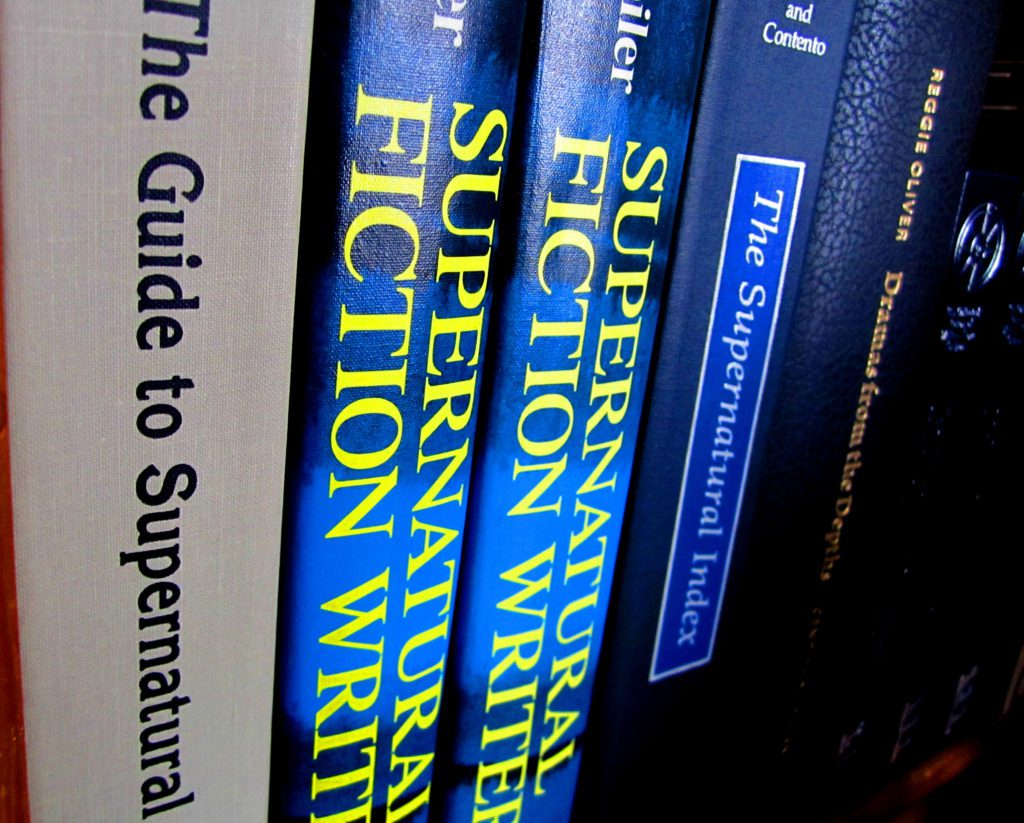
 I’ve long been a fan of checklists, indicies, bibliographies, literary guides, and genre studies. From Lovecraft’s Supernatural Horror in Literature to E.F. Bleiler’s Guide to Supernatural Fiction, and many more besides. One can spend hours immersed in these books, discovering new avenues for exploration and making mental notes on obscure titles to look out for. My shelves groan with these sorts of volumes, and despite severe bowing in some places, I don’t regret it one bit.
 Well, I decided to do something about that. For the past few months I’ve been in the early stages of assembling an “Encyclopaedia of Irish Writers of Fantastic Literature”. Loosely inspired by E.F. Bleiler’s Supernatural Fiction Writers and Jack Sullivan’s Penguin Encyclopedia to Horror and Supernatural, my first step was to compile a list of authors who I felt in some way contributed to Irish fantastic fiction. This list includes obvious writers such as Bram Stoker and Elizabeth Bowen, but also writers who are less well known, or whose contributions might not have had such a detectable effect on their peers.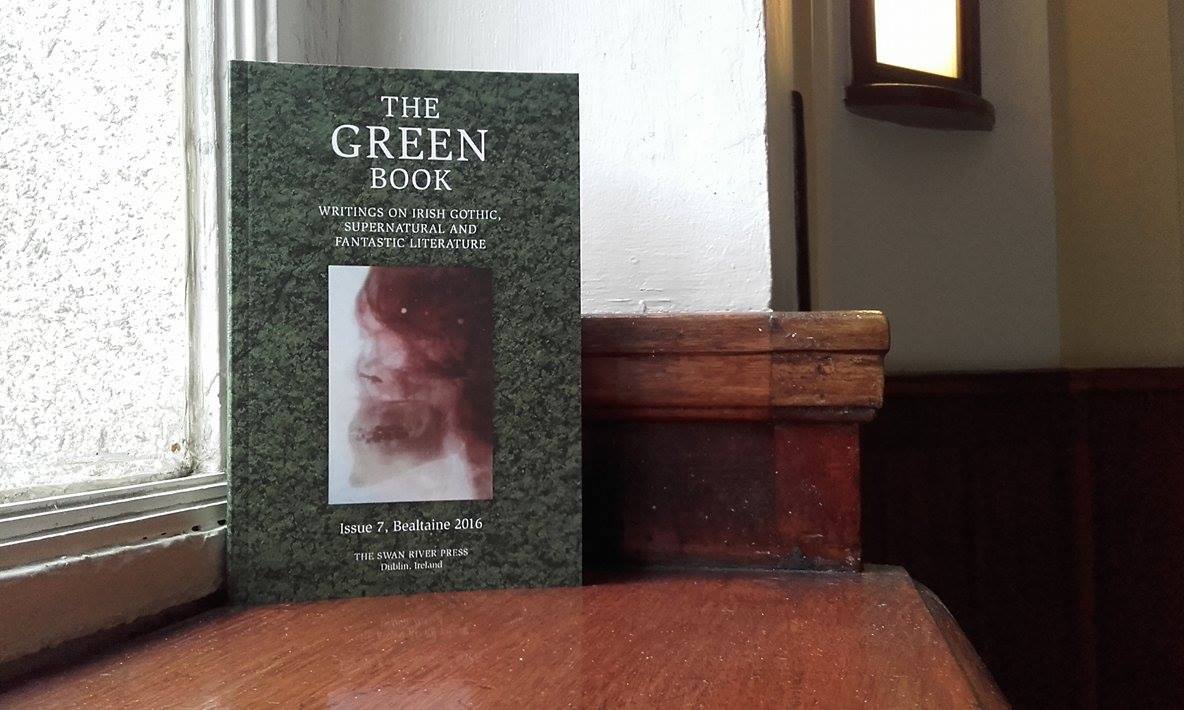

 Here we are on the first day of 2017, and I realise that Swan River Press hasn’t had a single publication since August 2016. But the end of summer was certainly busy enough: we not only published one collection and two anthologies, but also helped run a festival. I’d feel a little more guilty about it had I not spent most of my holiday working on no less than three forthcoming publications (erm, one of them being the now overdue issue of
 Our second contribution to the national spirit of Ireland was a never-before reprinted collection from 1924 by Dorothy Macardle. The stories in
  The next book we did was another dream project: Fritz Leiber’s
  Next up is a book I feel most privileged to have published: Lynda E. Rucker’s second collection,
  Also published in August were a pair of books I’d been working on for well over a year. I’m happy to introduce the first two volumes of Swan River Press’s anthology series, Uncertainties (
 And this post wouldn’t be complete without mentioning the
  So there you have it. Those were the Swan River Press highlights of 2016. Let me know if I missed something. The schedule for 2017 is already shaping up to be an intimidating and ambitious enough project. While I wouldn’t want to say too much, I will say that the first book of the year will be Mervyn Wall’s 1974 short story collection A Flutter of Wings – this reprint will additionally include Wall’s play Alarm Among the Clerks (1937) and the opening chapter of an abandoned novel. Our new edition will feature an introduction by Val Mulkerns and illustrations by Clare Brennan (who is Mervyn Wall’s granddaughter).