

Ghosts on the Cam
Robert Lloyd Parry (ed.)
Availability: Pre-order – Hardback
Estimated to ship in December 2026
“We must be ready to meet the Evil One if necessary.”
“In Cambridge?” queried Edward.
“Yes!”
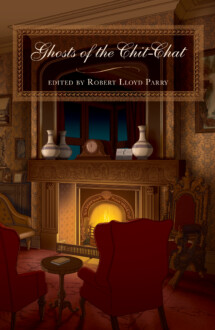
Ghosts on the Cam is the third in a series of linked anthologies. Ghosts of the Chit-Chat (2020) collected supernatural tales by members of the Cambridge University Chit-Chat Club, of which M. R. James was a leading light. Friends and Spectres (2024) looked more widely at works by MRJ’s friends outside the club. In the present volume the authors’ personal connections with MRJ are less strong, though his literary influence is just as powerfully felt. But what really binds the tales collected together here is the town of Cambridge itself, with its libraries and chapels and echoing cloisters, its murky river and misty streets. Many of the authors studied at Cambridge; several worked there; two were born there. In a series of introductory essays Robert Lloyd Parry looks at how and why a small market town on the edge of the Fens has produced so many writers of the supernatural.
- Companion volume to Ghosts of the Chit-Chat and Friends and Spectres
Hardback edition limited to 500 copies.
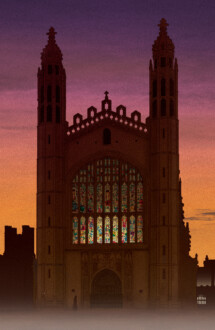
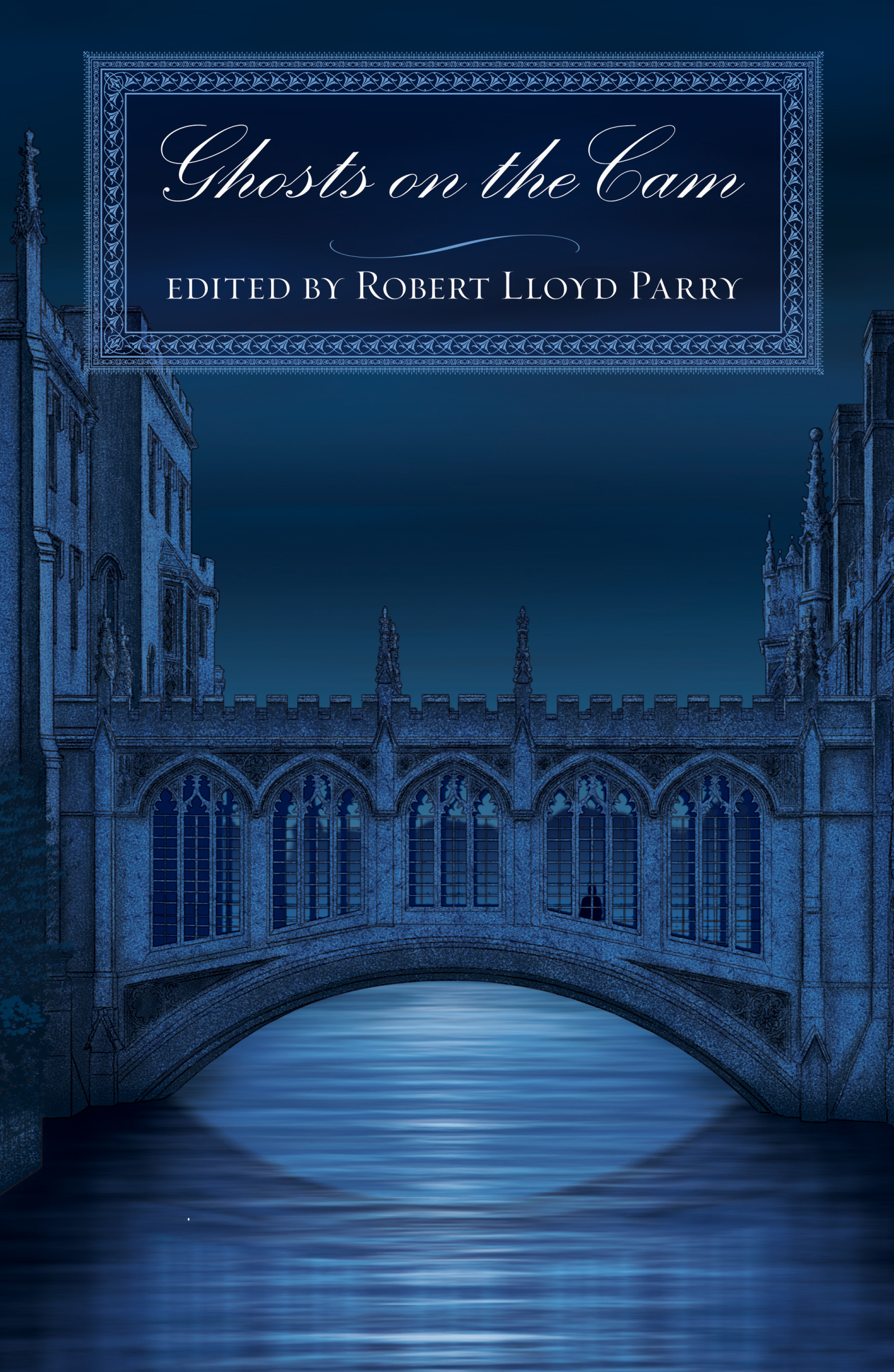
Cover art by John Coulthart
Selected and introduced by Robert Lloyd Parry
ISBN: 978-1-78380-059-9 (hbk)

Robert Lloyd Parry
Robert Lloyd Parry is a performance storyteller who specialises in bringing to life weird tales by the likes of M. R. James, H. G. Wells, Arthur Conan Doyle, H. P. Lovecraft, and Arthur Machen. For Swan River Press he has edited three anthologies related to M.R. James: Ghosts of the Chit-Chat (2020), Friends and Spectres (2024), and Ghosts on the Cam (2026). He also wrote the introduction to Curfew and other Eerie Tales (2010), a collection of the short supernatural fiction of Lucy M. Boston.
Read more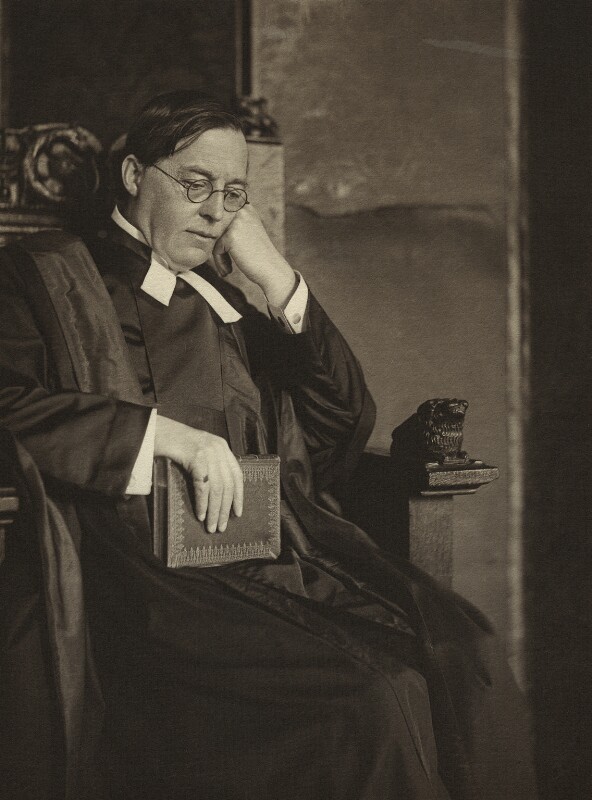
Ghosts on the Cam selected and introduced by Robert Lloyd Parry; cover art by John Coulthart; jacket design by Meggan Kehrli; edited by Brian J. Showers and Jim Rockhill; copyedited by Timothy J. Jarvis; typeset by Steve J. Shaw.
First Hardback Edition: Published on 31 October 2026; limited to 500 copies, the first 100 of which are embossed and hand-numbered; dust jacketed; illustrated cloth-printed boards; endpapers (Wibalin 564 Sky Blue); xii + 239 pages; lithographically printed on 80 gsm cream paper; sewn binding; head- and tail-bands (Winterband 002 light blue/white); issued with two postcards; printed by CPI Antony Rowe; ISBN: 978-1-78380-048-3.
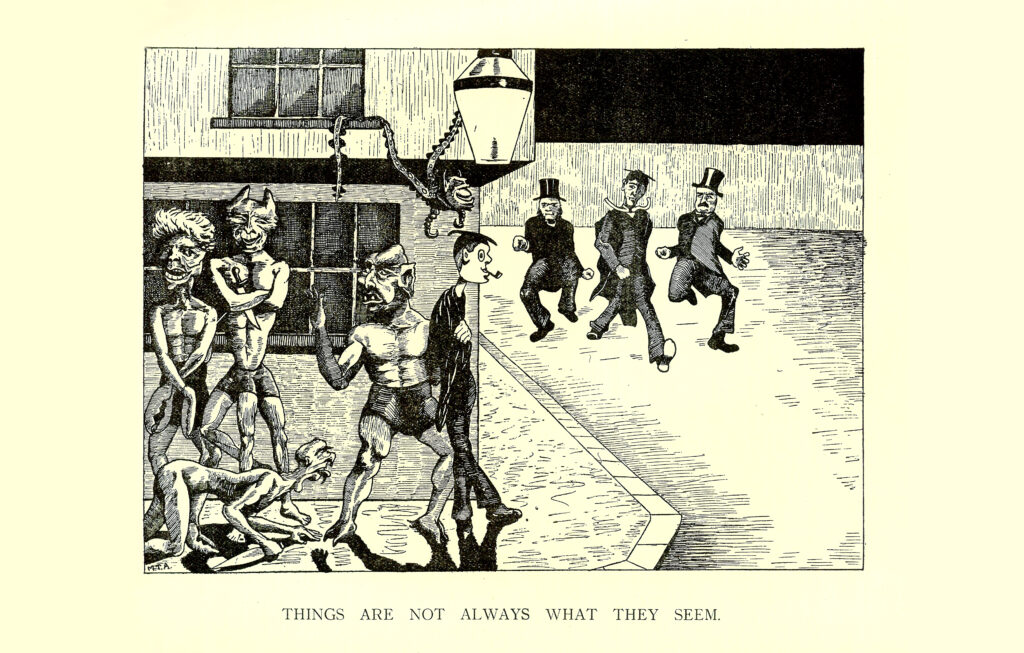
“Ghosts of Cambridge Past”
Conducted by John Kenny © August 2026
Robert Lloyd Parry is a performance storyteller who specialises in bringing to life weird tales by the likes of M. R. James, H. G. Wells, Arthur Conan Doyle, H. P. Lovecraft, and Arthur Machen. For Swan River Press he has edited three anthologies related to M.R. James: Ghosts of the Chit-Chat (2020), Friends and Spectres (2024), and Ghosts on the Cam (2026). He also wrote the introduction to Curfew and other Eerie Tales (2010), a collection of the short supernatural fiction of Lucy M. Boston. More information on Robert Lloyd Parry can be found at nunkie.co.uk.
John Kenny: The work you did in pulling together the stories for Friends and Spectres was phenomenal. Did you come across the stories included in Ghosts on the Cam during this time or did it entail further researches? Also, given that the link between the writers in this new collection and M. R. James is less formal, how did you go about identifying appropriate pieces?
Robert Lloyd Parry: Friends and Spectres contained several rediscovered tales. I think all except two or three of the stories in Ghosts on the Cam have been reprinted at least once since their original publication, so the contents will be more familiar to the well-read ghost story enthusiast. I’d read most of them before starting on the book. What’s new in this volume is the research into the writers’ lives—many of them are pretty marginal literary figures, so it’s been a pleasure and a challenge at times, to find out more about their lives and how their experiences contributed to the stories they wrote.
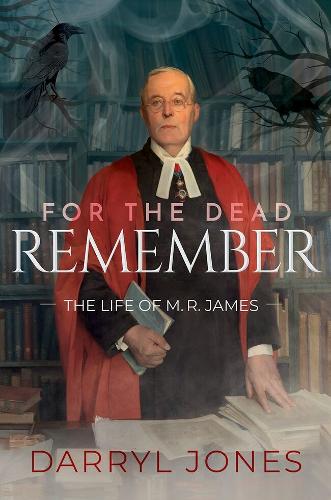 M. R. James is still an important influence on the tales collected here, but the binding agent in this collection is the city of Cambridge itself—the criterion I set myself was that the story had to take part largely in Cambridge or its immediate environs. I could have gone back to writers like Arthur Benson or Arthur Reed Ropes, for instance, who had appeared in other volumes, but I wanted to introduce new and unfamiliar writers, and look at their relationships with M. R. James, which are, as you suggest, often looser than in previous volumes.
JK: How much of a challenge was it to discover more about the lives of the writers featured in this new volume? Where did you go looking for information?
RLP: I consulted a lot of archives, in Cambridge and elsewhere. And my respect for archivists has never been greater—I met with real helpfulness and enthusiasm everywhere I went. When I wasn’t able to visit an archive in person, staff invariably sent me scans and looked up references for me. And there are things quoted and referenced in the introductions to this book that I don’t think have been written about before; Barry Pain’s chloral habit for instance, which is revealed in a spectacular letter in the archive at King’s College, Cambridge; much of the work that Frederick Cowles wrote for his library bulletin in Manchester. My favourite document that I came across is John Capron’s extraordinary account of the Corpus Christi College exorcism which can be found in the paper of the Society for Psychic Research in Cambridge University Library. I was made aware of that by a book about Cambridge ghosts by Alan Murdie.
JK: I understand you’ve read (and blurbed) the new M. R. James biography by Darryl Jones. How significant a contribution to MRJ studies do you consider it to be, and did you find it a useful resource in your researches for Ghosts on the Cam?
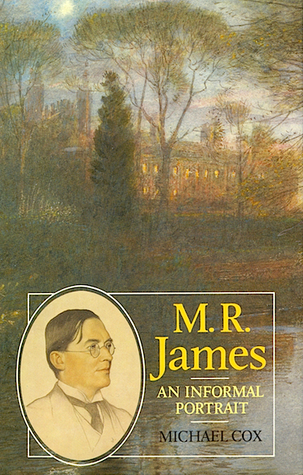
RLP: Yes, I was sent Darryl’s biography last autumn, rather too late, unfortunately, for it to have been much use in my work on this particular anthology. It’s extremely well researched—Darryl has been through an enormous number of primary sources, and for his mastery of MRJ’s handwriting alone he deserves all the praise. I feel I shouldn’t give too much away because it’s not out yet, but the overall picture of MRJ that he paints is more nuanced, detailed and frank than that in Michael Cox’s biography. It might surprise some people, and even annoy others. But it will, I think, engage and inform the general reader, and will be invaluable to me and other researchers going forward.
 JK: I would consider the three MRJ-related anthologies you’ve assembled for Swan River Press to be a substantial contribution in their own right to MRJ studies. This third volume, Ghosts on the Cam, also manages to paint a vivid picture of Cambridge itself and environs. Was this an important aspect of the book for you?
RLP: Thank you very much. Yes, my interest in MRJ, and subsequently in his followers, came about initially from my working in Cambridge and living in Cambridgeshire—places that I have grown to know well and love. A few years ago I started doing walking tours of the town, looking at the places where these writers lived and set their stories, and a lot of the research I did for that fed in to Ghosts of the Chit-Chat, Friends and Spectres, and now Ghosts on the Cam. I’ve always enjoyed visiting literary locations, and for the lover of ghost stories Cambridge is ground zero for that kind of thing. In the twenty-six years since I moved there, the town has changed hugely, and perhaps some of its old character has been eroded, but on a Sunday evening in November you can still take a walk from the market place to the river and get a sense of the Cambridge that these writers were inspired by and responded to in their stories.
JK: As with Friends and Spectres, you’ve included a few pseudonymous stories in this new volume, two by “DNJ” and one by “J.S.”. And you make a tentative but convincing identification of “DNJ”. I wonder if the choosing of initials by pseudonymous Cambridge University writers would have been random or if they likely held some significance?
RLP: I’m certain that the letters “DNJ” held some significance to whoever used them; I’ve just never worked out exactly what that significance was. I’m pretty sure—but am not entirely certain—that there wasn’t anyone with those initials studying or working at the University at the time that the “DNJ” stories appeared in 1911 and 1920, so I don’t think the letters refer straightforwardly to a name. A nickname perhaps? Some classical allusion? I’d love it if my hunch about who “DNJ” was could be somehow confirmed, but I accept that the case is still open.
 JK: It’s also interesting that “A Perfectly True Story”, written by the other pseudonymous writer included in Ghosts on the Cam, “J.S.”, is a more fully realised version of DNJ’s story “The Journal of Edward Hargood”. Did this have any bearing on your investigation into who “J.S.” might have been?
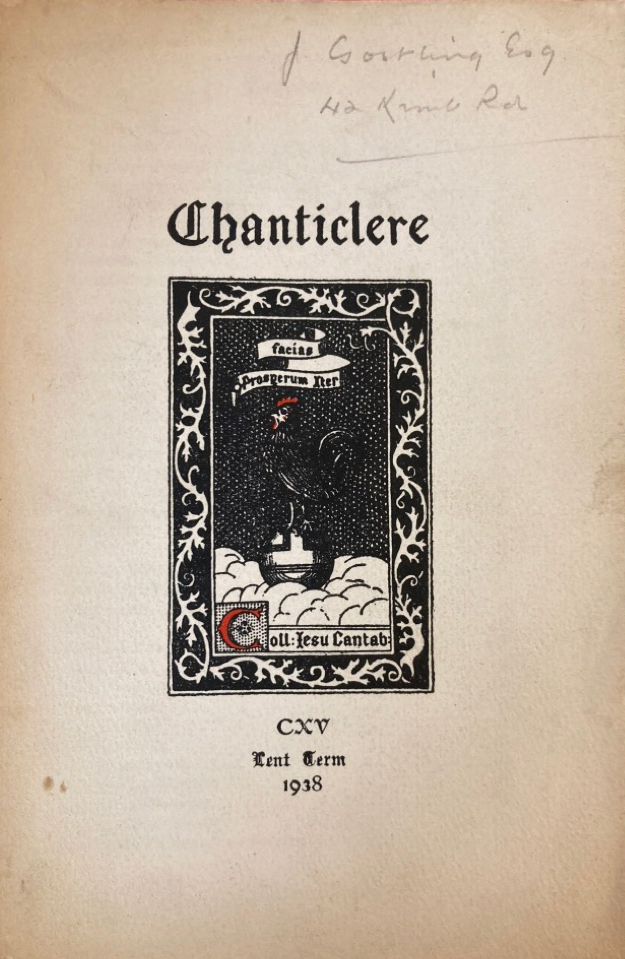
RLP: I came across “A Perfectly True Story” very late in the day, quite by accident when looking for something else (appropriately), and I’m afraid I haven’t devoted much effort to identifying the author. Interestingly, via the Jesus College magazine, Chanticlere, the story links “DNJ” to Arthur Gray who used the pseudonym “Ingulphus” and whose stories appeared in the Cambridge Review at the same time as DNJ’s first story. Although he’s not my first choice, I don’t think it’s impossible that Gray was “DNJ” as well as Ingulphus. Could the “J” stand for Jesus, the college where he spent his entire adult life? But, if so, why the two different pseudonyms in the same magazine? There’s also a distinct difference in style and approach between “DNJ” and Ingulphus. The “DNJ” question still intrigues me and I suspect that it’ll never be fully solved.
JK: Speaking of Arthur Gray, you’ve included three of his stories in Ghosts on the Cam. In “The Necromancer”, he uses real people connected to Cambridge University as characters, which lends credence to the unfolding story. I wonder was this common practice at the University and if Gray might have had any qualms about attaching a supernatural element to their awful fates?
RLP: Yes, in both “The Necromancer” and the later, much darker “Suspicion” Arthur Gray uses the names, and elements of the lives, of two real Fellows of Jesus who committed suicide. I can imagine that a writer might have qualms about using that kind of thing for works of entertainment, which Gray’s stories ultimately are. Gray doesn’t seem to have felt he was doing anything wrong or acting in bad taste. Perhaps he felt the pseudonym distanced him sufficiently from the content.
One could hardly call it common practise because relatively few people in the University were writing this kind of story, but Gray certainly shares with MRJ a talent for mixing the historically verifiable and the fantastic. The MRJ story I’ve included in this collection, “The Fenstanton Witch”, uses a similar mix of real and invented names and imagined events.
JK: I was particularly taken with Gray’s club rules in “The Everlasting Club”. When you think them through to their logical conclusion, the full horror of the bind the members find themselves in is genuinely chilling. Would you agree that there’s a subtlety to this story that makes it stand out from some of the others? Gray follows M. R. James’ dictum of not revealing too much.
RLP: Yes, as you say once you understand the full implications of membership of the club, it is brilliantly frightening. There’s an awful, thrilling sense of inevitability. It’s a very clever story, very “donnish” really. Subtle? I suppose so. And as you say commendably restrained when it comes to the climax.
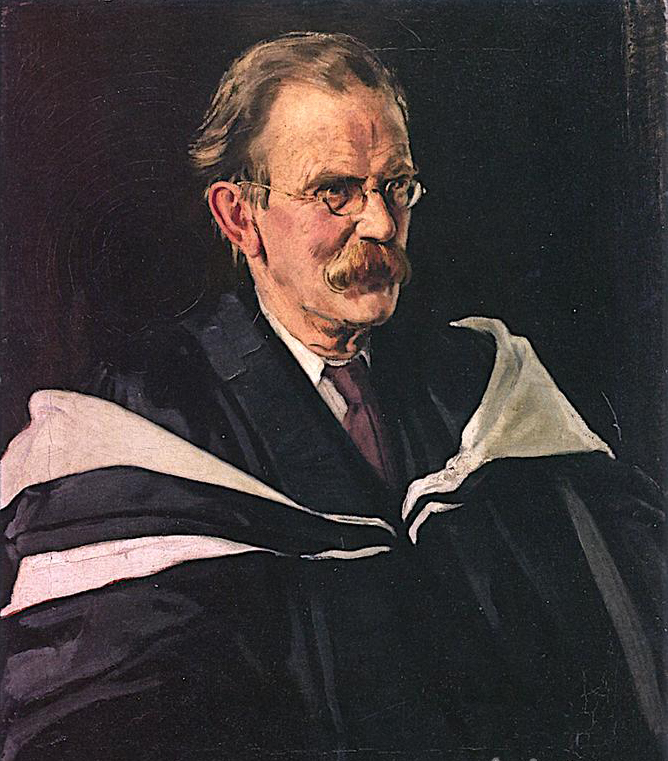
JK: Another writer you include three stories by is Frederick Cowles. According to your introductory essay, he seems to have had a more tangential connection to Cambridge University. Can you tell us a little about him?
RLP: Frederick Cowles was born in Cambridge and spend his childhood there on and off, and he worked for a while as a library assistant at Trinity College. He didn’t study at the University, though I get the impression that he allowed people to think that he had. He clearly hung out with University folks, one of whom introduced him, greatly to his delight, to the poet Rupert Brooke. But Cowles’s relationship with Cambridge was an ambivalent one. He appreciated the beauty and antiquity of the place, but I suspect that he felt like an outsider from the University, perhaps more “town” than “gown”. He talks in one of his travel books about the pride and snobbery he sensed at Trinity (by no means to the first or last person to have noticed that.). He really flourished when he left Cambridge for Manchester in the 1920s where he proved himself to be a librarian of genius. But Cambridge remained with him and features in several of his stories.
JK: There’s definitely a different quality to his writing, more forthright. I was surprised by how grisly “The Witch-finder” was, considering it was published in 1938. Do you think his approach marked a departure from the classic model for tales of the supernatural?
RLP: I don’t think it was a departure, or anything new. Cowles’s stories are in the pulp tradition, which was well established by the time he published his stories. He himself called them “shockers” and was amused to have upset a great aunt with them. As a librarian he championed popular literature and I think he was happy to contribute to it. “The Witch-finder” certainly is grisly but not uniquely so. MRJ himself, though his prose is more elegant than Cowles, was not above imagining the bloody supernatural murder of a sadistic old man.
JK: In your essay introducing Barry Pain’s excellent “The Glass of Supreme Moments”, you mention Pain’s reliance on chloral hydrate to help him mitigate personal anxieties and also to sleep. How effective and/or dangerous was this drug? And do you think the dreamlike quality of “The Glass of Supreme Moments” could have been inspired by his use of it?
RLP: Chloral hydrate was, in the late nineteenth century, a popular sedative, that could be used recreationally, and was open to abuse. It developed a reputation as a dangerous, addictive drug. Deaths were associated with it. The painter and poet Dante Gabriel Rossetti washed large amounts of it down with whisky and suffered a serious breakdown. But he also, arguably, produced some of his most memorable work under the influence of chloral. Barry Pain started using the drug during a period of depression and insomnia, while he was working miserably as a school teacher in Guilford and dreaming of literary success. I think his experiences on chloral (which he details in a fascinating letter to his friend—and MRJ colleague—Nathaniel Wedd) certainly inspired the woozy, trippy atmosphere of “The Glass of Supreme Moments”. Whether the drug in general caused users to hallucinate about gorgeous female personifications of Death is a subject worthy of investigation—but I think it might have done with Rossetti and Pain.
 JK: Another story included in Ghosts on the Cam that features a real event is Shane Leslie’s “Ghost-time and Summer-time”, this time involving an exorcism and the writer himself. How much evidence was available to you regarding this? Leslie own memory of it seemed to change over time.
RLP: “Ghost-time and Summer-time” rather than being a short story is a chapter from Leslie’s controversial novel The Cantab, which is very closely based on his own experience as an undergraduate at King’s College in the early 1900s. He eventually had to withdraw this book from sale and re-release an edited version because a sex scene upset the Catholic establishment of the day. The exorcism scene is a fictionalised account of a real event in Corpus Christi College in 1903, which involved Leslie and two of his friends attempting to lay a ghost to rest in another friend’s rooms. Several different accounts have been published over the years by different parties and while Leslie was an eye witness and clearly dined out on the story throughout his life, he admitted later in life that his own recollection was hazy. That something happened in Corpus Christi that night is certain—how genuinely uncanny it was is open to doubt. But Leslie’s account in The Cantab is a spirited sketch that I’m glad to be able to bring back into print.
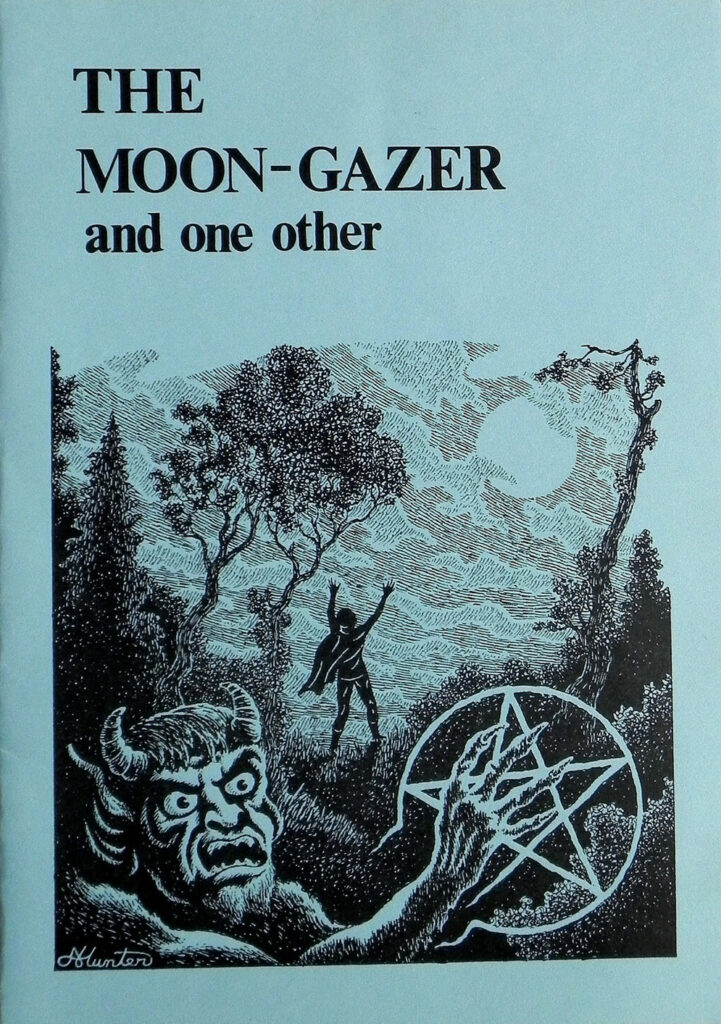
JK: And finally, in your introduction to “The Moon-Gazer” by “DNJ”, you speculate that the story might best have been written with a view to its being read aloud, or performed. Is it a story you would consider adding to your performance repertoire?
RLP: Yes, I get the feeling that “DNJ”, like MRJ, might well have enjoyed performing his own stories. “The Moon-Gazer” with its sudden shouts and ominous silences works well out loud. I’ve done live readings of it in pubs in Cambridge, and online, and recently did a livestream of “The Journal of Edward Hargood”. You can see them here and here. Much as I’d like to do more with “The Moon-Gazer”, I’m unlikely to commit it to memory as I have the MRJ stories. But you never know. After the publication of this anthology public demand may become unignorable.