Our Haunted Year 2025

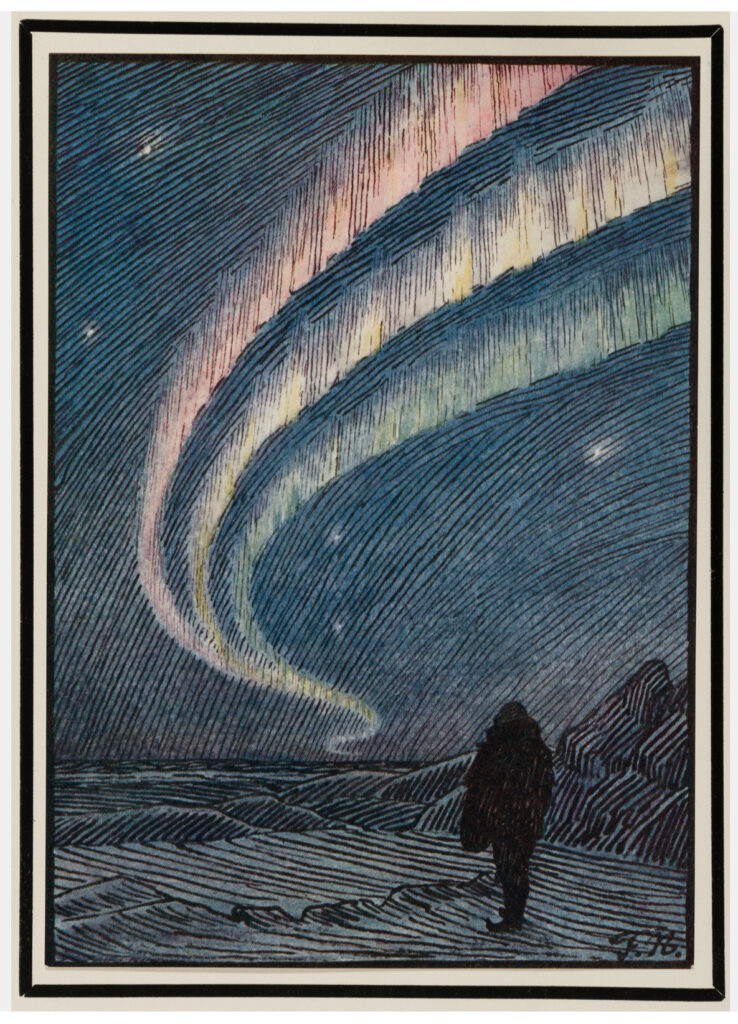
“Northern Lights”, Fridtjof Nansen

After another cycle around the sun, and as the darker days of winter approach, it’s time to look back at what we managed to accomplish this year here at Swan River Press. Along the housing front, the sad answer is not too much. Æon House remains in something of a chaotic state as I continue renovating towards something resembling a grand vision. While most corners of Æon House are still somewhat confused, there are occasional glimpses of hospitable sanity. But enough of that. Onto Swan River . . .

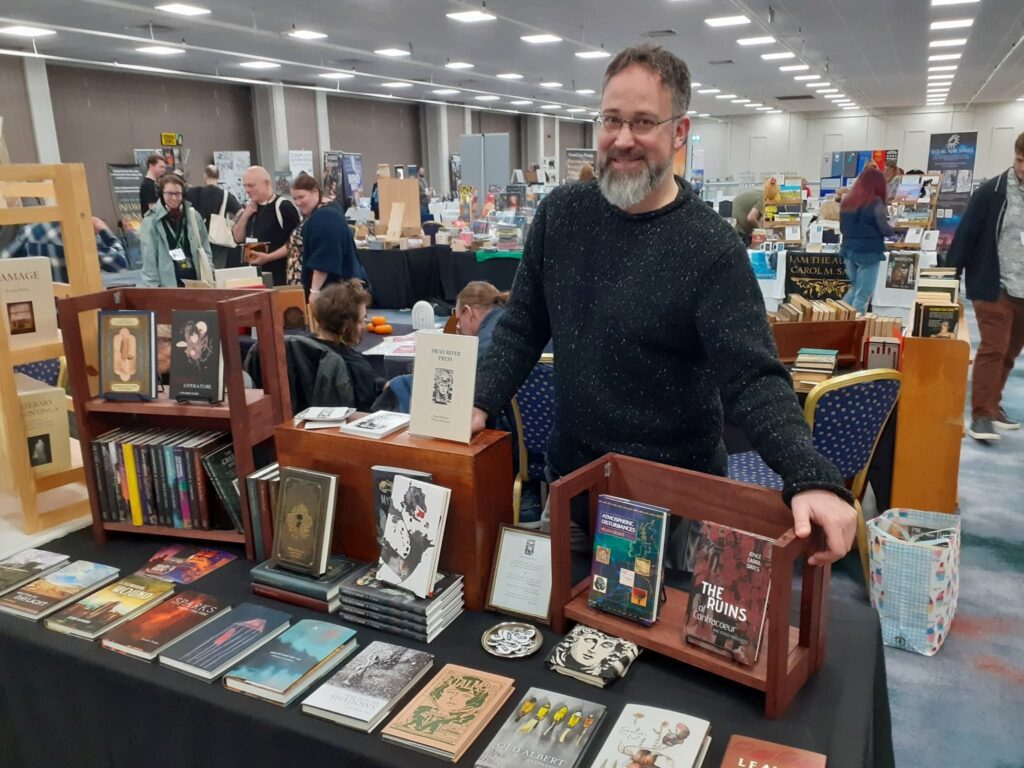
The press was nominated this year for a British Fantasy Award in the “Best Independent Press” category. It’s always an honour to be nominated for an award, and I’ve noticed it’s happening more in recent years. We didn’t win this time around, but I did enjoy spending time in Brighton at the World Fantasy convention, where we were sat besides our colleagues from Tartarus Press and Zagava. And our friend Steve J. Shaw, who takes care of Swan River’s typesetting duties, had better luck in Brighton, picking up a World Fantasy Award in the “Special Award—Non-Professional” category for his work with Black Shuck Books. Congratulations, Steve!

I also attended EasterCon in Belfast back in April. I’d not been to Belfast in ages, and had never attended an EasterCon before, so this was a new experience. As always, I couldn’t go to any panels, but I did get to spend a lot of time with both Helen Grant and Lynda E. Rucker, neither of whom I’d seen in a long time. Apparently Belfast will be hosting its own annual convention starting next year . . . should I go? Are you?

In November we participated in the Dublin Small Press Fair at the Pearse Street Library. We were surrounded by numerous publishers of every stripe and mode; a good reminder of the richness and vibrancy of Ireland’s publishing scene. The event, which included readings and panel discussions, was ably organised by Tom Groenland and Éireann Lorsung, with support from Dublin UNESCO City of Literature. It’s the sort of event that Dublin sorely needs, so kudos to the organisers. With luck, there will be another next year.

And now . . . onto the books!
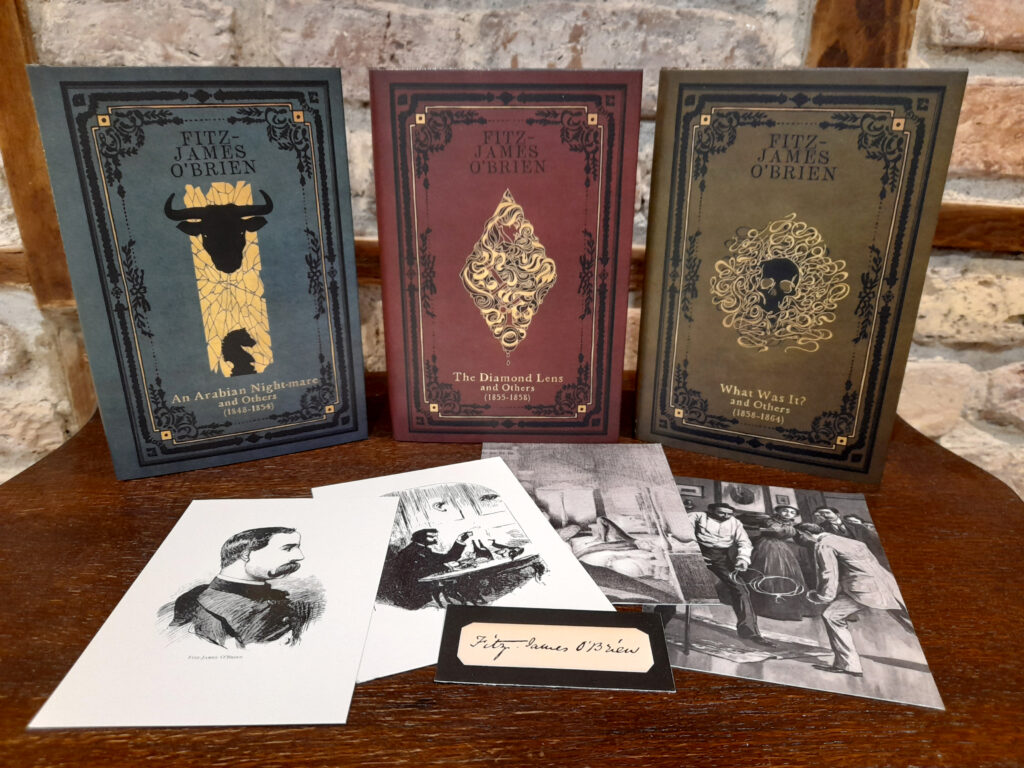
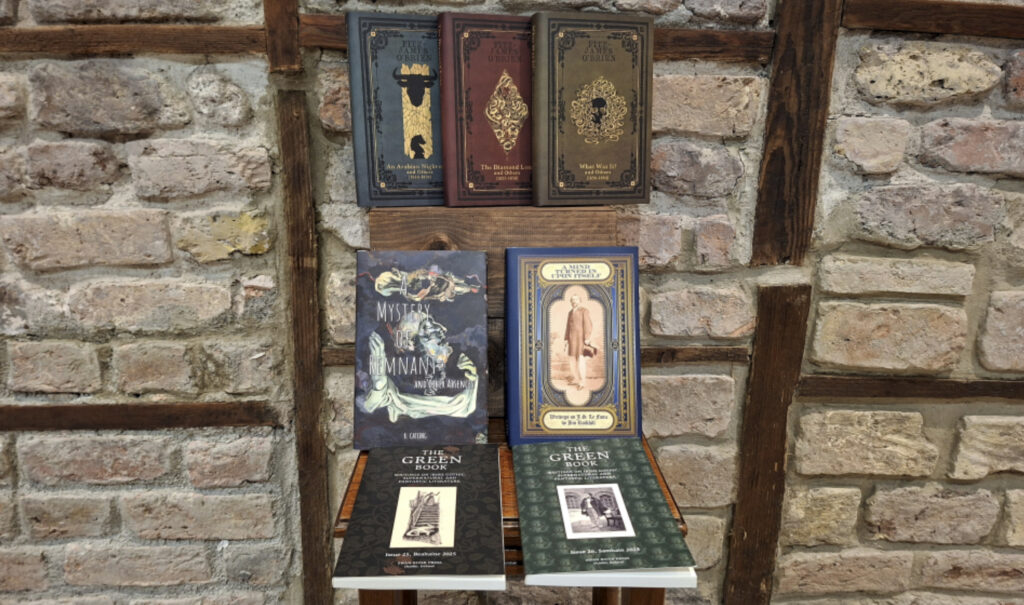
Our first publication this year was an ambitious three-volume Collected Speculative Works by the Cork-born writer Fitz-James O’Brien (1826/8-1862). O’Brien is notable for being at the forefront of genre when it was still in its infancy and the boundaries still blurred: he dabbled in satire, fantasy, horror, science fiction, ghost stories, and more. Pop Matters warmly reviewed the set as “the most comprehensive attempt yet to situate O’Brien firmly within the canon of 19th-century fantastical literature”, while Supernatural Tales wrote, “Quirky humour and darkly imaginative flourishes . . . [O’Brien is] a weaver of visionary images––a writer of reveries.”

These three volumes were a long time in the making. I’d estimate somewhere in the region of five years, if not longer. The project was originally proposed by editor John P. Irish, who assembled a career-spanning selection of O’Brien’s fantastical output, both prose and poetry. In an interview entitled “An Irish Wondersmith in New York”, John Irish positions O’Brien in both genre and broader literary contexts: “What continues to impress me about O’Brien is his foresight. His literary style was far ahead of its time. His short fiction incorporates modernist elements such as metafiction, unreliable narration, intertextuality, stream of consciousness, autofiction, and hyperreality—long before these techniques became hallmarks of the modernist movement.”

What makes this such an interesting project is the way in which you can track O’Brien’s development as a writer, one whose stories would become touchstones for later genre scribes. Each of the three volumes contains an introduction by Irish that guides us through O’Brien’s life, tragically cut short in the American Civil War; and so, in reading the set you get a full overview of O’Brien’s life and writing. If you want to know more, I wrote a short article “Publishing Fitz-James O’Brien”.

And here’s a nifty unboxing video from Too Many Books.

The cover art was provided by Brian Coldrick, who came up with a design to unify the three books. As always, I’m proud of the work we’ve produced; I believe this set now supersedes all previous volumes of O’Brien’s work. Thank you to everyone who took a chance on this one! Lovecraft observed that, “O’Brien’s early death undoubtedly deprived us of some masterful tales of strangeness and terror.” I think that’s probably true.

(Buy Collected Speculative Works here.)

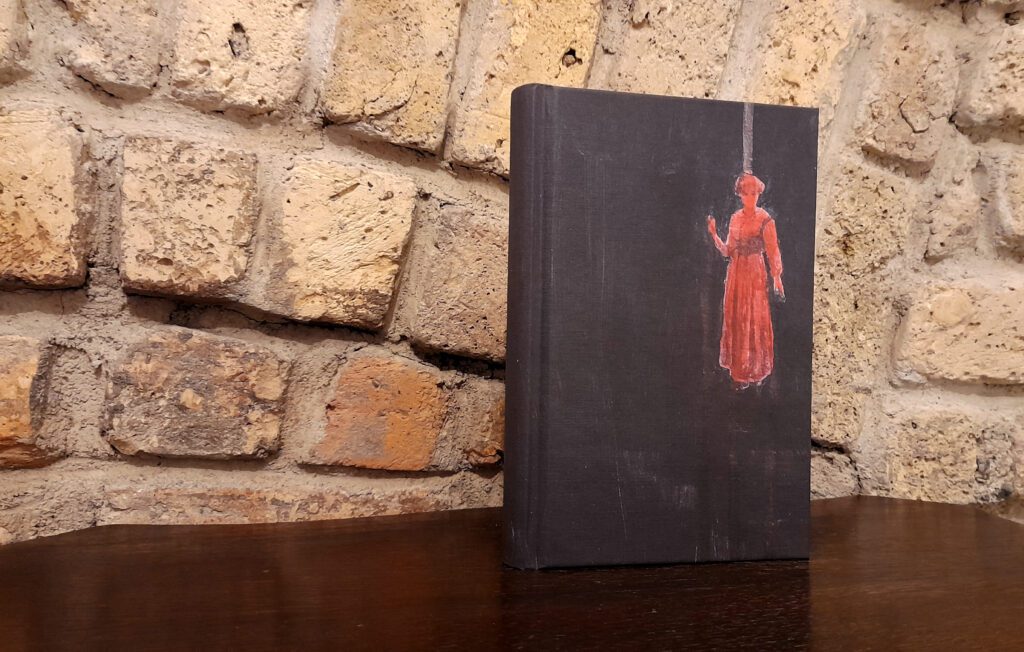
Our next release this year was as much a collaborative memorial as it is a collection: A Mystery of Remnant and Other Absences by B. Catling. This is our second Catling book, the first being the novella Munky in 2020. After Catling passed away in September 2022, editors Victor Rees and Iain Sinclair set about assembling a volume of texts that would reflect the personal pantheon of Catling’s imagination.

The stories collected in A Mystery of Remnant are fragments of Catling’s singular imagination, portals into worlds populated by dog-headed giants and reanimated bog bodies, spirits both beastly and mundane. Tales about visionaries and mystics, about the need to venture into blurry territories of sight in which angels, ghosts and memories merge and reform. Together they showcase the distinctive voice underlying the very best of Catling’s work.

The collaborative aspect of this book is perhaps as important as the book itself: Victor Rees, who introduces the volume, is working on a PhD about Catling’s work; Iain Sinclair, who provided photographs and an afterword, and Alan Moore, who supplied short prose pieces to accompany those photos, were long-time friends of Catling; while Eleanor Crook, who created the jacket art for the book, was one of Catling’s former students; and finally artist Jack Catling, who penned the foreword, is Brian’s son. Through them, Catling’s imagination continues to seep, saturate, and inspire.

The reviews for this collection are both receptive and perceptive. The Ancillary Review called A Mystery of Remnant “a delightfully strange formal oddity of a book”, while You’re Reading observed, “This book is a composite picture of a complex and genuine iconoclast, an artist absorbed in an investigation of existence and non-existence, and the border between.” That all sounds about right to me.

“Catling never liked talking about process,” says Rees in a recent talk, “Exploring the Hollows”, “[instead] referring to his books as having written themselves, as though a kind of channelling had taken place in which he was simply there to mediate words that flowed through him into his laptop. Catling suggests the possibility that these words and voices may have reached him from someplace else.” And the stories in A Mystery of Remnant serve as glimpses to that “someplace else”.

A Mystery of Remnant was one of our fastest sellers this year; as I write this, only a handful of hardback copies remain. I’m not sure yet if there will be a paperback edition, so if you’re interested, you’d best pick up a copy now.

(Buy A Mystery of Remnant here.)
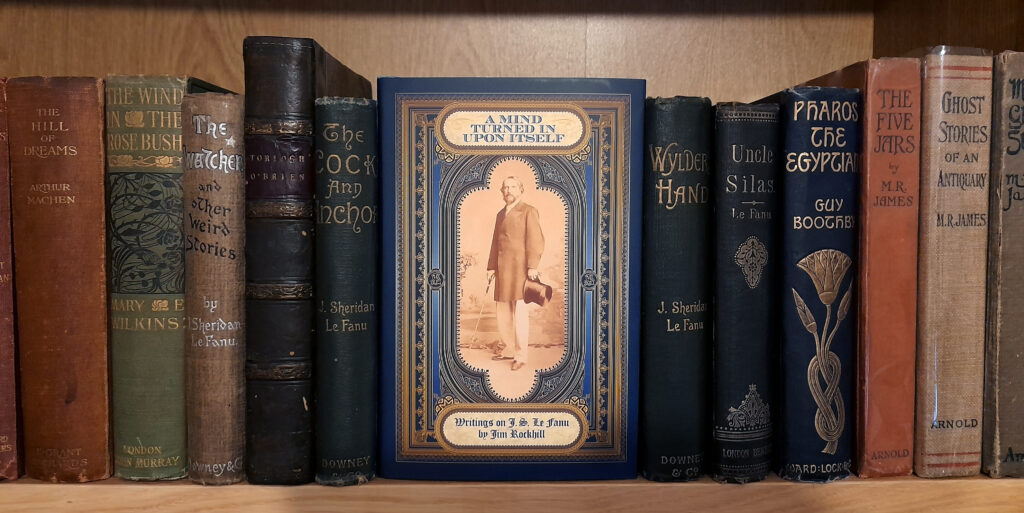
And finally, we have Jim Rockhill’s A Mind Turned in Upon Itself: Writings on J. S. Le Fanu. This is another project that’s been long in the making. The core of this volume consists of the introductions Jim wrote for Ash Tree Press’s definitive three-volume ghost stories of Le Fanu, now out of print. Now collected, revised, and expanded, A Mind Turned in Upon Itself is an excellent overview of Le Fanu’s life and supernatural literature. This non-fiction collection—our first?—is rounded out by a handful of Jim’s other essays on Le Fanu, making this a real treasure trove.

Jim is an ardent admirer of Le Fanu’s work, and in “Dreaming of Shadow and Smoke”, he explains how that came about: “I first encountered Le Fanu through Wise and Fraser’s Great Tales of Terror and the Supernatural. Having reached the innocuously-titled “Green Tea” on a pleasant afternoon while visiting my grandparents, I was shocked at the world the story depicted. [It] terrified me on a more fundamental level than anything else I had read in the book.”
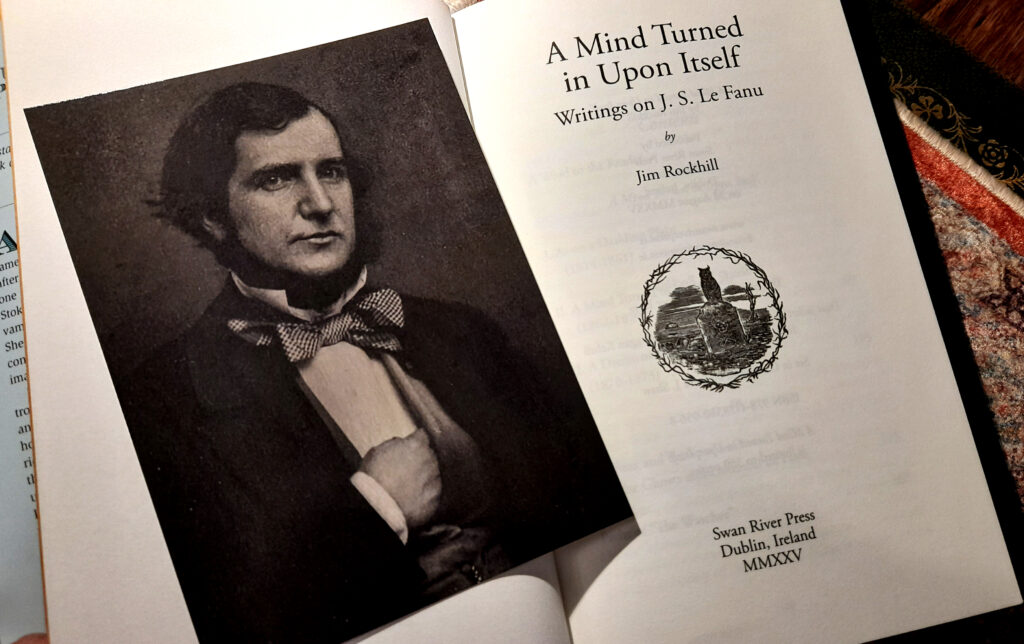
You’re Reading gave the book an incredibly kind notice: “In A Mind Turned in Upon Itself, Jim Rockhill abundantly demonstrates his love and appreciation for J. S. Le Fanu’s fiction and presents such an enthusiastic examination of the work as to inspire people to seek out whatever of that work they have not so far read. Highly recommended.”

John Coulthart did a great cover for us too, and the eagle-eyed will notice Le Fanu’s monogram embedded in the design. As a bonus, back in September, Jim visited Æon House here in Dublin shortly after the book was published and kindly signed the entire print run. A Mind Turned in Upon Itself is the perfect accompaniment to long-time fans of Le Fanu and those who are exploring his ghostly oeuvre for the first time.

(Buy A Mind Turned in Upon Itself here.)

Which brings us to this year’s issues of The Green Book: Writing on Irish Gothic, Supernatural and Fantastic Fiction. And as luck may have it, both issues this year are devoted to Le Fanu.

Issue 25 boasts several rare Le Fanu items, including a memoir by Le Fanu’s friend and publisher Edmund Downey that had not been reprinted in over one hundred years. We’ve expanded Le Fanu’s bibliography, if only in a minor way, by making a new poetry attribution. You’ll also find rare reprint of Le Fanu’s “Some Gossip About Chapelizod”, as well as commentaries on these aforementioned texts. Finally, there’s the bizarre story of a sequel to “Green Tea” published in 1942 by the German writer O. C. Recht. If you want to know more, check out the Editor’s Note.

Issue 26 was another Le Fanu issue. We reprinted “My Aunt Margaret’s Adventure”, which was first attributed to Le Fanu by M. R. James, but passed over for inclusion in Madam Crowl’s Ghost (1923). There are two contributions from Le Fanu’s siblings, including extracts from William Le Fanu’s Seventy Years of Irish Life, plus the sole short story written by his sister Catherine, reprinted here for the first time. Lastly, you’ll find two pieces concerning Le Fanu passing: the first being a collection of obituaries, and the second an attempt at deciphering the capstone of Le Fanu’s vault. An absolute wealth for Le Fanu aficionados. Again, read the Editor’s Note if you’re curious.
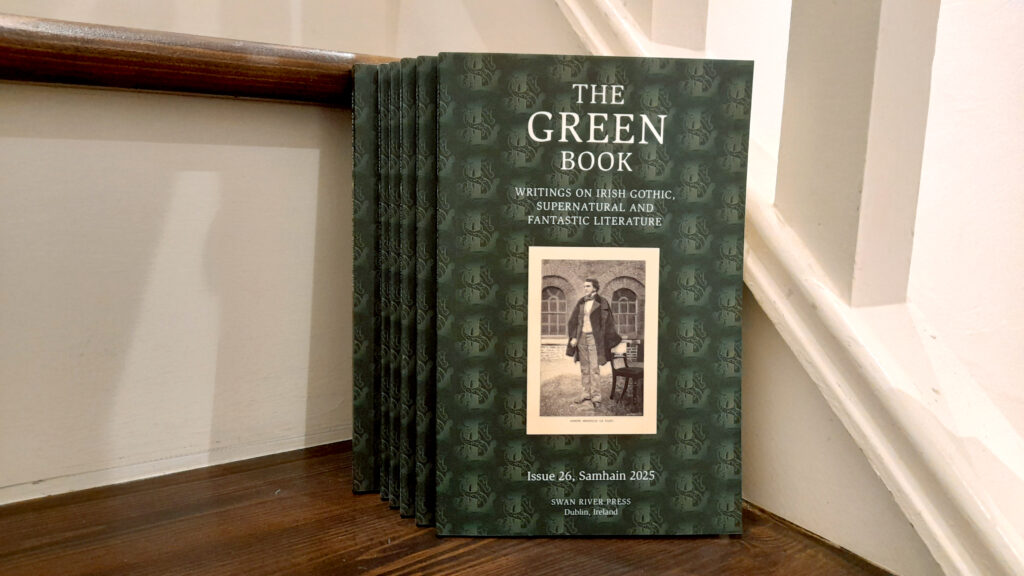
(Buy The Green Book here.)

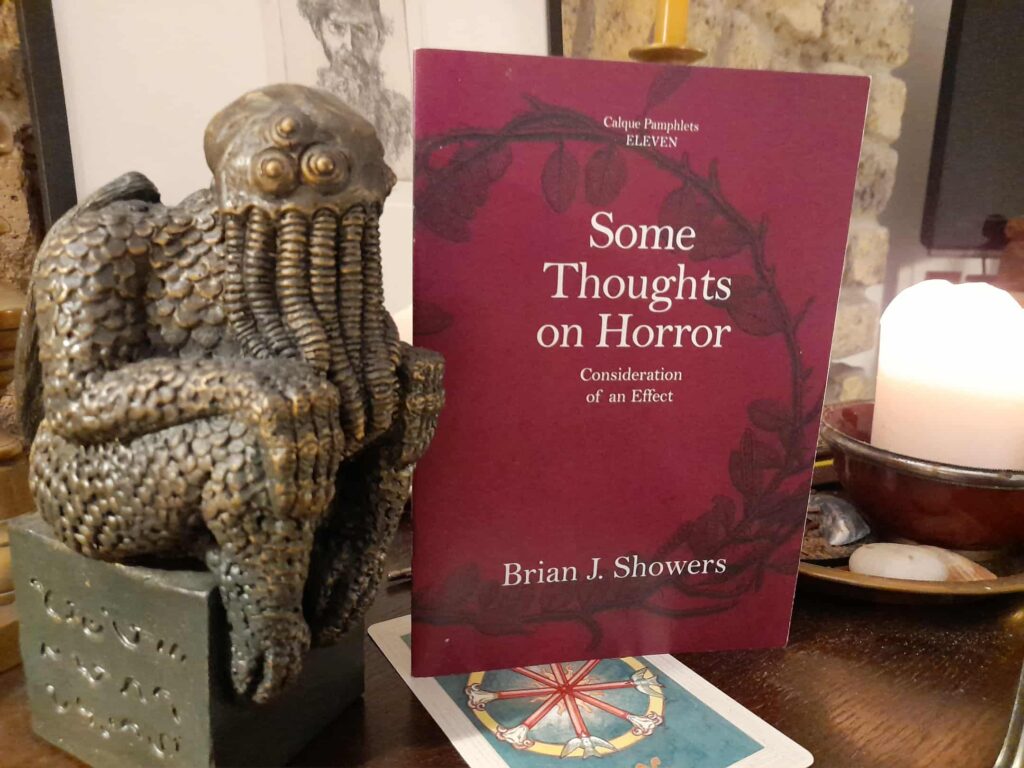
Although not a Swan River Press publication, I’d like to draw your attention to a short monograph I wrote for our friends at Calque Press entitled Some Thoughts on Horror: Consideration of an Effect. It’s a three-part essay, the first part of which some of you will recognise as my musings from the introduction to the now out of print Uncertainties 5. It turned out I had more to say on the subject of how we approach and appreciate horror, so if you like reading that sort of thing, do pick up a copy of this limited edition pamphlet.

(Buy Some Thoughts on Horror here.)

For those interested in statistics, we published 5 new titles this year, totalling 1,480 pages; 2,250 copies; and 392,613 words. That includes this year’s issues of The Green Book.

If you’re looking to keep tabs on what we get up to throughout the year, the best way is probably to sign up for our newsletter. Apart from that, we can be found on Instagram, Facebook, Bluesky, and Threads. So if you don’t want to miss out on any announcements or exciting books, do give us a follow.
And just to draw everyone’s attention to it, you can use the filters on our Titles page to see which books are on the Low Stock Report—the ones that might not be around much longer. The filter menus are a handy tool, I use them quite a bit myself. There are a few titles now in short supply, which you’re better off picking up now while they’re still at cover price.

Of course, as always, I am grateful to the Swan River Press team: Meggan Kehrli, Jim Rockhill, Steve J. Shaw, Timothy J. Jarvis, and John Kenny. I don’t think I could have assembled a more dedicated and talented group, each of whom helps to keep Swan River Press running smoothly and at the calibre you’ve come to expect.

If you’ve read this far, you might be curious what we’ve got in store for next year. Well, there will be another two issues of The Green Book, I know that much. And we’ve a full roster of hardbacks for 2026. In fact, I’ve probably more titles than I’ll be able to publish. While I don’t like to announce titles in advance, I will say that I’ve got two lined up for early in the new year, which I hope you’ll like.

Thank you again to everyone who has bought and read our books this year, or otherwise shown us support and encouragement. I particularly enjoyed getting to conventions and fairs to meet people, so with luck there will be more of that over the coming twelve months. Until then, please stay healthy, take care of each other, support your public services, vote, and be sure to keep your communities fascist free.

And may your festive season be filled with shadows, wonderment, and joy!

Brian J. Showers
Æon House, Dublin
2 December 2025
In an Uncertain Mode

Conducted by Brian J. Showers

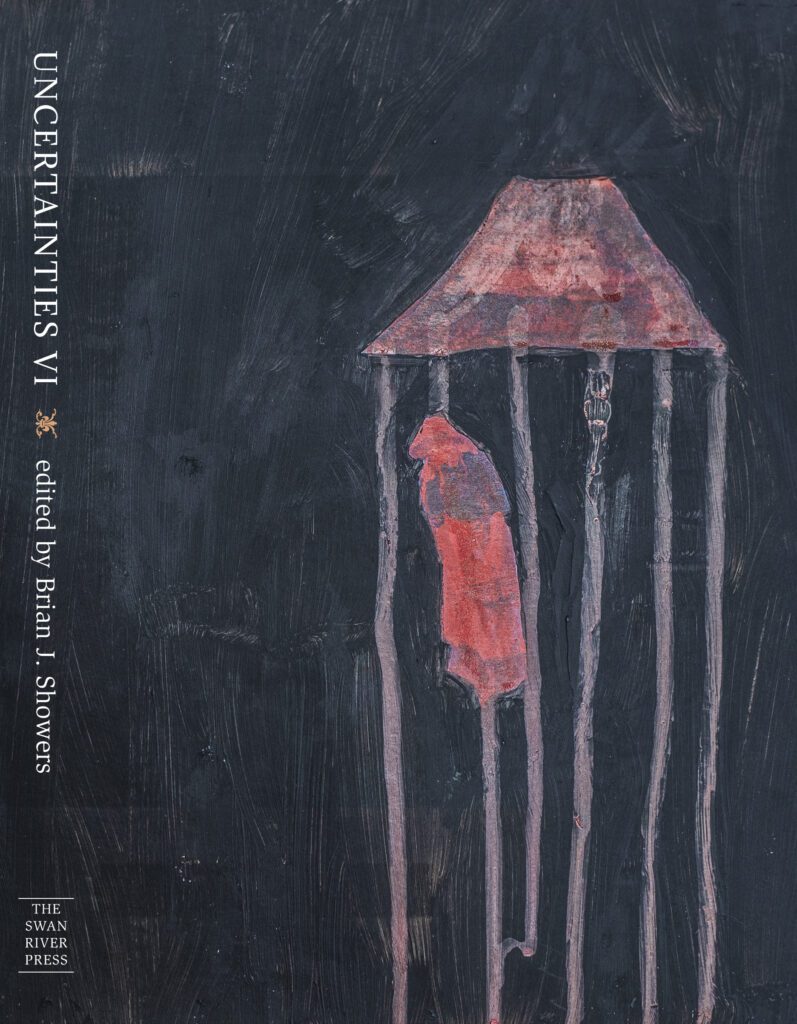
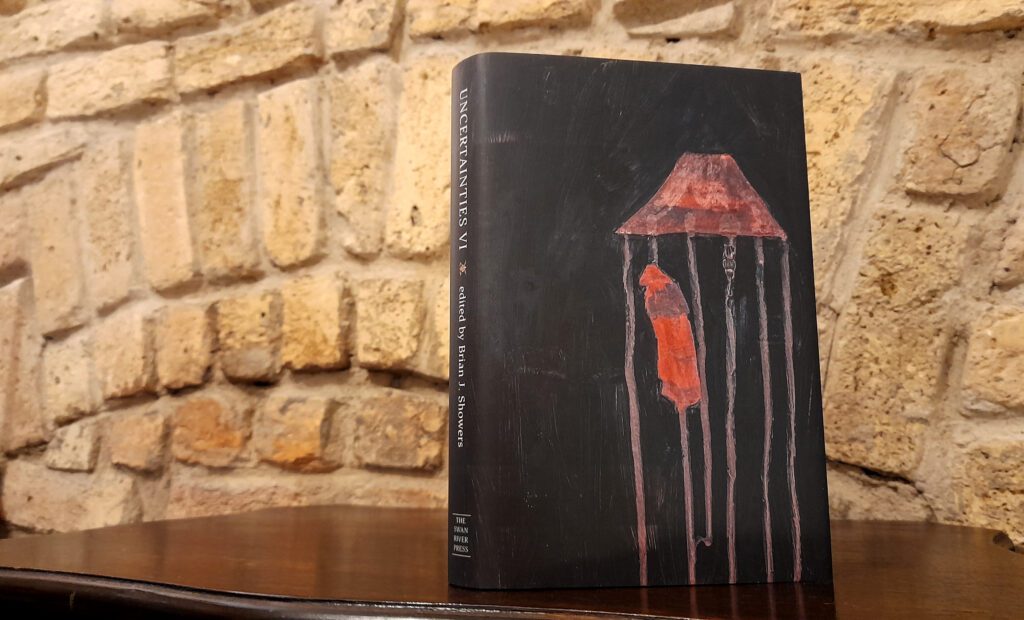
For most of our books we conduct short interviews just prior to the title’s release. In the case of an anthology, the interview is with the editor. However, for Uncertainties 6, I wanted to do something slightly different. Hoping for just a bit more insight into the genre we love, I posed a single question:

 What draws you to write tales in the weird/uncanny mode?

Here are the responses . . .


Ruth Barber (“Unfinished Business”)

My stories are a form of therapy, a vehicle for processing negative emotions such as grief, sadness, disappointment, and unfairness. The black humour comes from the random and surreal circumstances in which misery is often meted out.

I had an unhappy childhood where the expression of emotion was discouraged. I began writing from a young age: my stories and poems became an acceptable outlet for my feelings. As fiction my feelings could be safely expressed in a way that avoided any need for responsibility, accountability, or indeed resolution.

I work as a criminal lawyer and write in my spare time. Growing up in an atmosphere of unfair condemnation I feel a degree of empathy with people facing criminal charges and my ability to emotionally disassociate allows me to deal with many unpleasant and traumatic cases. I am, of course, professionally bound to keep the details of my cases confidential however I collect discrete shards of experiences and weave them together to create fantasy tales.

My tales are therefore formed from feelings and moments—the creak of a second hand sofa in a café, the shine on a cheap suit, the smell of fear in the courtroom. My tales examine the secret ticks and vices we adopt to make life bearable and the delusions we create to avoid confronting our demons.

I am the person who knows before you call, the person who can extrapolate your mood from the frequency of your WhatsApp logins, and who predicts the future from the lyrics in the next song on the radio. I know the real reason you just spoke to that person and when you are lying. But I will never tell.

Most importantly dear reader know that I write for myself and not for you. Through my tales you gain the privilege of a glimpse inside my head. Be wary as to whether it is truly a place you want to visit.

James Everington (“The Switch”)

The honest answer to this is probably “because I can’t write anything else”. I’ve a relatively broad taste when it comes to reading, but my attempts to write realistic slices of life, comedic fantasy, or—god help me—poetry have always fallen flat. And I think of it as a plus, for a writer, to eventually realise the narrow circumference of your talent and concentrate your efforts there. And it’s not as if I’m missing out: writing about the strange, the ghostly, the nebulous is my realism, reflecting life as I feel it. The hidden yet nagging sense of something unexplainable or jarring or out of sync with reality. And it’s my poetry, too: a chance to play with language and form and style in the pursuit of capturing in words something fleeting yet indelible. All of which is a highfalutin way of saying that, for me, reading and writing uncanny tales scratches an itch that other genres can’t.

Alison Moore (“Where Are They Now?”)

Some years ago, I wrote a horror novelette under a pseudonym for the Eden Book Society series published by Dead Ink Books. Writing a horror story was a natural and satisfying way for me to process the almost unreal experience of donating a kidney. Analysing that process—the relationship between the experience and the story—for a subsequent article clarified my understanding of how and why the uncanny, in which the familiar and the strange coexist, was uniquely suited to this narrative about transplantation and its very literal breaching of boundaries. The kidney donor in my novelette has a persistent sense that none of this is real, and the surreal quality of the experience is reflected in imagery encompassing stories and dreams and horror films. She feels herself gradually disappearing, from her name to her receding gums. “I swear to God,” says a visitor, “there’ll be nothing left of you soon.” There’s a sense of inevitability: when she’s given some paperwork to sign, giving her permission for the procedure to go ahead, she finds she’s already signed it. Her abdomen is marked with a thick black arrow pointing towards the kidney they’re going to take. “If this mark comes off,” the doctor says, “it will be drawn on again.” I took these and other details in the story directly from the diary I was keeping, but what was innocent in reality gains a sinister quality within the fictional narrative, so that the everyday seems to be giving way to something stranger. The procedure went according to plan and the real-life story was a good-news item on local TV, but the horror story, the version that acknowledges and channels the weirdness of it all, captures what it felt like and as a result feels more true.

Naben Ruthnum (“The Bracken Box”)

I’ve been trying to write weird fiction since I started writing. I certainly think there are other kinds of fiction worth reading and writing, but I can’t deny that the weird ones are special for me, that the great and good ones create an artistic effect that is beyond craft or technique, coming close to what I think is most worthwhile in art. That’s why I so rarely put one out there; I think that this piece in Uncertainties is my only successful piece of weird short fiction.

Aickman talked about the shared qualities between poetry and the strange story, which is true in so many ways. I find writing weird fiction to be as difficult as I find writing poetry, and I continue to keep attempting both. I’m starting to succeed, fitfully, with the weird tale, but with every new attempt to flesh an idea or an impression, there come moments when I feel as unarmed and amateur as I did when I first started writing anything. This is a mode that exposes; while strange stories can be suggestive, can lead without going, if there’s nothing to them, we all can tell that there are no ghosts to be found.

Anne-Sylvie Salzman (“Houses of Flesh”)

I was seven when I tried to read my first “adult” book, The Secret of Sarek (L’Île aux trente cercueils), by Maurice Leblanc; I say “try”, because I stopped after a few pages of sombre omens and mutilated corpses (I tackled it a few years later and loved it, of course). But it left its mark—and more than that. The decayed bodies went on rotting in the recesses of my brain and gave birth to most splendid flowers—as would the painter Odilon Redon. At some point, this conflated with a keen love of nature inherited from my parents (naturalists/entomologists/botanists), older brother (ornithologist), and uncle (entomologist). And it is by poring over some accidents of nature—especially in Scotland, and starting with the drumming of the snipe—that I was eventually driven to write uncanny tales, after having trying my hand at a more urban sort of unquietness.

Eric Stener Carlson (“I See Minza”)

That’s a bit of a strange question. I mean, I get it. “Uncanny” is supposed to mean something just slightly off, something that doesn’t feel real.

But that presupposes that there’s one stream of “reality” (composed of common sense, and fair rules of the game, and generally-accepted behaviour), and then there’s another—almost inexistent—stream of “unreality” (where people act inexplicably, where rules don’t apply, where behaviour is cruel, barbaric and fantastic).

Here’s one example of our attempt to push the uncanny into a quiet, little corner. Recently, I watched a TV show from the UK on ancient belief systems (like druids and the early Christian church). The commentator, trying to explain the social context of the Black Death, said something like, “You see, back then, people believed in something called the ‘devil’, and they thought it surrounded them all the time.”

Really? You don’t believe the devil surrounds us on all sides, trying to tempt us to destruction? I do. I believe in an ever-loving, benevolent God, so I also believe in the polar opposite. I’m not saying the devil is a flesh-and-blood creature (in fact, we may be our own devils), but that doesn’t make him any less real. I’ve investigated war crimes in Argentina and the former Yugoslavia, so I know that for a fact.

Although we’d like to think otherwise, “strange” things are woven into the very fabric of our lives. Once, on an abandoned railway platform in Poland at about 3 a.m., a 300-lb former wrestler appeared out of the darkness, and challenged me to punch him in the stomach as hard as I could (I declined). And in college, there was a “glitch” in my answering machine that made it call up a friend and leave my “Please leave your message at the beep” message. She thought maybe it was a plea for help (it wasn’t, at least not from me).

Why do I write weird tales? It’s my attempt to outline our dappled existence, where what we call the “extraordinary” and the “ordinary”, “natural” and “supernatural”, “real” and “uncanny”, all swirl together on a typical Monday morning. What’s “weird” about that is how often we fail to recognize it.

Méabh de Brún (“Consumed as in Obsessed”)
I love ghosts. I love ghosts and goblins and things that go bump in the night. I love gothic hauntings in old creaking manors and the folkloric horror of things within the woods. Sometimes people ask me, but do you really believe? Inconsequential. Irrelevant. I am having a ball. But there’s a subtle difference between spooky and strange, and it’s the strange that truly unnerves and fascinates. Those weird uncanny stories that are not so easily explained by a restless, roaming spirit or an old folk-tale. Senseless events without rules, reason or motive that leave you lonely in the half-dark asking, but why? but why? These kinds of stories may not cause a burst of terror in the moment, but they worm beneath the skin. They unsettle. They unnerve. It’s always the inexplicable that leaves you lying awake at night, turning it over your mind like a tongue probing a rotting tooth. I press the weird against the mundane to highlight the horror of the everyday, and to write about the things that are truly scary. The banal and boring evil of a housing crisis. The creeping dread of losing a beloved friend. I would stride up the steps of the haunted manor with a skip in my step and a song in my heart. No ghoul could compare with living through late stage capitalism. Simone Weil once said, “Imaginary evil is romantic and varied; real evil is gloomy, monotonous, barren, boring.” By writing in the uncanny, I can add a splash of colour to the grey. A jewel-tone spread of strange and sourceless mould across clean concrete. When I need to get to grips with real fear, it’s the uncanny that gives me the weird gloves to do so. Yes, things are still bad, but now they’re interesting. And after all, in the face of inexplicable horror one should always continue to aim for that glorious goal of having a ball.

Stephen J. Clark (“Interference”)

Writing for me involves being receptive to my imagination and unconscious mind. Once an idea, memory or image emerges then the process of creative play begins, and I interpret and delve into the images and ideas to see where they will take me.

To an extent the story has a life of its own. If I set out with a personal experience or memory or dream in mind, I often discover something unexpected: some long-forgotten detail or surprising insight. It’s this potential for revelation that inspires me. I find that revelation is inextricably linked to my experience of language, which involves encountering arresting metaphors or lucid phrases as part of the process and pleasure of writing.

I think of language as a fabric partly composed of unconscious threads, of personal memories yet also ancient images and ideas, so my writing is a way of engaging with those hidden seams between intimacy and myth. For me, writing from the imagination involves attempting to describe what often resists expression, to utter what would otherwise remain lost, concealed or forbidden, to reach into those zones of uncertainty and possibility. For the fabric can become a map, charting journeys into the domains of the grotesque and the Marvellous. Exploring this personal mythology of poetic images and resonances is a method of catharsis too: of attempting to lay ghosts to rest or to name demons.

For me, writing is a kind of waking dream, using my imagination to form a dialogue between the conscious and the unconscious. Whether discovered by chance or through deliberate exploration, I’m fascinated by the experience of encountering alluring and disturbing images and ideas, and my art and stories are the residual evidence of those encounters.

A. K. Benedict (“The Sands”)

Explaining why I write the uncanny would require more words, time, and money for therapy than I currently have, but it is something to do with seeing strangeness in a world that most people think of as “normal”. It’s about being slantwise. Catching the sniff of ghosts in dust motes, fixing restless spirits in ink, bones in words. The uncanny makes more sense than most because we know less than nothing, about anything, and there is joy in acknowledging the twisting of shadows

David Tibet (“Dreams As Red Barn”)

When I was young in Malaysia
I loved the Hebrew Bible
And the New Testament
And the Biblical Apocryphal Writings
Especially Coptic texts
And Apocryphas led me to M. R. James
And his The Apocryphal New Testament
And then I fell in LOVE with his GHOST STORIES
I also loved Enid Blyton
And her NODDY books
And She Wrote in one of them
Amen Amen Amen:
It isn’t very good
In The Dark Dark Wood
In the middle of the night
When there isn’t any light . . .
It isn’t very good
In The Dark Dark Wood . . .
And ever since READING those HALLUCINATORY WORDS . . .
I have searched for The Dark Dark Wood
And found her many times
Amen Amen Amen

David Tibet, Hastings, 4 VII 2023

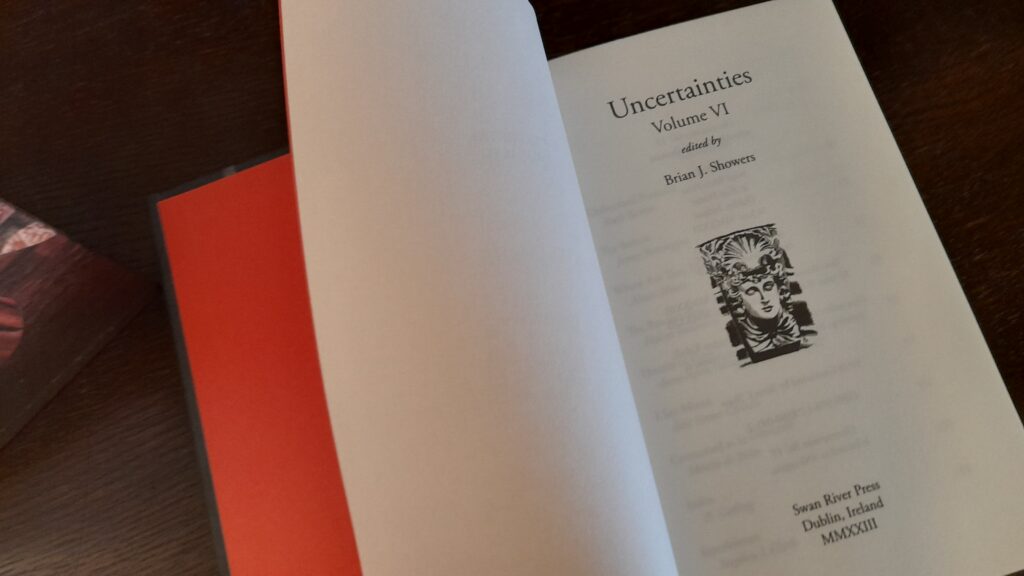
Buy a copy of Uncertainties 6.

Excavating Oblivion

In Conversation with Iain Sinclair

Matthew Stocker: I honestly didn’t know how to open this interview, then yesterday I was in a restaurant with my children and wife and I spotted beside many bits of Joyce paraphernalia a quote;

“I want to give a picture of Dublin so complete that if the city suddenly disappeared from the earth it could be reconstructed out of my book.”

In Agents of Oblivion, Dublin is mentioned once or twice in passing, but with regards London do you see yourself undertaking the same type of project as Joyce attempted for Dublin?

Iain Sinclair: Dublin wrote Joyce into existence. The city identified its ideal scribe at the optimum moment when the solid structures and achievements of nineteenth-century fiction were ready to be absorbed into the permissions of high modernism. Those special theories of everything hovering over the sweat and stink and chatter. Joyce, as the chosen instrument, had to be expelled, forced to carry out his epic sequence of masterworks at a safe distance. Whatever the cost. Whatever the collateral rewards. Poverty, vanity, a Swiss grave. He gave everything to become—the horror of it!—a cultural resource. A brand. Municipal real estate pimped for cultural tourism. But he links very neatly with the Protestant austerity of Beckett. The one who could revise and refine the task, strip it down, and carry it away from the choking rituals, the provincialism, and the heady particulars of a mesmerising and Oedipal port city.

Living for four years in Dublin was the best possible preparation for appreciating that London could never be excavated in that way. London was not a project for me. It was the curse that never stops giving. A Faustian contract to be worked out through fortunate collaborations, in poetry, film, performance, pilgrimage. Pulling away from London gravity was never successful. Those books were barely noticed or permitted. The point was to live there, to begin with the first step outside my Hackney door. To dig in, to stay. To honour characters who presented themselves and demanded a cameo.

Stocker: The book, Agents of Oblivion, is dedicated to B. Catling and he appears within the text alongside a plethora of other literary giants. I was saddened to read of his passing, I really enjoyed The Vorrh trilogy and Munky (published by Swan River Press, also illustrated by McKean); it makes a lovely companion with Agents.

Why Blackwood, Machen, Ballard, and Lovecraft? Writers/characters such as Brian and Alan Moore and Steve Moore (no relation) play almost a bigger role as travellers through the textuality.

Sinclair: Again, it felt as if those writers, with their own haunting characteristics—writers much more implicated in generic tropes than Joyce—were authentic witnesses and contributors to the weave of London mythology. Reading them, they nudge the pen. They whisper.

They have laid out the model. But it is not finished, never finished. Their words remain contemporary. They are our psychic landscape as much as Woolwich or Farringdon Road or Northolt.

The characters from our own times, like Alan Moore, Brian Catling, and Steve Moore, have doubled identities. They shape worlds, they mine extraordinary language reserves—and they also share experiences that I can subvert or celebrate. As ever: “The living can assist the imaginations of the dead.” And vice versa. Those writers know how to take the dictation and how to exploit it. They pass on the obligations of attentive readership. They pilot the future.

Stocker: Does the book serve a double purpose, on one side to be read/enjoyed/absorbed in its own right, but also as a reading list for the initiate to dive into? As a syllabus, I have been racking my mind as to what the course would be called.

Sinclair: It is my reading list at the time of writing these stories, a period of a few months. It is not a pitch for an established academic discipline. Nobody is required to locate and absorb every referenced figure. I haven’t read those books at an examination pitch. I dipped and pecked and reached out for the shelves when things were flagging.

I should say that the stories were put together in a posthumous dialogue with Brian Catling. And as a companion piece to Munky, the novella he published with Swan River. That also came with perfectly sympathetic drawings by Dave McKean. It was Catling who pointed me towards Blackwood and the John Silence stories the first time I visited his family home, off the Old Kent Road. He was also, in the late 1960s, a devourer of Lovecraft. I heard many stories of Ballard and the era of New Worlds from Mike Moorcock. I appreciated that lineage, what passed down from Moorcock, Ballard, Angela Carter to Alan Moore and Catling. They tapped the fabric of London as London prodded them.

Brian was responding, to his last breath. He projected a fourth volume of The Vorrh, in parallel with Surreycide, a questing return to the mythology of a rubbled childhood among the tenements and canals of Camberwell. That city, that time. The museums lying in wait as he rode in a London bus alongside his adopted father. Because it was always the boy who chose his parent. Who recognised and teased the inheritance from William Blake.

Stocker: You appear to take the reader on a journey linking author after author and their works, it goes beyond intertextuality. It feels like a ghost story, the writers you write about haunt the places and live on in both their writing and the landscape (I should note not all the characters are dead—Alan Moore for one).

While the literary/film characters of the book fill the pages, it is the peppering in of people like William Lyttle that add an extra dimension to your writing. (Less of a question and more calling out an aspect I loved. On second reading, I sat with Google by my side and fell down many enjoyable/educational rabbit holes, was that your intention?) That kind of interplay between a text and the digital world didn’t exist twenty years ago—what, if any, impact do you think that has had on your writing?

Sinclair: Not much. Beyond the convenience of checking dates and facts, with frequently unreliable results. Sometimes—as with the walking films of John Rogers on YouTube—I find inspiration, confirmation. In general, the digital world is a swamp. Easier to drown than swim.

Stocker: As you write, do you start with a map to the journey you take the reader on both with regards the physical places you bring them and the writers that inhabit them? Or is it a chain of events, one naturally leading to the other as you wrote?

Sinclair: I don’t know how “natural” the process is. But there is no pecking order: maps are usually involved, but I might not consult them until the walks are done. And those maps tend to be so old that they have the charm of fiction. Key buildings and sites have vanished. The latest interventions are not yet admitted. The Secret State redacts inconvenient military installations, pharmaceutical and “experimental” facilities. London documentation has to ooze through the cracks in forbidden zones. There is a perpetual struggle to outperform CGI boasts and projections. Writing is a dangerous negotiation. You pay a price to be admitted to the game.

Stocker: The artwork in the book is phenomenal, I am an avid fan of Dave McKean. (Loved your previous collaboration, Slow Chocolate Autopsy) How does that process work, how does the end product gel with the imagery in your head as you write?

Sinclair: Dave has a preternatural gift for fine-tuning his imagery to the extravagant conceits of my prose. In practical terms, as I discovered from the start, with Slow Chocolate Autopsy and London Orbital, the best way forward was to send Dave a bunch of my research snapshots—places, characters, and incidents from which the fiction took off. Dave has that classic Victorian or Edwardian gift of catching the lineaments of character and exaggerating them to achieve a higher truth.

He would do what you wanted, what you pre-imagine—and then much more. I did not for a moment conceive of the range of illustrations he would extract from Agents of Oblivion. What he delivered made it a different and richer book, a graphic novella.

Dave’s animated interventions boosted the films I made for Channel 4 with Chris Petit. There was an unforgettable moment in The Falconer when he finessed a vampiric Hammer Films seizure out of an overheated television interview Peter Whitehead conducted with a Norwegian woman, when he talked about cohabiting with raptors.

Buy a copy of Agents of Oblivion


Matthew Stocker, a graduate of the English Department of Trinity College Dublin and occasional storyteller, lives under the kitchen table and tells stories for food.


Our Haunted Year 2020

We can probably safely say that few could have guessed what 2020 would have in store for us. I haven’t quite decided yet whether or not I take comfort in the fact that this can be said at the start of any given year. Anyway, here at Swan River Press I had to adjust quickly: I started to work my day job from home last March, which then blurred daily into the evening hours that I put into the press. Time is a bit elastic in this room, and it isn’t uncommon to find myself wondering what day of the week it is.

Whenever I write one of these annual reviews, it seems that the most recent passing year is the “most ambitious yet”. This year feels no different, if only because most of my free moments—for better or for worse—were given over to Swan River. I suppose one must keep oneself distracted, right? I admit, I enjoy the indulgence in work. At least this sort of work.

But here we are at the end of a difficult year, and it’s time for me to take stock of what we’ve accomplished on the publishing front. I say “we” because, though it’s just been me in this room for the majority of the year, Swan River is far from just myself as you’ll quickly see.

So let’s start at the beginning.

Our first book of the year was the fourth instalment in our ongoing anthology series, Uncertainties, our showcase of new writing—featuring contributions from Britain, America, Canada, Australia, and the Philippines—each writer exploring the idea of increasingly fragmented senses of reality. This year’s volume was edited by Timothy J. Jarvis, and included an impressive line-up of stories from fourteen contemporary writers such as Lucie McKnight Hardy, Camilla Grudova, John Darnielle, Brian Evenson, and Claire Dean. I was particularly delighted to feature on the cover a painting by B. Catling, who we’ll return to in a moment. David Longhorn of Supernatural Tales had some kind things to say about the anthology: “[Uncertainties 4] has, for me, illustrated yet again the broad range of Gothic fiction, and more than hints at a genre revival in this century far more impressive than anything in the last. Perhaps this is because, like the Victorian era, ours is one of uncertain peace, irrational fads, scientific progress, and deeply unstable societies that are mirrored in confused personal identities and relationships. And people still like spooky stuff a lot.”

(Buy Uncertainties 4 here.)

Lucifer and the Child by Ethel Mannin felt like one of our biggest discoveries of the year, something to be truly excited about: the first Irish edition of an overlooked novel once banned in this country. An atypical book from Mannin, Lucifer and the Child was originally published in 1945, then reviewed in the Irish Times as “a strange, but gripping book”. Our new edition of this extraordinary novel features an introduction by Rosanne Rabinowitz, and was given favourable notice in the Dublin Inquirer: “It is not surprising that this book was deemed unsuitable for 1940s Ireland. The allure of Lucifer and the occult would certainly have been deemed inappropriate, as would the depictions of female sexuality.” (Although no records exist that give reason, I personally suspect it wasn’t the occult themes that got the book banned, but rather the mention of abortion.) Despite the challenges it poses to conservative pearl-clutchers, this book was warmly received as evidenced by the many emails I got from delighted readers. The cover is by Australian artist Lorena Carrington—she did a wonderful job of depicting the dark faerie tale within its pages.

(Buy Lucifer and the Child here.)

Our next title, Munky, allowed us not only to work with artist and novelist B. Catling RA, author of the Vorrh trilogy, but for the cover art the opportunity to team up with artist Dave McKean. This project started as a submission to Uncertainties 4, but after some consideration, we decided it stood better on its own. Munky is a quirky novella that illustrates an English town and its inhabitants, as ridiculous as they are quaint, evoking an atmosphere that “might be called M. R. James with a soupçon of P. G. Wodehouse and a dash of Viz” (The Scotsman). We had also arranged for this edition to be signed by both author and artist, making this book one helluva package. Once a book is published, I tend not to go back and read it (yet again). Not so with Munky. Over these past months I found myself picking it up on occasion to revisit Catling’s charmingly cracked world.

(Buy Munky here.)

Our fourth book this year was also our fourth by Irish author Mervyn Wall: Leaves for the Burning, originally published in 1952. We’ve been championing Wall’s work for quite some time now: The Unfortunate Fursey (2015), The Return of Fursey (2015), A Flutter of Wings (2017), and in a few issues of The Green Book. A mid-century portrait of Ireland, Leaves for the Burning is rich in grotesque humour and savage absurdity, depicting a middle-aged public servant who works in a shabby county council sub-office in the bleak Irish midlands, mired in Kafkaesque bureaucracy and petty skirmishes with locals. Although we stray from our typical fantastical themes with this one, we hope you’ll still give it a chance. With an introduction by Susan Tomaselli, editor of gorse, we are proud to make available again Mervyn Wall’s great “half-bitter book”—as it was judged by Seán O’Faoláin—surely now just as relevant as it was over half a century ago. The cover art for this one is by Niall McCormack, whose work will be recognisable to those who read Tomaselli’s gorse.

(Buy Leaves for the Burning here.)

Continuing with our “recovered voices” of Irish women writers of the supernatural, this year we published The Death Spancel and Others by Katharine Tynan. Research for this project started over three years ago—though you’ll recall we featured Tynan in Bending to Earth: Strange Stories by Irish Women (2019) and in various issues of The Green Book. Consisting of fifteen stories, seven poems, three appendices, and an introduction by Peter Bell, The Death Spancel is the first collection to showcase Katharine Tynan’s tales of the macabre and supernatural. It is also the only volume of this once-popular Irish author’s work currently in print, perhaps making this book all the more important. The Death Spancel was reviewed in Hellnotes by Mario Guslani to be “of remarkably high literary quality . . . a great collection recommended to any good fiction lover.” Brian Coldrick, who is quickly becoming one of our favourite artists to work with, did the cover for this one. You might recognise his work from the cover of Rosa Mulholland’s Not to Be Taken at Bed-time (2019).

(Buy The Death Spancel here.)

The final hardback of the year was Ghosts of the Chit-Chat, edited by actor and scholar Robert Lloyd Parry. The book is as much an anthology of stories and poems as it is a work of scholarship. Lloyd Parry introduces each author with a short biographical sketch, building a portrait of those in the orbit of M. R. James, who debuted his own ghost stories on the evening of Saturday, 28 October 1893, Cambridge University’s Chit-Chat Club. Like many of our books, this one was long in the works. In addition to reprinting numerous rare and only recently discovered pieces, Ghosts of the Chit-Chat also features earlier, slightly different versions of James’s “Canon Alberic’s Scrap-book” (here titled “The Scrap-book of Canon Alberic”) and “Lost Hearts”. We also had a Zoom launch for Chit-Chat, and though it wasn’t recorded, we’ve got a video of Lloyd Parry reading Maurice Baring’s “The Ikon”. The volume was published on 8 December, and proved to be so popular that the already extended edition of 500 swiftly went out of print on 20 December, breaking some sort of record for us. Reception has been encouraging, with James scholar Rosemary Pardoe noting, “People who’ve missed out on it should be kicking themselves.” But don’t worry. We have plans for a paperback edition next year—sign up to our mailing list if you want advance notice.

(Buy Ghosts of the Chit-Chat here.)

We also published three issues of our journal The Green Book: Writings on Irish Gothic, Supernatural and the Fantastic. Issue 14, outstanding from 2019, was published simultaneously with Issue 15. Based loosely around the theme of memoir and biographical sketches, Issue 14 contained pieces by or about Dorothy Macardle, Fitz-James O’Brien, Rosa Mulholland, among others. Issue 15 was a departure from our standard practice: we decided to feature fiction, and so reprinted rare pieces by Conall Cearnach, Herbert Moore Pim, Robert Cromie, and others. Issue 16 featured ten entries from our (still tentatively titled) Guide to Irish Gothic and Supernatural Fiction Writers project, including profiles of Edmund Burke, L. T. Meade, Forrest Read, Elizabeth Bowen, and more. Our issues for 2021 are already coming together nicely.

(Buy The Green Book here.)

And there you have it!

So is anyone interested in the final tallies? I’ve got my nifty spreadsheets set up to spit out some figures. We published 8 new titles this year, totalling 1,584 pages, 2,950 copies, and 462,763 words.

Naturally we attended no conventions this year, either online or in person. I think the last might have been FantasyCon in Glasgow. But I look forward to seeing everyone again soon!

Perhaps the biggest Swan River development over these past twelve months was a long-mooted foray into paperbacks. We’ve dipped our toes in the water so far with Earth-Bound (Dorothy Macardle), The House on the Borderland (William Hope Hodgson), and Insect Literature (Lafcadio Hearn). We’ll be doing more in 2021, so it will be your chance to read some of our out-of-print books at a more reasonable price than what you’ll often find them for on the secondhand market. The reason it took so long is because I wanted to make sure we were doing paperbacks as best we could given the myriad challenges I had to consider and balance. This not only includes the books themselves, but also the behind-the-scenes admin work they create. But I’m happy we’ll been able to make available again some great stories. If you want to read more about our paperbacks, I wrote an entire blogpost about it.

(Buy Swan River Paperbacks here.)

Next I’d like to extend a warm welcome to Timothy J. Jarvis, who will be joining (actually, already has) the Swan River team. I’ve known and worked with Tim for a good many years now. I’ve always found both his fiction and writings on supernatural literature to be nothing but insightful; and I, as I am sure do many, value his generosity, passion, and friendship highly. If you want to check out Tim’s work, I suggest starting with his novel The Wanderer (2014). Tim also edited Uncertainties 4 this year, and his short fiction and articles can be found in innumerable anthologies. He is also co-editor of Faunus, the journal of the Friends of Arthur Machen (to which you should subscribe if you don’t already). Welcome, Tim!

Not forgetting the Swan River team, who make sure that I’ve not sat alone in this room for the year: Meggan Kehrli, who has once again done a superb job designing and laying out all our titles (including the various other ads and graphics I occasionally need); Jim Rockhill, who is always at the ready to provide proofreading and sage editorial input, always backed with his thoughtful scholarship; and Ken Mackenzie, who takes care of all our books’ insides, always patiently putting up with my dithering until things are just right. And finally, Alison Lyons and the team at Dublin UNESCO City of Literature, who continues to give their support, encouragement, and enthusiasm for our on-going work, allowing us to reach just a bit further than we might otherwise be able to.

(Don’t worry, I’m nearly finished.)

This year has been difficult for many, and I’ve had a lot of books and media to keep me company lately. I’d like to give a shout out to the creatives whose work I’ve been enjoying lately. Maybe you’ll find something new and interesting too: Tartarus Press, Zagava, Ritual Limited, Egaeus Press, Sarob Press, Side Real Press, Supernatural Tales, Hellbore, Nunkie Productions, Eibonvale Press, Undertow Publications, Nightjar Press, Friends of Arthur Machen—all of these people are doing the sort of things that I love, so be sure to give them your support if you find something you like. Not to mention the many booksellers out there who stock our books—and even if they don’t, be sure to support your favourite local, independent booksellers anyway. Choose to put your money into their pockets instead of Am*zon’s, because it really does make a difference.

Lastly, thank you to everyone who supported Swan River Press this year: with kind words, by buying books, donating through our patron programme, or simply spreading the word—I’m grateful for it all! If you’d like to keep in touch, do join our mailing list, find us on Facebook, follow on Twitter and Instagram. We’ve got some exciting projects for next year that I’m looking forward to sharing with you all. Until then, please stay healthy; take care of each other and your communities. I’d like to wish you all a restful holiday season, and hope to hear from you in the New Year!