

Nocturnal Mirrors
Richard Gavin
Availability: Out of Print – Hardback
“Something foul is knocking at the door to our world.”
A grand marble staircase prowls the night in search of passengers, Hidden Mothers whisper tales of the Wild Hunt to children carved from wood, a man is gifted candles whose flames do not dispel shadows but lure them . . . and that which lurks beyond. Such are the shapes of Otherness reflected in Nocturnal Mirrors. Across thirteen stories, Richard Gavin conjures liminal realms where the familiar is transformed by spectral and chthonic forces. Drawing upon the literary traditions of the Gothic, fin de siècle Decadence, and Surrealism, Nocturnal Mirrors gives form to the author’s conviction that our world is most vitally experienced when it is viewed through a glass darkly.
Our limited edition hardback is sold out.
Please check with our Booksellers for remaining copies.
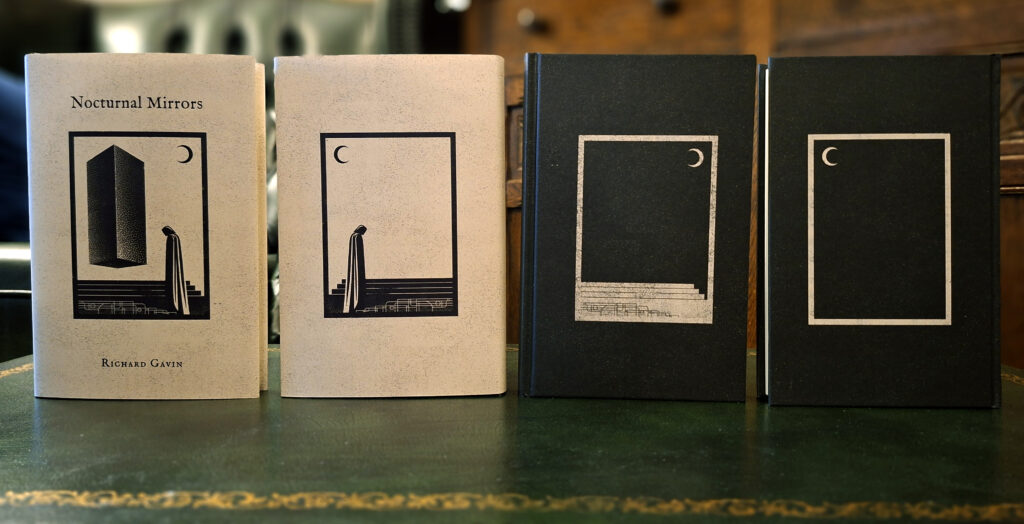
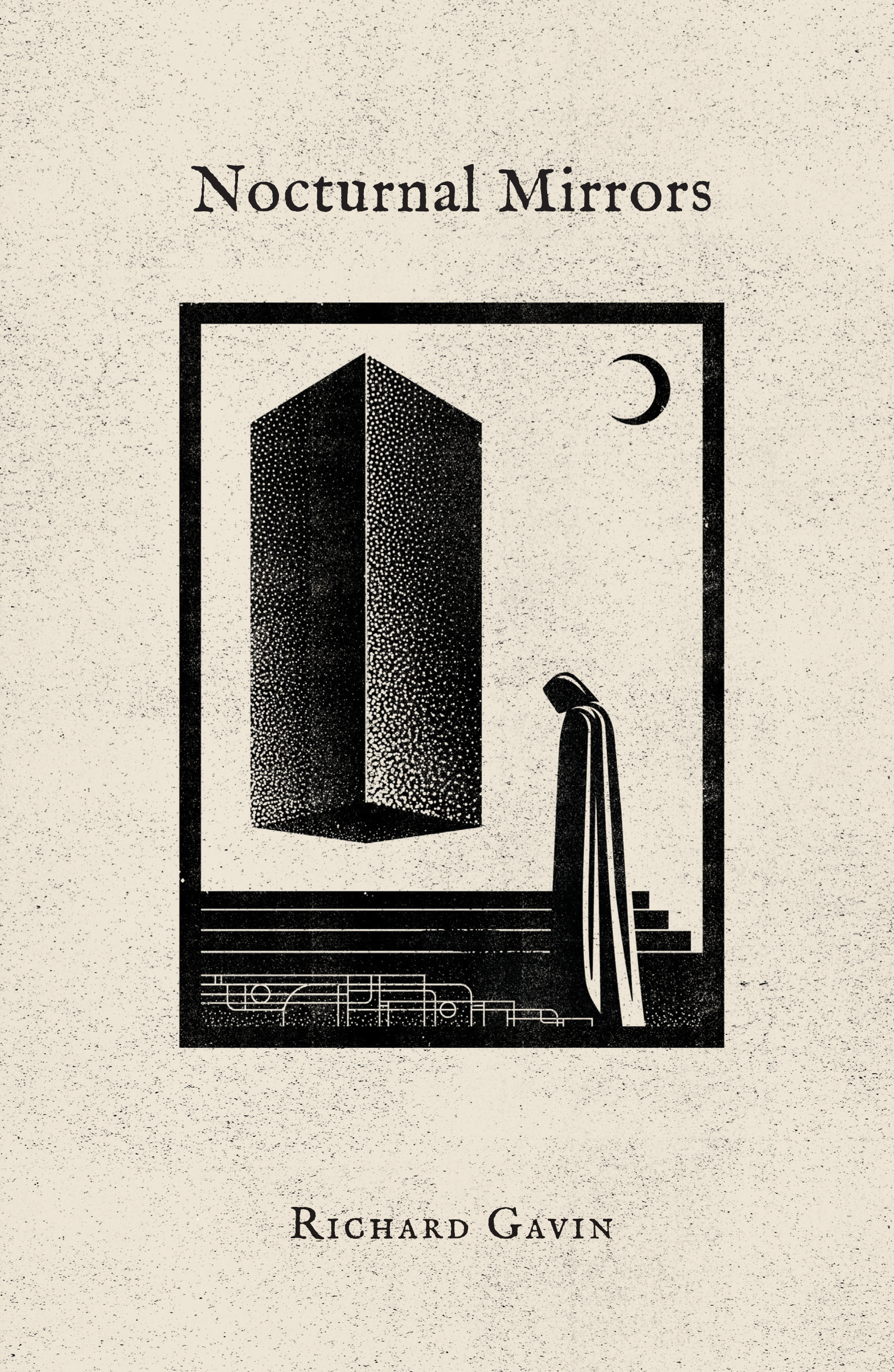
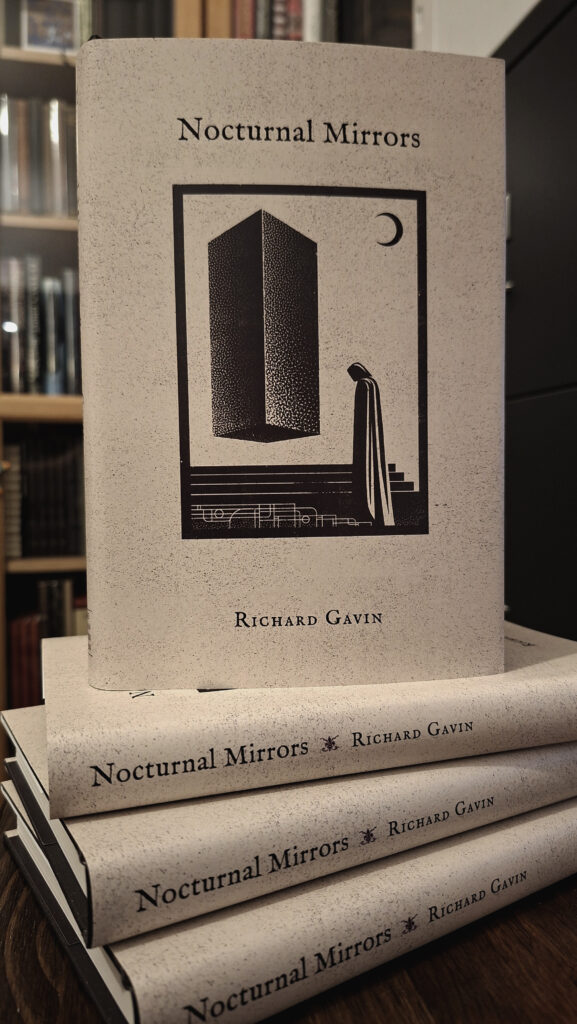
Cover art by Morgan Sorensen
ISBN: 978-1-78380-058-2 (hbk)
Richard Gavin
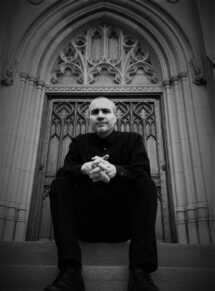
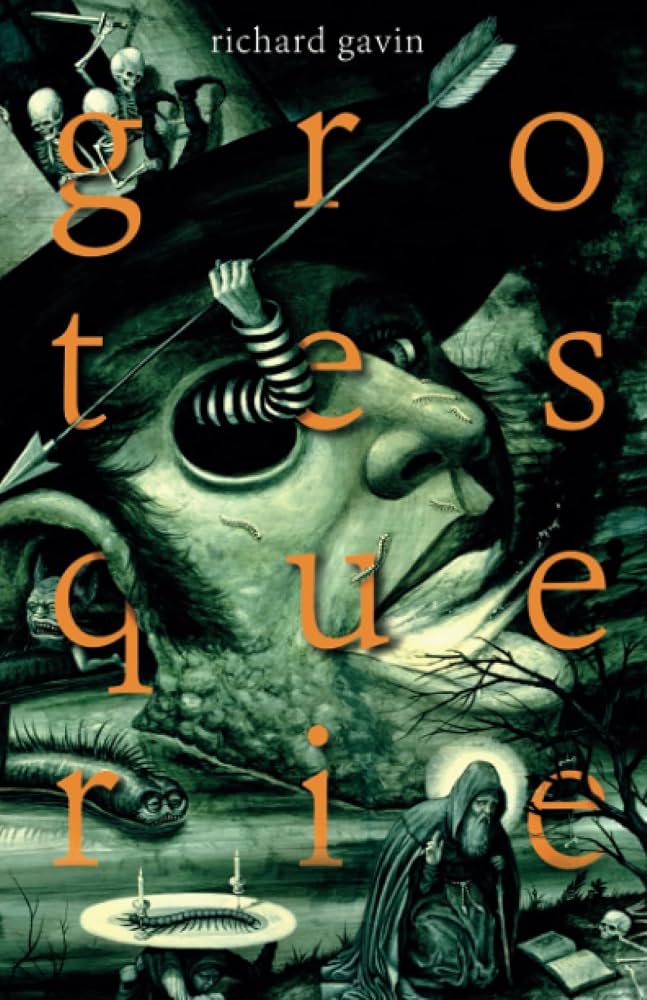
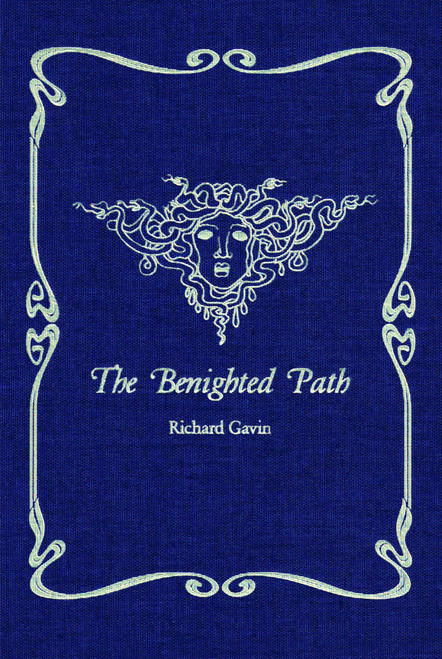
Richard Gavin has authored numerous collections of supernatural horror fiction, including Grotesquerie (2020), Sylvan Dread: Tales of Pastoral Darkness (2016), and At Fear’s Altar (2012). His volumes of esotericism include The Benighted Path: Primeval Gnosis and the Monstrous Soul (2015) and The Infernal Masque (2022). He lives in Ontario, Canada
Read more“Richard Gavin knows his horror and occult lore so well that he can be playful, mysterious, refreshing, and inspiring with an enviable ease.” – Rue Morgue
“These stories can be seen as items in a manifesto, an argument for the exploration of what [Richard Gavin] calls the Shadowland. With this collection, Gavin has demonstrated his versatility, intellect, and panache as a storyteller. Stylistically powerful and thematically strong, every story glitters like a cursed jewel in some mad tyrant’s hoard.” – Supernatural Tales
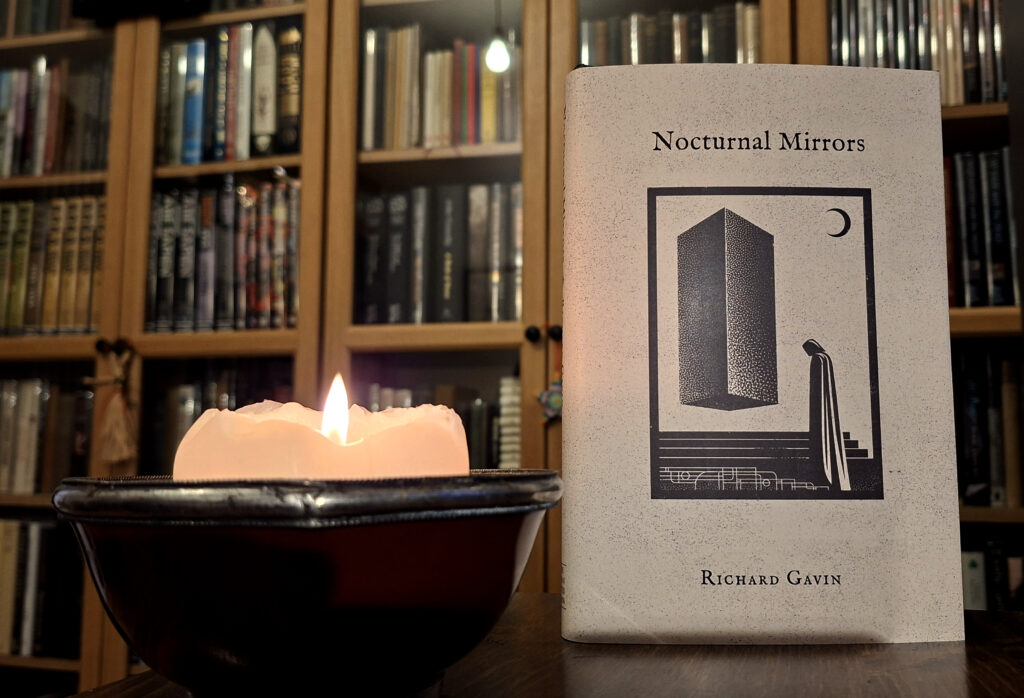
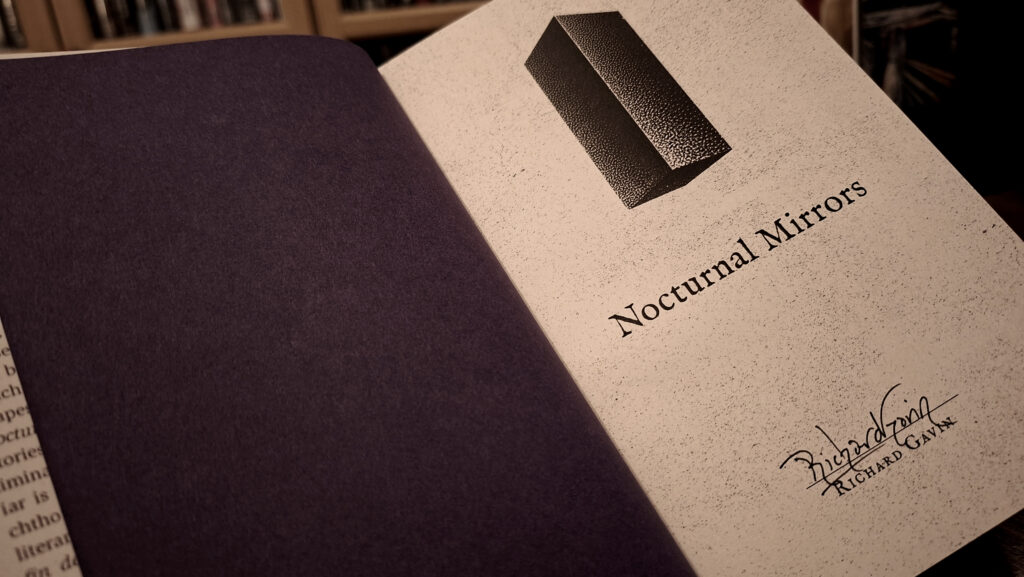
Nocturnal Mirrors by Richard Gavin; cover art by Morgan Sorensen; cover design by Meggan Kehrli; edited by Brian J. Showers; copyedited by Jim Rockhill; typeset by Steve J. Shaw; published by Swan River Press at Æon House.
First Hardback Edition: Published on 5 June 2026; limited to 350 copies of which 100 were embossed and hand numbered; signed by Richard Gavin; dust jacketed; illustrated cloth-printed boards; endpapers (WBN580 Amethyst); 217 pages; lithographically printed on 80 gsm cream paper; sewn binding; head- and tail-bands (Winterband 999 solid black); printed by CPI Antony Rowe, Chippenham, Wiltshire; ISBN: 978-1-78380-058-2.
 “Reflecting the Gothic”
Conducted by Alexander Dickow © June 2026
Richard Gavin has authored numerous collections of supernatural horror fiction, including Grotesquerie (2020), Sylvan Dread: Tales of Pastoral Darkness (2016), and At Fear’s Altar (2012). His volumes of esotericism include The Benighted Path: Primeval Gnosis and the Monstrous Soul (2015) and The Infernal Masque (2022). He lives in Ontario, Canada. His new collection, Nocturnal Mirrors, is now available from Swan River Press.
Alexander Dickow: You often invoke the term “Gothic” to describe what you do. Do you prefer this term to ones like “weird fiction” or “supernatural horror”? Is there any difference? How would you define Nocturnal Mirrors in relation to such terms? Is it “more” Gothic than your prior work?
Richard Gavin: “Gothic” has always resonated with my entire being. It has always served as a shadowy alternative to the dayside modes of rationalism, progressivism, and materialism. It emphasises how our world is not an inert backdrop to our egocentric ambitions but is an ensouled place dripping with spectral traces of the past and of Fate. All my life I have innately understood and resonated with this stance, so it’s hardly surprising that I gravitated toward the Gothic at an extremely young age. I would not say that Nocturnal Mirrors is necessarily any “more Gothic” than my prior work simply because this is the way I have always engaged with the world. It is what I am, rather than a certain literary mode I adopt.
As far as descriptors such as “weird tales” or “supernatural horror” go, they are perfectly fine with me as these also underscore that my work is rooted in the metaphysical tradition of horror literature.
In my view a few of the qualities that distinguish it are the primacy of mood and atmosphere, unfettered Sturm und Drang, a philosophical fidelity with many aspects of Romanticism, and perhaps most crucially, a relishing of the beauty of the macabre, the eerie, the enigmatic. This is not to suggest that other forms of supernatural fiction cannot or do not possess these same qualities at times, but the Gothic has always been renowned/reviled for its total aesthetic of dread and decay, its eager embrace of darkness.
AD: There’s certainly plenty of darkness in these tales, but there’s also a hallucinatory and at times almost funhouse quality to many of them—something that brings colour and verve to the sinister workings of the invisible. I also noticed the reference to the French surrealist poet Paul Éluard in your afterword, and it made me wonder if that movement, which claims its own commerce with the underside of things, were an important reference point for you, in Nocturnal Mirrors specifically, perhaps.
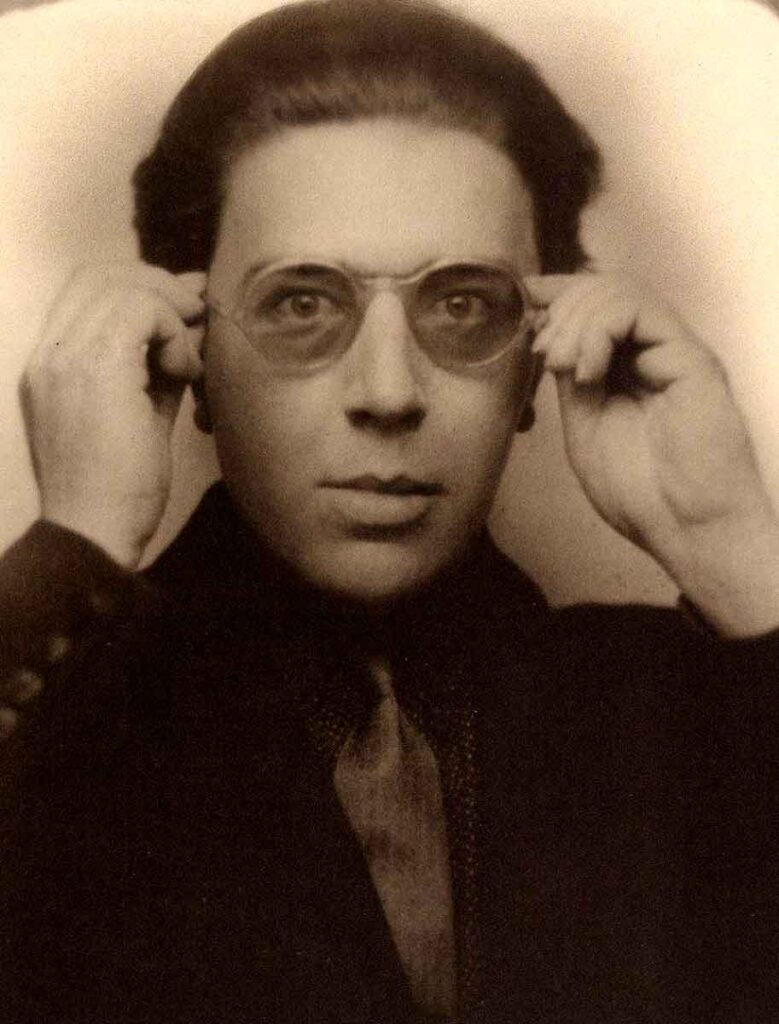
RD: I commend your perceptiveness. Surrealism has always interested me. Like the Decadents and the Symbolists that preceded them, the original Surrealists were dedicated to the numinous. André Breton was quite vocal in his belief that Surrealism was magic art, an engagement with the ineffable.
What distinguished the Surrealist movement from the more classical traditions of spiritual or religious art was their dedication to internal experience. Dreams, visions, subjective impressions of places or objects were all highly valued. To populate a work of art with the familiar and accepted symbols of conventional faiths does not, in my view, automatically make that art “sacred”. It could easily be mere propaganda for the dominant religion of a given culture. The Surrealists captured arresting images trawled up from their own subconscious and their audience would often be struck by an overwhelming sense of the uncanny; that delicious, irrational chill of Otherness creeping in from the margins of everyday life. In this sense, the audience can experience the spirit that inspired that artist to create. Surreal art is therefore no mere jumble of images that are “weird for weird’s sake”. It is a portal.
I certainly strive to create fiction that is a portal to the reader’s own depths. So, you are correct: Nocturnal Mirrors is my attempt to weave Surreal elements into the horror story more explicitly than in my previous books. In fact, I have described these new tales as “Gothic Surrealism”, which is why Nocturnal Mirrors is dedicated to both Edgar Allan Poe and Leonora Carrington.
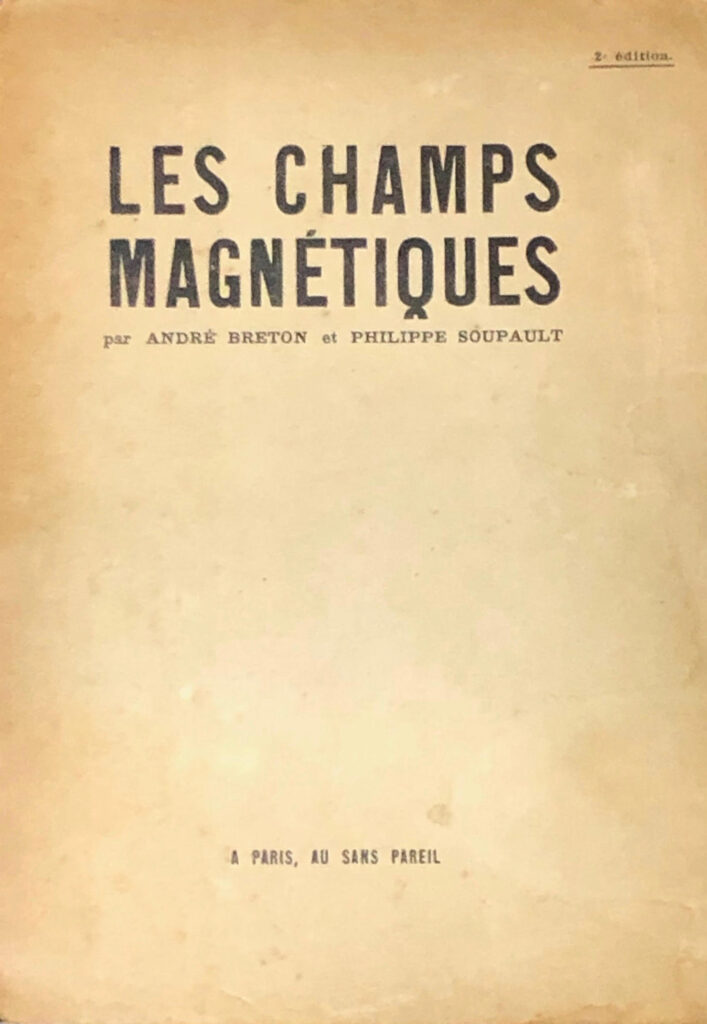
AD: A foundational Surrealist text is “La Glace sans tain”, from André Breton and Philippe Soupault’s 1919 collection Champs magnétiques [Magnetic Fields]. A “glace sans tain” is a mirror without silvering—otherwise known as a pane of glass! Mirrors, mirror-images, doubles, and doubling are a definite throughline in Nocturnal Mirrors, as the title suggests, such as in stories like “Molly on the Stairhead” and “Prowling Through Throated Chambers” among others. Beyond the relevance of mirrors to the language of dreams, what drew you to this motif or principle, and how does it play out in this collection?
 RD: Reflections, shadows, doubles, and the like extend a feeling of presence in any situation. To varying degrees, they evince that Being neither begins within our brain nor ceases with our skin. The world is teeming with presences; some overt, some incredibly delicate and subtle. A chanced glimpse in a mirror can plant the first trace of doubt in the soul of one who believes that what is apparent is reality. It can be the impetus to their realising that nothing is what it seems.
AD: “Nothing is what it seems” could be, alongside “As above, so below”, a quintessential statement about the worldview at work in many esoteric traditions. This collection involves these, as in the story “The Four Stages of Alchemy”. But this book seems more connected to these traditions than some of your other fiction. How does your nonfiction on esoteric subjects and your fiction inform one another? Would you say these stories engage more overtly with the esoteric than previous fiction?
RD: These stories are likely more steeped in the esoteric simply because I have been on this path for many decades now and that accreted experience informs all my work. Both modes of writing, fiction and nonfiction, radiate from my ongoing explorations of what might best be termed “Pandaemonic Reality”, in which everything is alive and there is far more Mystery than answers.
Sometimes these explorations conjure images that are best served by a fictional context. Other times the experiences are more complex and nuanced. This can result in non-fiction work, which tends to be more congenial to people with an existing interest in esotericism. But my role in both processes is the same: creating the most appropriate literary vessels I possibly can. I put my egoic identity to one side and try to write as evocatively and truthfully as I am able.
I do wish to add that I neither expect nor want all readers of my fiction to share my worldview. I know many people enjoy my stories simply for the frisson they provide. I could not ask for more than that. Ultimately, I strive to meet readers halfway. If they wish to take my fiction strictly as spooky entertainment, that’s wonderful. But if they do desire to delve more deeply, there are layers in each story for them to explore as they will.
 AD: I like the idea of the many layers to these stories, whether they be in the order of symbolism, tradition, or perhaps Gnosis. I wonder if some of these stories speak specifically to your own experience. I know my own writing connects to my lived experience even when I’m involved in very different imaginative worlds. Could you comment on the autobiographical layer to any of these tales?
RD: For me, being a writer means floating upon a continuum, like a subterranean river that never ceases flowing. Writing a story doesn’t begin once I sit down with a notebook or behind my laptop. My subconscious functions in an endless assimilation of countless aspects of life. It can take a dream image, a snippet of everyday conversation, a distant memory, a phrase from a book, a moment of insight, and then cook them all together. I am blissfully unaware of this until that alchemical blend surges into my conscious mind in the form of inspiration. Then and only then does it feel appropriate to begin writing.
An example from this book is “Molly on the Stairhead”. As a child, I adored games like Hide-and-Seek and Bloody Mary, Bloody Mary. To this day I can still remember being in the summer gloaming and feeling that my friends and I were now entering into a special, secret ritual. Looking back, it was as if we had slipped out of time and into what Jung would call the “Eternal”. It was electrifying.
But I also remember the dismay I felt when those kinds of games lost their magic because my childhood was ending. That melancholic sense of loss led me to wonder what those twilight games of childhood might possibly reveal if a child refused to let their magic fade, if they rejected the natural process of aging and just kept playing. A few hours later the character of Molly was a living presence in my mind . . .
AD: I think that a strong sense of loss informs a lot of the weird and Gothic writers I admire most. Is that sense at work in other stories in the collection in addition to “Molly on the Stairhead”? Is there something intrinsically elegiac about these stories, or about gothic stories in general, or is that just an occasional feature?
RD: Loss in various guises is a key element to weird and macabre fiction. The obvious reason for this is that loss, pathos, and fear are intense emotions and therefore the vicarious experience of dark fiction provides catharsis. But I believe that loss, and the horror that often comes with loss, runs even deeper than this.
 At the root of our being each of us intuits that our entire existence is but a lighting flash against the Abyss. We are who we are for a brief season, and then we are subsumed back into the Abyss to be transformed into something else entirely. This natural fact only becomes a horror or a tragedy if our egoic identity tries to cling to people, objects, or events in the hope of immunising them to decay and transformation. From my point of view, it is far healthier and realistic to celebrate our temporality while at the same time embracing the fact that death is woven inextricably into the very fabric of life. Et in Arcadia ego.
Stories like “A Place of Courtship” and “Lady Esmé’s Chandler” exemplify my belief that death is not a cessation but one’s ultimate transformation, and that whatever might exist beyond the human sphere of life is right at our elbow.
AD: “Lady Esmé’s Chandler” is a particularly interesting twisting of certain fairy tale tropes; after a fashion, the main character appears as a kind of dupe. While there’s clearly an element of the esoteric here (one of the story’s layers), I find the folktale or fairy tale dimension of the story symptomatic of a broader tendency in Nocturnal Mirrors. Where does that folktale quality come from? Would you say folk or fairy tales have influenced you directly—I’m thinking of writers like Madame d’Aulnoy for example, or the Grimms of course, or do you come by this quality through other writers?
RD: A dupe he is, and a pretentious one at that! Yes, fairy tales and folktales have influenced me, but in a gradual and clandestine way. Since childhood I’ve loved them as a reader or listener, but only in the last few years have I come to see how they’ve influenced my writing. I suppose this is because I aspire to create fiction that affects readers at a primal level, and fairy tales have always been a perfect vessel for archetypal experiences, from their symmetry (three tasks that require successful completion, for instance), to their settings in a timeless, primeval land, and so forth.
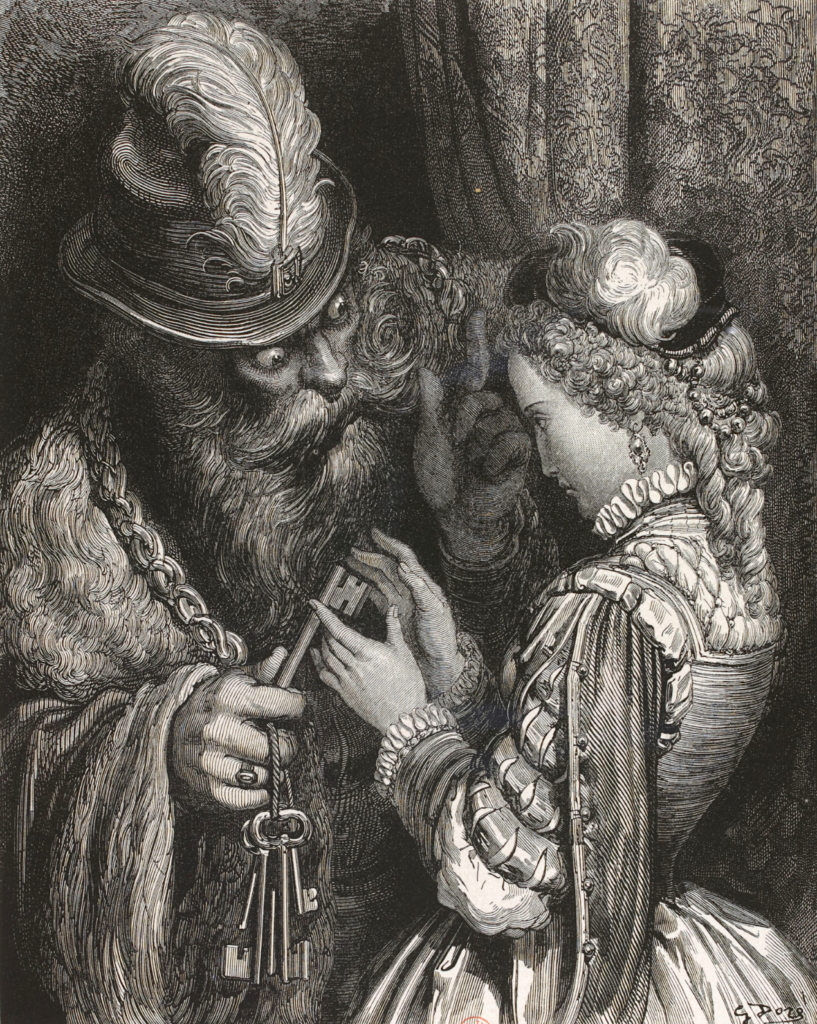 A few years ago, I encountered a theory from archetypal psychology that I found interesting: if an analyst asked their patient to name their favourite fairy tale, often that patient’s life would have organically followed the pattern of that fairy tale, usually in a totally unconscious manner. Life is never that tidily explained of course, but it did cause me to question how this process might apply to me. My lifelong favourite fairy tale is Charles Perrault’s version of “Bluebeard”. Anyone familiar with the story can imagine that resonating with a deceitful tyrant who butchered a long string of wives was more than a bit disturbing. But eventually I was struck with the real reason why this story had always been my favourite: it was not Bluebeard who I identified with, it was his latest bride. She, despite many warnings from those around her, was determined to enter Bluebeard’s foreboding castle. She was going to take that key and unlock the door to the forbidden chamber. That summarises many aspects of my own life rather well. For good or ill, I’ve always been impelled to see what might be lurking in the dark. I’ve always wanted to know forbidden, secret things.
AD: I suspect your readers will be eager to discover the secret things that await them in Nocturnal Mirrors! It’s been a pleasure to speak to you, and I wish the book much success!
RD: The pleasure was mine, Alex. Thank you. I hope readers will be pleased with Nocturnal Mirrors.